The Renters' Rights Act 2026 has fundamentally shifted the balance of power in UK rental markets, with landlords now facing mandatory pet accommodation requirements that trigger complex structural assessment obligations. Early data from property management firms indicates that nearly 60% of pet-related adaptation requests involve modifications that require professional surveying—from reinforced boundary fencing to drainage system upgrades—creating an urgent need for standardized evaluation protocols.
Building Survey Protocols for Renters' Rights Act Pet Requests: Assessing Structural Impacts of Approved Adaptations represent a critical framework that protects both tenant rights and property integrity. As landlords navigate these new legal requirements, understanding how to commission appropriate structural assessments has become essential for compliance while avoiding costly disputes with neighbours and ensuring long-term property value.
Key Takeaways
- 🏗️ Level 3 RICS surveys provide the comprehensive structural analysis required for assessing pet-related property adaptations under the Renters' Rights Act 2026
- 📋 Standardized protocols help landlords evaluate structural impacts of approved modifications like reinforced fencing, flooring upgrades, and drainage improvements
- 🤝 Neighbour considerations must be incorporated into survey assessments to prevent party wall disputes and boundary conflicts
- 📊 Documentation requirements include detailed condition reports before and after adaptations to establish baseline property integrity
- ⚖️ Compliance frameworks balance tenant pet rights with legitimate structural safety concerns and property preservation
Understanding the Renters' Rights Act 2026 Pet Accommodation Framework
The Renters' Rights Act 2026 introduced sweeping changes to pet ownership rights in rental properties across the UK. Unlike previous legislation that allowed landlords broad discretion to refuse pets, the new framework establishes a presumption in favour of pet ownership with limited grounds for refusal [3].
Legal Obligations for Landlords
Landlords can no longer impose blanket pet bans. Instead, they must assess each request individually and can only refuse based on:
- Legitimate structural concerns about property damage
- Specific property limitations (such as inadequate outdoor space)
- Documented safety risks to other residents
- Existing lease restrictions in buildings with freeholder prohibitions
This shift mirrors developments in other jurisdictions. California's evolving pet housing laws demonstrate similar trends, with Los Angeles County exploring mandatory pet accommodation in rent-controlled housing [1][5]. These international precedents highlight the growing recognition of pets as integral family members deserving legal protection.
Triggering Survey Requirements
When tenants request pet accommodation that involves physical modifications, landlords must determine whether structural assessments are necessary. Common adaptation requests include:
✅ Reinforced garden fencing or boundary walls
✅ Pet door installations
✅ Flooring replacements (scratch-resistant materials)
✅ Drainage system modifications for outdoor washing areas
✅ Soundproofing installations
Each of these modifications carries potential structural implications that require professional evaluation through comprehensive RICS Building Surveys Level 3.
Building Survey Protocols for Renters' Rights Act Pet Requests: Essential Assessment Components
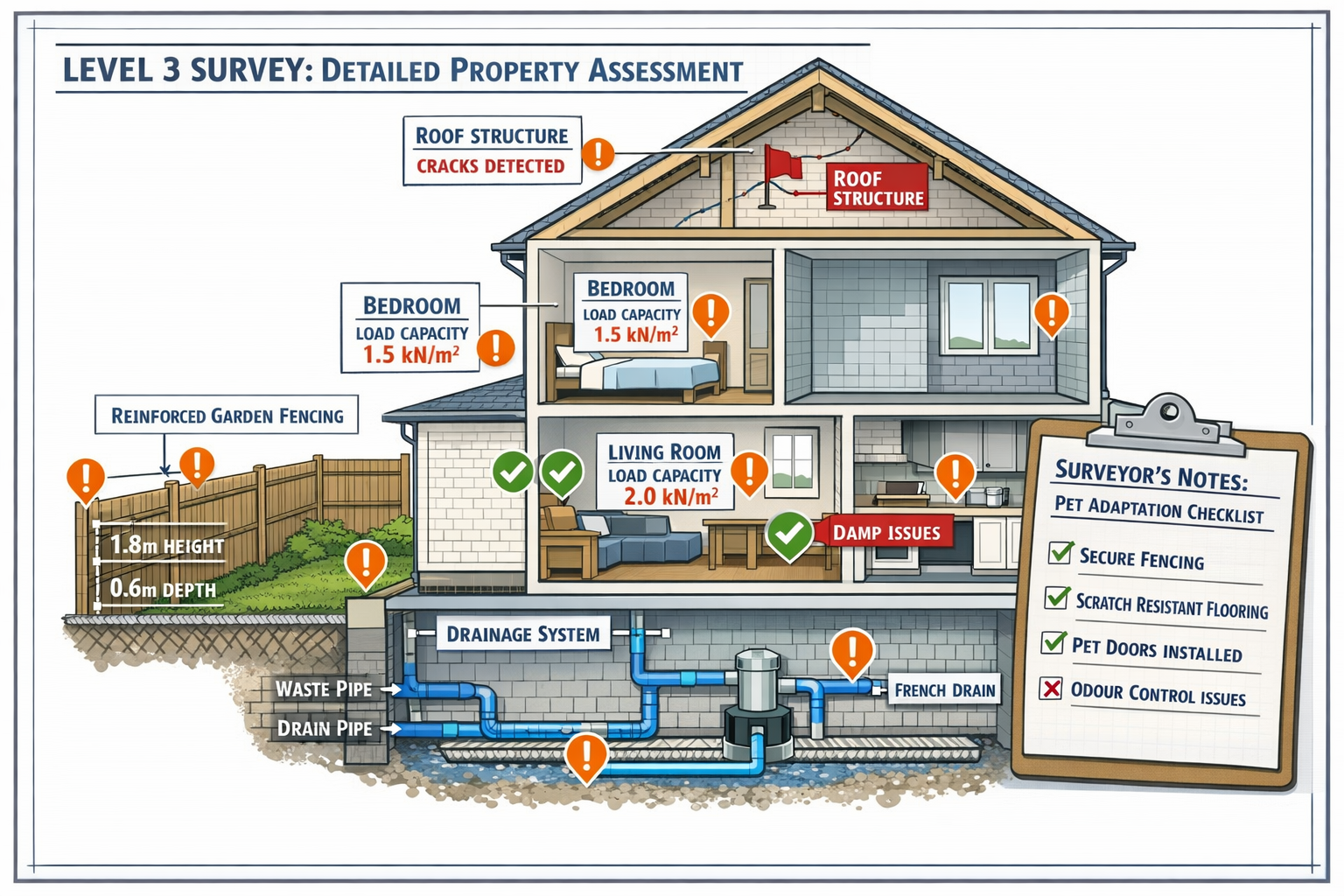
Developing robust Building Survey Protocols for Renters' Rights Act Pet Requests requires understanding the specific structural elements that pet-related adaptations may affect. Professional surveyors must evaluate multiple property systems to ensure modifications don't compromise building integrity.
Structural Load Assessment
Pet adaptations often involve adding weight or changing load distribution. A qualified surveyor conducting structural surveys will examine:
Floor Load Capacity: Large pet enclosures, aquariums, or reinforced flooring materials add significant weight. Surveyors calculate whether existing floor joists and support structures can handle additional loads without deflection or failure.
Wall Integrity: Installing pet doors or creating access points requires cutting through structural elements. Assessment includes:
- Load-bearing wall identification
- Lintel requirements for new openings
- Impact on lateral stability
- Moisture ingress risks
Foundation Considerations: Outdoor modifications like reinforced fencing require foundation analysis to ensure:
- Adequate depth for fence post footings
- Proper drainage around new structures
- No interference with existing drainage systems
- Compliance with boundary setback requirements
Boundary and Fencing Evaluations
Reinforced fencing represents one of the most common pet-related adaptation requests. Survey protocols must address:
| Assessment Area | Key Considerations | Documentation Required |
|---|---|---|
| Height restrictions | Local planning regulations, neighbour sight lines | Planning permission status |
| Foundation depth | Soil type, frost line, drainage impact | Soil analysis, excavation plans |
| Materials specification | Durability, maintenance, aesthetic compliance | Material samples, manufacturer specs |
| Boundary accuracy | Title deed boundaries, registered land plans | Land registry documents, survey maps |
| Party wall implications | Shared boundaries, adjoining structures | Party wall notices, neighbour agreements |
The intersection with party wall legislation is particularly important. As noted in party wall survey protocols, modifications near shared boundaries require formal notice procedures and may trigger additional surveyor appointments [3][7].
Drainage and Waterproofing Analysis
Pet-friendly adaptations frequently impact drainage systems. Professional drainage surveys should evaluate:
🔍 Outdoor washing stations: New water outlets require proper drainage connections to prevent water accumulation and foundation damage
🔍 Garden modifications: Reinforced play areas may alter natural drainage patterns, requiring assessment of:
- Surface water runoff
- Soakaway capacity
- Connection to existing drainage infrastructure
- Risk of water backing up toward building foundations
🔍 Indoor adaptations: Pet washing areas inside properties need waterproofing assessments and proper waste water connections
Flooring and Surface Material Assessment
Scratch-resistant flooring installations may seem cosmetic, but they carry structural implications:
- Subfloor condition: Existing subfloor must be level and structurally sound
- Moisture barriers: New flooring systems require proper damp-proofing
- Height transitions: Floor level changes affect door clearances and accessibility
- Adhesive compatibility: Chemical interactions between new and existing materials
Implementing Building Survey Protocols for Renters' Rights Act Pet Requests: Assessing Structural Impacts of Approved Adaptations
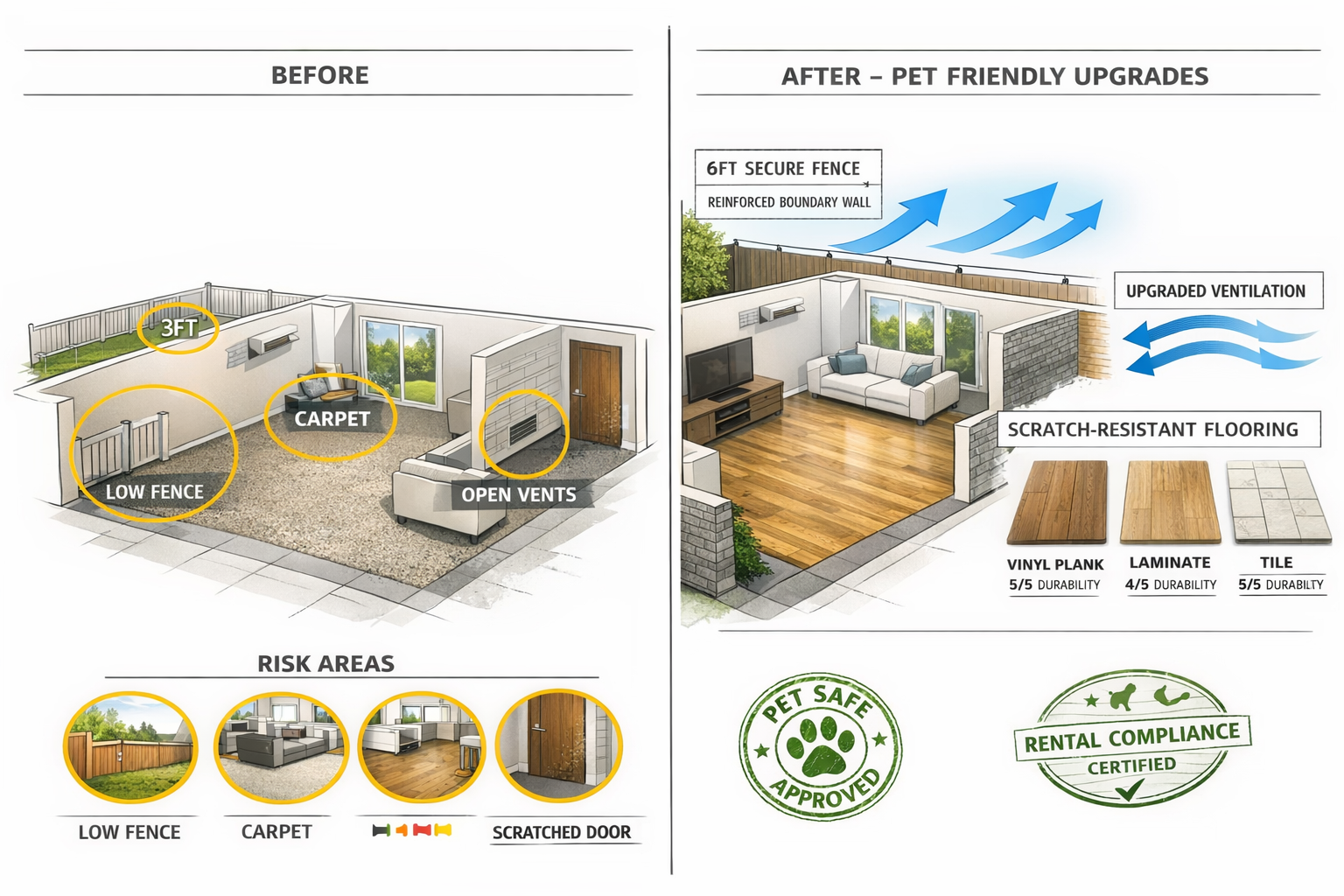
Effective implementation of Building Survey Protocols for Renters' Rights Act Pet Requests requires a systematic approach that balances tenant rights with property protection. Landlords need clear procedures for commissioning surveys, interpreting results, and documenting compliance.
The Three-Stage Survey Protocol
Stage 1: Initial Risk Assessment (Pre-Approval)
Before approving pet accommodation requests involving modifications, landlords should commission a preliminary assessment:
- Desktop review of property plans and existing condition reports
- Identification of potential structural concerns
- Determination of survey scope required
- Preliminary cost estimation for approved modifications
This stage helps landlords provide timely responses to tenant requests while gathering information needed for informed decisions.
Stage 2: Comprehensive Structural Survey
When modifications proceed, a full RICS Building Survey provides detailed analysis:
📋 Baseline Documentation: Comprehensive photographic and written records of pre-modification property condition
📋 Structural Analysis: Detailed assessment of all affected building elements using residential structural engineering principles
📋 Specification Development: Technical specifications for approved modifications ensuring structural integrity
📋 Risk Mitigation Recommendations: Specific measures to address identified concerns
📋 Neighbour Impact Assessment: Evaluation of potential effects on adjoining properties
Stage 3: Post-Modification Verification
After adaptations are complete, verification surveys confirm:
- Modifications match approved specifications
- No unintended structural impacts occurred
- Building regulations compliance (where applicable)
- Proper documentation for future property transactions
Neighbour Consultation and Party Wall Compliance
One of the most sensitive aspects of Building Survey Protocols for Renters' Rights Act Pet Requests involves managing neighbour relationships. Structural modifications near boundaries can trigger party wall obligations and create disputes if not properly managed [7].
Proactive Communication Strategies:
✉️ Early notification to neighbours about proposed modifications
✉️ Sharing survey findings that demonstrate structural safety
✉️ Addressing concerns about noise, odours, or visual impact
✉️ Formal party wall notices when legally required
Party Wall Survey Integration: When modifications affect shared structures or involve excavation near boundaries, landlords must engage party wall surveyors to:
- Serve proper statutory notices
- Document pre-work conditions
- Monitor construction activities
- Resolve disputes through agreed awards
The party wall framework provides a structured process for managing neighbour concerns while allowing legitimate tenant adaptations to proceed [3].
Cost Considerations and Budget Planning
Understanding survey costs helps landlords budget appropriately for compliance. Structural survey pricing varies based on:
- Property size and complexity
- Scope of proposed modifications
- Accessibility challenges
- Specialist investigations required (e.g., soil analysis, drainage testing)
Typical Cost Ranges (2026):
- Basic structural assessment: £400-£800
- Comprehensive Level 3 survey: £800-£1,500
- Specialist drainage survey: £300-£600
- Party wall surveyor fees: £700-£1,200 per party
While these costs may seem substantial, they protect landlords from far greater expenses associated with:
- Structural repairs from inappropriate modifications
- Legal disputes with tenants or neighbours
- Property devaluation from undocumented changes
- Insurance claim rejections due to unauthorized alterations
Documentation and Record-Keeping Requirements
Robust documentation protects all parties involved in pet accommodation agreements. Essential records include:
📁 Survey Reports: Complete copies of all structural assessments with photographic evidence
📁 Approval Correspondence: Written approvals specifying permitted modifications and conditions
📁 Contractor Certifications: Proof that approved contractors completed work to specification
📁 Compliance Certificates: Building control sign-offs where applicable
📁 Insurance Notifications: Documentation that insurers were informed of modifications
📁 Tenancy Agreement Addendums: Formal amendments incorporating pet accommodation terms
This documentation serves multiple purposes:
- Demonstrates compliance with Renters' Rights Act requirements
- Provides evidence in potential disputes
- Maintains property value through transparent modification history
- Facilitates future property sales or refinancing
Specialized Survey Considerations for Different Property Types
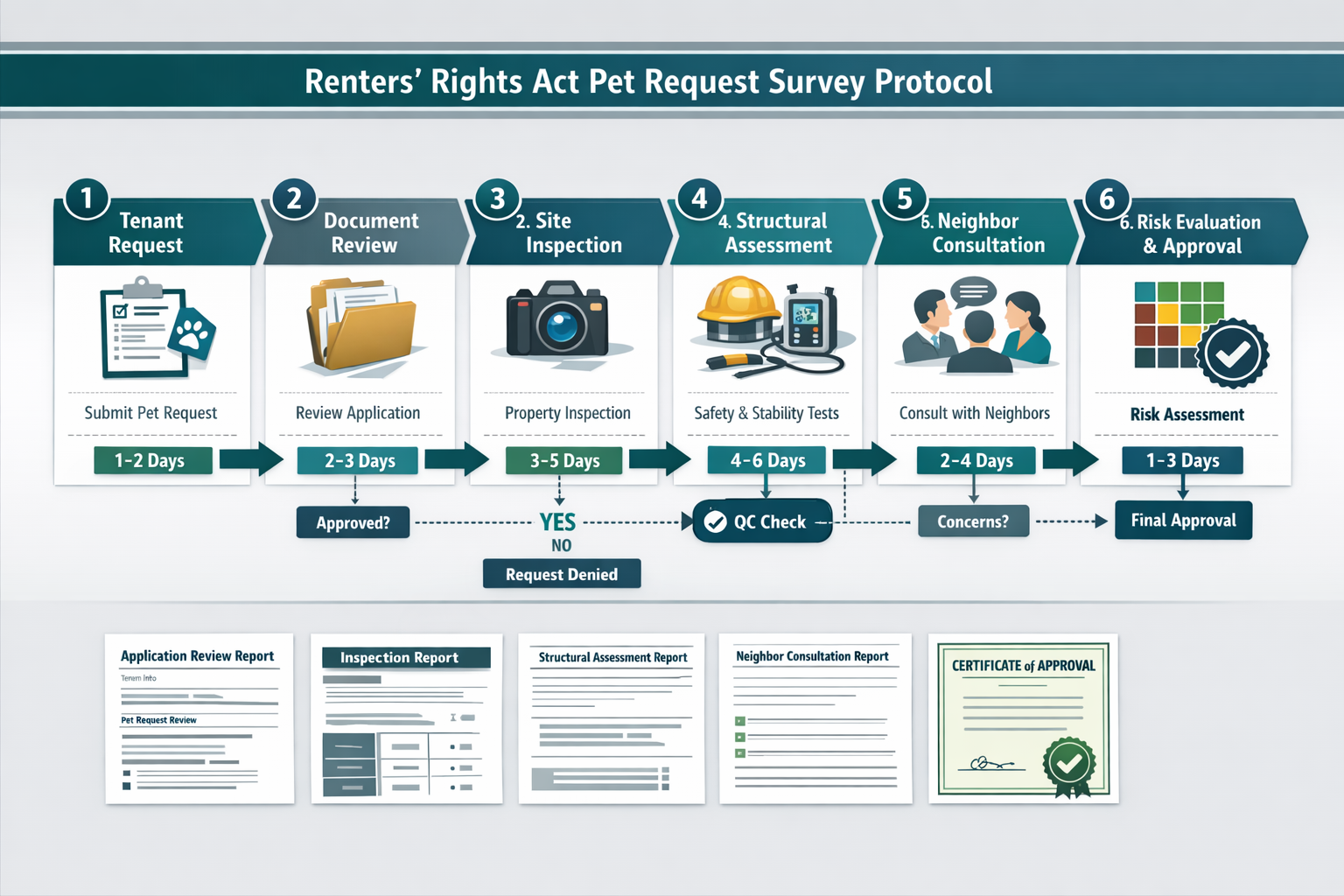
Building Survey Protocols for Renters' Rights Act Pet Requests must adapt to different property configurations. Each property type presents unique structural challenges requiring specialized assessment approaches.
Period Properties and Listed Buildings
Historic properties require particularly sensitive survey approaches:
Structural Vulnerabilities: Older construction methods may not accommodate modern pet adaptations without specialized interventions. Surveyors must assess:
- Original timber frame integrity before installing pet doors
- Historic masonry condition before adding boundary structures
- Traditional flooring systems' capacity for modern materials
- Conservation area restrictions on external modifications
Heritage Compliance: Listed buildings face additional constraints requiring coordination with conservation officers and heritage consultants. Specialist defect surveys help identify appropriate adaptation methods that preserve historic fabric.
Flats and Apartment Buildings
Multi-unit properties present complex survey challenges:
🏢 Shared Structure Considerations: Modifications in one unit can affect neighbours through:
- Sound transmission through party floors and walls
- Shared drainage system capacity
- Communal area impacts
- Fire safety compartmentation
🏢 Leasehold Restrictions: Freeholder permissions may be required beyond landlord approval, necessitating additional documentation and potentially restricting available adaptations.
🏢 Building Insurance Implications: Modifications must be disclosed to block insurance policies, requiring clear survey evidence that structural integrity remains intact.
Modern New-Build Properties
Contemporary construction offers both advantages and challenges:
Advantages:
- Better documented structural specifications
- Modern building standards with higher load capacities
- Integrated drainage systems more adaptable to modifications
- Warranty considerations that require professional survey evidence
Challenges:
- Warranty invalidation risks from unauthorized modifications
- NHBC requirements for documented alterations
- Potential conflicts with estate management rules
- Modern materials requiring specialized assessment techniques
Properties with Existing Structural Issues
When pet adaptation requests coincide with pre-existing structural concerns, survey protocols become even more critical. Properties with known issues require:
🔧 Baseline Condition Assessment: Clear documentation separating existing defects from pet-related impacts
🔧 Prioritized Remediation: Addressing structural issues before approving adaptations
🔧 Enhanced Monitoring: More frequent inspections to detect any deterioration
🔧 Specialized Surveys: Additional investigations such as subsidence surveys or roof surveys where relevant
Professional Surveyor Selection and Engagement
Choosing qualified professionals is essential for reliable Building Survey Protocols for Renters' Rights Act Pet Requests implementation. Not all surveyors have equivalent expertise in assessing pet-related adaptations.
Essential Qualifications and Experience
Look for surveyors with:
✓ RICS Accreditation: Chartered status ensures professional standards and insurance coverage
✓ Structural Engineering Knowledge: Understanding of load calculations, material specifications, and building physics
✓ Local Regulatory Expertise: Familiarity with regional planning requirements and building control standards
✓ Pet Adaptation Experience: Specific experience assessing animal-related property modifications
✓ Party Wall Expertise: Understanding of boundary issues and neighbour impact assessments
Survey Scope Definition
Clear scope definition prevents misunderstandings and ensures comprehensive assessments. Specify:
- Exact modifications being assessed
- Property areas requiring detailed inspection
- Specialist investigations needed (drainage, soil, etc.)
- Reporting format and detail level required
- Timeline for report delivery
- Budget parameters
Interpreting Survey Reports
Professional survey reports provide detailed findings, but landlords must understand key elements:
Risk Categorization: Most surveys classify concerns using traffic light systems:
- 🟢 Green: No significant concerns, modifications appropriate
- 🟡 Amber: Minor concerns requiring mitigation measures
- 🔴 Red: Significant structural risks, modifications inadvisable without major works
Recommendations Hierarchy: Distinguish between:
- Essential requirements for structural safety
- Best practice recommendations
- Optional enhancements
Cost Implications: Understand which costs are:
- Tenant responsibilities (approved modifications)
- Landlord obligations (structural repairs)
- Shared expenses (party wall procedures)
Balancing Tenant Rights with Property Protection
The Renters' Rights Act 2026 creates a delicate balance between tenant pet ownership rights and legitimate landlord concerns. Building Survey Protocols for Renters' Rights Act Pet Requests provide the evidence-based framework for navigating this balance.
Reasonable Refusal Grounds
Comprehensive surveys provide objective evidence for decisions. Landlords can reasonably refuse modifications when surveys demonstrate:
❌ Structural Incompatibility: The property cannot safely accommodate proposed adaptations without major structural works exceeding reasonable expectations
❌ Disproportionate Cost: Required modifications would cost significantly more than property value justifies
❌ Neighbour Impact: Adaptations would materially affect adjoining properties despite mitigation efforts
❌ Regulatory Barriers: Planning restrictions or conservation requirements prevent modifications
Alternative Accommodation Solutions
When structural surveys identify barriers to requested adaptations, landlords should explore alternatives:
- Modified adaptation designs addressing structural concerns
- Alternative pet accommodation methods (e.g., portable solutions)
- Phased implementation allowing structural upgrades
- Cost-sharing arrangements for necessary structural works
Dispute Resolution Mechanisms
When disagreements arise about survey findings or modification approvals, several resolution paths exist:
🤝 Mediation Services: Independent mediators help parties reach mutually acceptable solutions
🤝 Expert Determination: Appointing a neutral surveyor to provide binding assessment
🤝 Tribunal Proceedings: Formal adjudication through property tribunals
🤝 Legal Proceedings: Court action as a last resort for unresolved disputes
Having comprehensive survey documentation strengthens positions in any dispute resolution process, demonstrating good faith efforts to accommodate tenant rights while protecting property integrity.
Future-Proofing Properties for Pet-Friendly Tenancies
Forward-thinking landlords are proactively adapting properties to accommodate pet-owning tenants, using Building Survey Protocols for Renters' Rights Act Pet Requests as planning tools rather than reactive compliance measures.
Preventive Structural Enhancements
Strategic property improvements can reduce future survey requirements:
🛠️ Durable Flooring Installation: Scratch-resistant materials as standard reduce adaptation needs
🛠️ Reinforced Boundaries: Quality fencing and secure gardens installed proactively
🛠️ Enhanced Ventilation: Improved air circulation systems minimize odour concerns
🛠️ Soundproofing Upgrades: Acoustic insulation reduces noise transmission risks
🛠️ Robust Fixtures: Heavy-duty fixtures and fittings withstand pet-related wear
Marketing Pet-Friendly Properties
Properties with pre-approved pet accommodations command premium rents and attract stable tenants. Survey documentation demonstrating pet-readiness becomes a marketing asset:
- Reduced void periods from larger tenant pool
- Higher rental yields from pet-owning demographic
- Lower turnover rates from satisfied long-term tenants
- Competitive advantage in tight rental markets
Long-Term Property Value Considerations
Professional surveys documenting pet adaptations protect property values by:
- Creating transparent modification history for future buyers
- Demonstrating proper structural considerations
- Avoiding hidden defects from undocumented changes
- Maintaining insurance validity through proper disclosure
Conclusion
Building Survey Protocols for Renters' Rights Act Pet Requests: Assessing Structural Impacts of Approved Adaptations represent an essential framework for navigating the new landscape of tenant pet rights in 2026. The Renters' Rights Act has fundamentally changed landlord obligations, requiring evidence-based approaches to pet accommodation decisions that balance tenant rights with legitimate property protection concerns.
Key implementation steps for landlords include:
- Commission comprehensive Level 3 RICS surveys when tenants request modifications, using qualified professionals with structural engineering expertise
- Document all assessments thoroughly to demonstrate compliance and protect against future disputes
- Engage proactively with neighbours when modifications affect boundaries or shared structures
- Interpret survey findings fairly, distinguishing between genuine structural concerns and unreasonable resistance to tenant rights
- Consider preventive property enhancements that reduce future survey requirements and attract quality tenants
The intersection of tenant rights, structural integrity, and neighbour considerations creates complexity that professional surveying expertise can navigate effectively. Landlords who invest in proper structural surveys and follow established protocols protect their properties while complying with legal obligations.
As the rental market continues evolving toward greater tenant protections, building survey protocols will become increasingly important for responsible property management. The framework established for pet accommodation assessments provides a model for evaluating other tenant-requested modifications, creating standardized approaches that benefit all stakeholders.
Take action today by reviewing your property portfolio, identifying potential pet accommodation scenarios, and establishing relationships with qualified surveyors who can provide the specialized assessments required under the Renters' Rights Act 2026. Proactive preparation prevents costly disputes and positions properties competitively in the modern rental market.
References
[1] Los Angeles County Renter Pet Protections Board Of Supervisors Vote Tenant Landlord Housing – https://laist.com/brief/news/housing-homelessness/los-angeles-county-renter-pet-protections-board-of-supervisors-vote-tenant-landlord-housing
[3] Party Wall Surveys Under Renters Rights Act 2026 Managing Landlord Modifications And Pet Friendly Extensions – https://nottinghillsurveyors.com/blog/party-wall-surveys-under-renters-rights-act-2026-managing-landlord-modifications-and-pet-friendly-extensions
[5] L A County Report Outlines Potential Pet Mandate For Rent Controlled Housing – https://caanet.org/l-a-county-report-outlines-potential-pet-mandate-for-rent-controlled-housing/
[7] Party Wall Implications Of Renters Rights Act 2026 Survey Protocols For Prs Database And Section 8 Notice Compliance – https://nottinghillsurveyors.com/blog/party-wall-implications-of-renters-rights-act-2026-survey-protocols-for-prs-database-and-section-8-notice-compliance