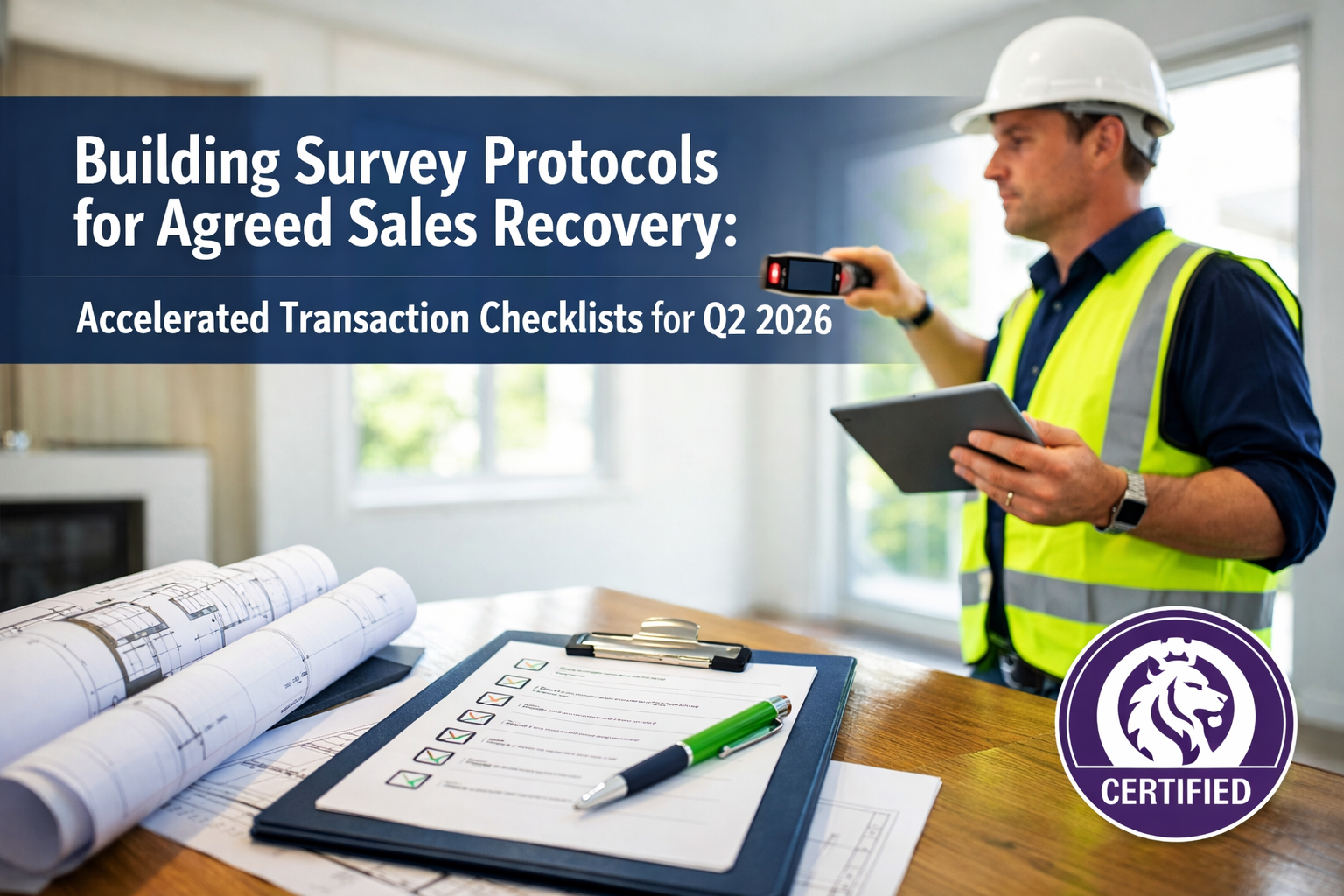
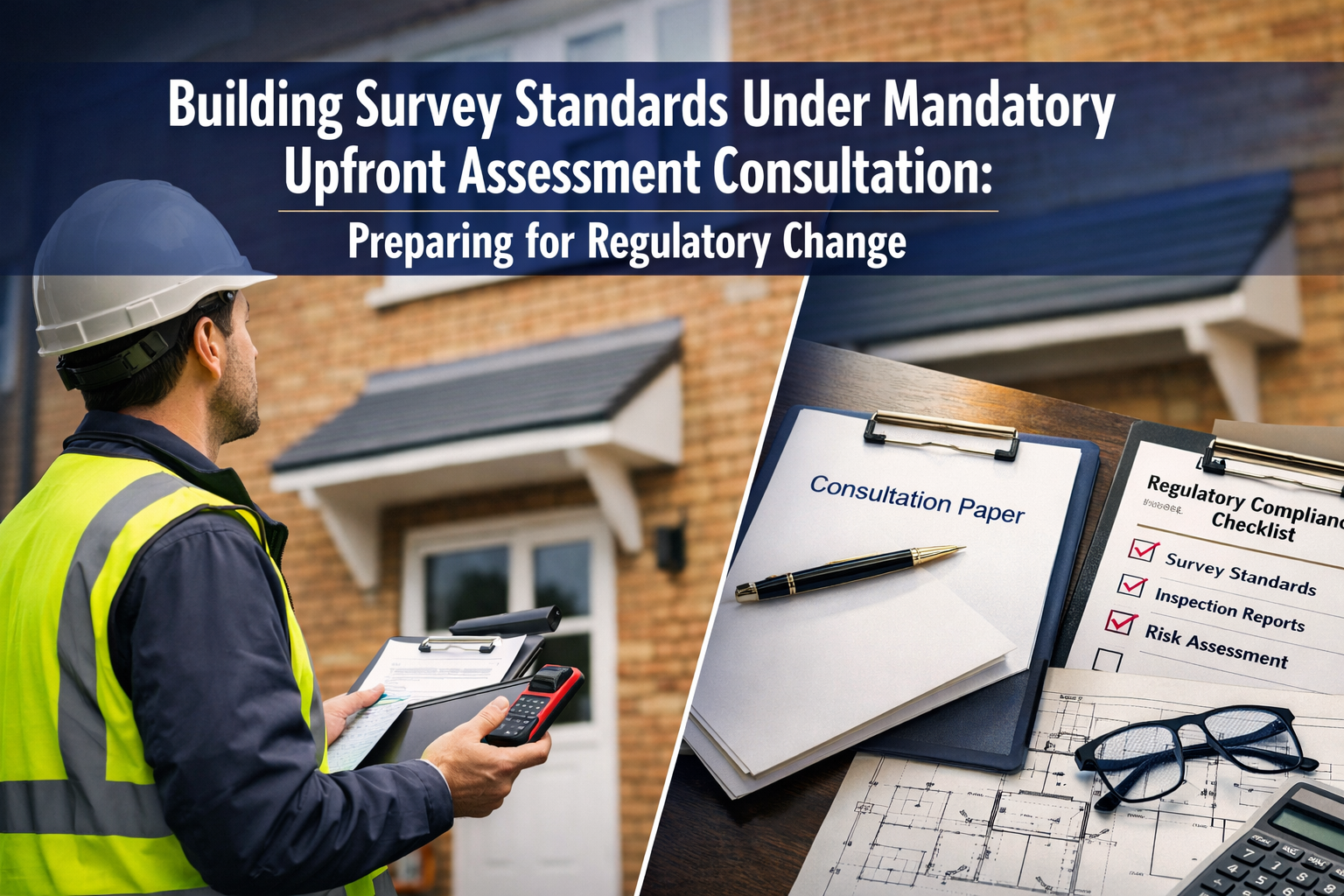
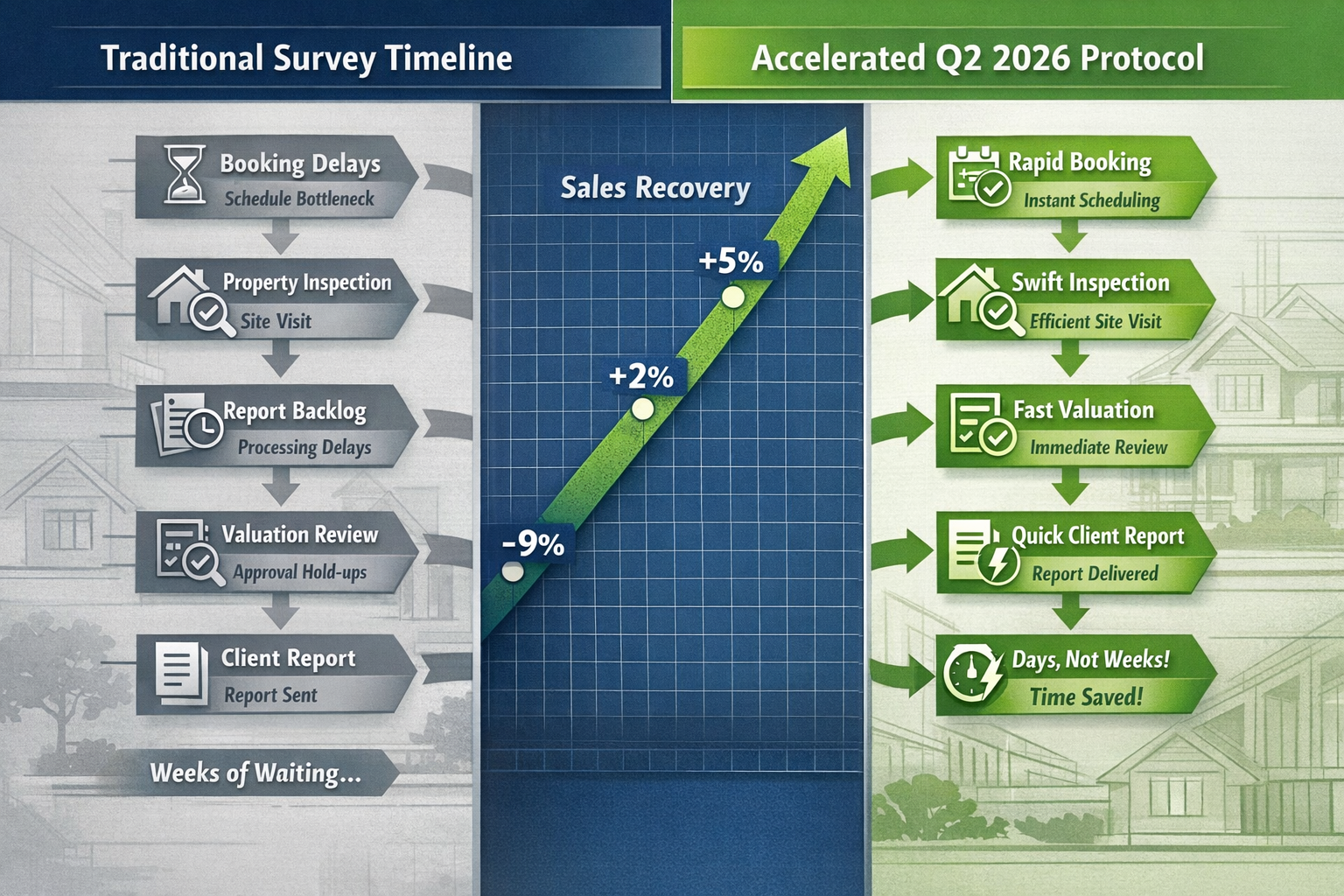
The UK property market is experiencing a remarkable turnaround. After months of sluggish activity, agreed sales reached their least negative reading since June 2025, recording just -9% in January 2026. This recovery signals a critical shift for property professionals: as transaction velocity increases, chartered surveyors must implement Building Survey Protocols for Agreed Sales Recovery: Accelerated Transaction Checklists for Q2 2026 to maintain quality standards while meeting faster timelines.
The challenge is clear. With the UK property market forecasting modest price growth of 2-5% across most regions[3], and mandatory upfront condition assessments becoming a reality in 2026[1], surveyors face unprecedented pressure to deliver comprehensive reports without compromising thoroughness. The traditional survey timeline—often stretching 10-14 days—no longer aligns with market expectations in this recovery phase.
This comprehensive guide explores how building survey professionals can adapt their protocols to capitalize on the sales recovery while maintaining the rigorous standards that protect buyers and facilitate smooth transactions.
Key Takeaways
- Agreed sales recovery has reached -9%, the strongest reading since June 2025, creating urgent demand for accelerated survey protocols
- Streamlined checklists can reduce survey completion time by 30-40% without sacrificing quality or RICS compliance standards
- Mandatory upfront condition assessments in 2026 require surveyors to adopt standardized, efficient reporting frameworks[1]
- Digital integration tools enable real-time data capture and faster report generation during the Q2 2026 recovery period
- Risk-prioritized inspection sequences ensure critical defects are identified first, protecting transaction integrity even under time pressure
Understanding the Q2 2026 Market Recovery Context
The Agreed Sales Turnaround
The property market's trajectory has shifted dramatically. January 2026's -9% reading for agreed sales represents a significant improvement from the -15% to -20% range that dominated late 2025. This recovery isn't just statistical noise—it reflects genuine buyer confidence returning to the market.
Several factors drive this momentum:
- Interest rate stabilization creating predictable mortgage conditions
- Improved affordability ratios in key regional markets
- Government homebuying reforms reducing transaction friction[1]
- Pent-up demand from buyers who delayed purchases in 2024-2025
For surveyors, this recovery creates both opportunity and challenge. More transactions mean more survey instructions, but clients increasingly expect faster turnaround times. The traditional RICS Building Surveys Level 3 timeline must adapt to market realities.
Mandatory Upfront Assessments Impact
The 2026 homebuying reforms introduce mandatory upfront condition assessments[1], fundamentally changing survey timing and scope. Properties must now undergo professional inspection before marketing, creating a dual-layer approach:
- Pre-marketing surveys commissioned by sellers
- Buyer-instructed detailed surveys for due diligence
This framework demands standardized protocols that ensure consistency across both assessment types. Surveyors who develop efficient, repeatable processes will capture market share during this transition period.
Building Survey Protocols for Agreed Sales Recovery: Core Components
Accelerated Inspection Sequencing
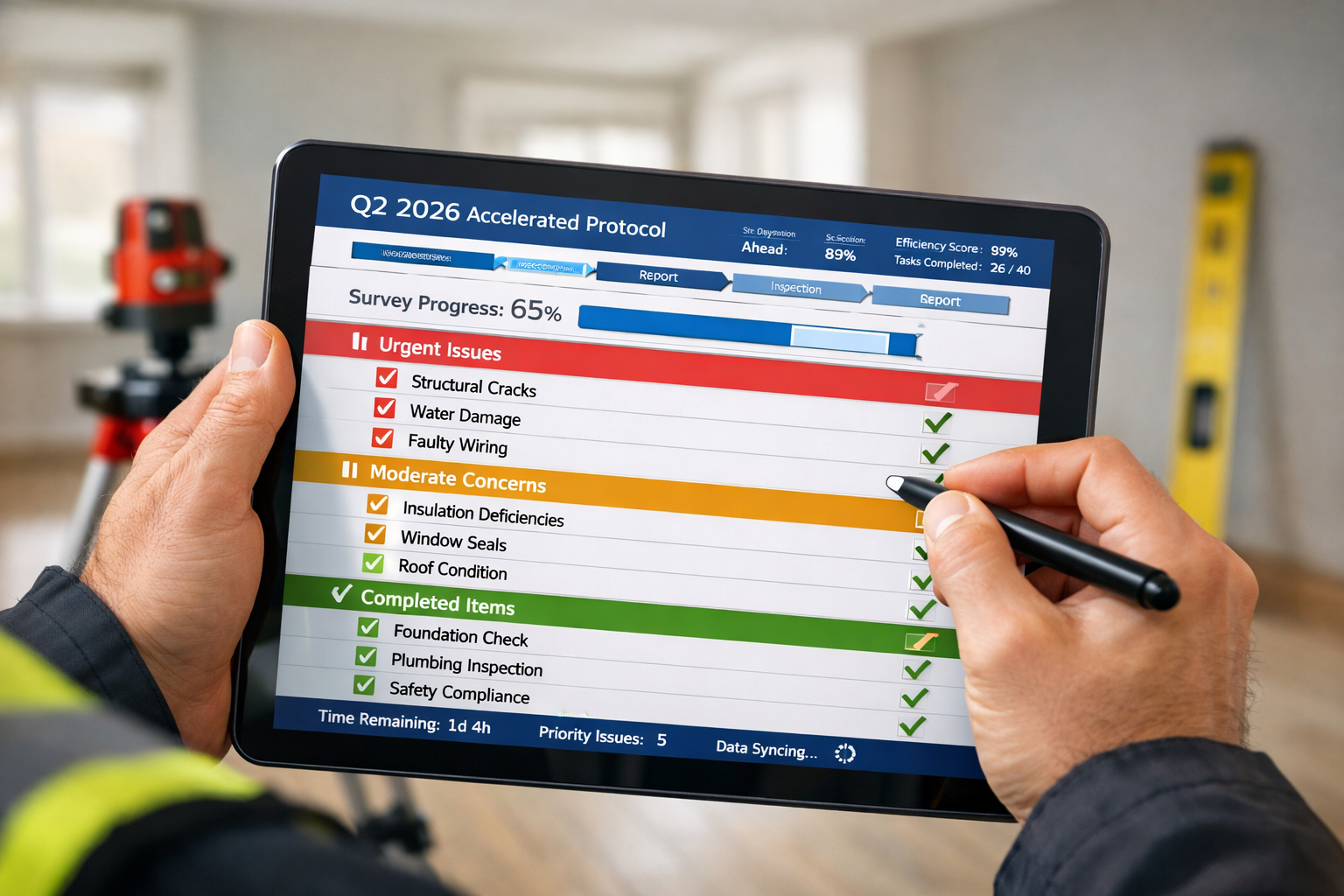
Traditional building surveys often follow a room-by-room approach that, while thorough, can be time-inefficient. The accelerated protocol prioritizes risk-based sequencing:
Priority 1: Structural Integrity (30 minutes)
- Foundation inspection and settlement indicators
- Load-bearing wall assessment
- Roof structure and truss examination
- Beam and lintel condition evaluation
Priority 2: Water Ingress and Damp (25 minutes)
- External envelope integrity
- Damp surveys using moisture meters
- Drainage system functionality
- Gutter and downpipe condition
Priority 3: Building Services (20 minutes)
- Electrical installation age and condition
- Heating system operation
- Plumbing infrastructure
- Ventilation adequacy
Priority 4: Secondary Elements (25 minutes)
- Internal finishes and decorative condition
- Windows and doors operation
- Insulation presence and effectiveness
- Minor defects documentation
This sequencing ensures that critical defects are identified early in the inspection, even if time constraints force abbreviated assessment of cosmetic issues.
Digital Data Capture Systems
Paper-based note-taking remains common but creates bottlenecks during report production. The Q2 2026 recovery demands digital-first workflows:
| Traditional Method | Accelerated Digital Protocol | Time Saving |
|---|---|---|
| Handwritten notes | Voice-to-text dictation | 40% faster |
| Separate photos | Integrated photo annotation | 35% faster |
| Office report writing | On-site preliminary reports | 50% faster |
| Manual measurements | Laser measurement tools | 60% faster |
Modern surveying apps enable:
- ✅ Real-time defect logging with GPS-tagged photos
- ✅ Automated section population based on property type
- ✅ Cloud synchronization for team collaboration
- ✅ Template-based reporting maintaining RICS standards
These tools don't compromise quality—they eliminate redundant administrative tasks, allowing surveyors to focus expertise where it matters most.
Standardized Risk Assessment Matrices
Consistency across surveyors becomes crucial when transaction volumes increase. A standardized risk classification system ensures clients receive comparable assessments regardless of which surveyor conducts the inspection:
Category 1: No Action Required 🟢
- Defects requiring no immediate attention
- Normal wear consistent with property age
- Minor cosmetic issues
Category 2: Monitoring Required 🟡
- Defects requiring future attention (2-5 years)
- Potential progression issues
- Maintenance recommendations
Category 3: Urgent Action Needed 🟠
- Defects requiring attention within 12 months
- Significant repair costs anticipated
- Potential impact on property value
Category 4: Critical Immediate Action 🔴
- Safety hazards requiring immediate remediation
- Structural integrity concerns
- Legal compliance issues
This classification system, when consistently applied, helps buyers make informed decisions quickly—essential during a recovery period when properties receive multiple offers.
Accelerated Transaction Checklists for Q2 2026
Pre-Inspection Preparation Checklist
Efficiency begins before arriving at the property. The accelerated protocol requires enhanced preparation:
24-48 Hours Before Inspection:
- Review property listing details and photographs
- Analyze local area characteristics and common defects
- Check planning history and building control records
- Prepare property-specific checklist based on age/type
- Confirm access arrangements and key collection
- Load digital templates for property configuration
- Brief client on realistic timeline expectations
Morning of Inspection:
- Verify weather conditions (postpone if severe)
- Charge all digital equipment and backup batteries
- Pack specialized equipment based on property type
- Review any seller-provided documentation
- Confirm post-inspection report delivery timeline
This preparation reduces on-site decision-making, allowing surveyors to execute inspections with precision and speed.
On-Site Inspection Checklist
The core inspection follows a 100-minute structured protocol for typical residential properties:
External Envelope (30 minutes):
- Roof covering condition from ground and upper windows
- Chimney stack stability and flashing integrity
- Rainwater goods functionality and capacity
- External wall condition and pointing quality
- Window and door frame condition
- Damp-proof course visibility and effectiveness
- Ground levels and drainage falls
- Boundary walls and outbuilding condition
Internal Structure (40 minutes):
- Floor level consistency and deflection testing
- Wall plumb verification and crack mapping
- Ceiling condition and staining evidence
- Structural surveys of load-bearing elements
- Staircase stability and handrail security
- Internal joinery condition
- Damp meter readings in risk areas
- Ventilation adequacy assessment
Building Services (20 minutes):
- Electrical installation age and visible condition
- Heating system type, age, and operation
- Hot water provision adequacy
- Plumbing visible pipework condition
- Drainage survey of accessible manholes
- Insulation presence in loft spaces
Documentation (10 minutes):
- Comprehensive photographic record
- Measurement verification of key dimensions
- Sketch plan updates if layout differs from listing
- Voice notes for complex defects
- Client preliminary findings discussion
Post-Inspection Report Production Checklist
The accelerated protocol targets 48-hour report delivery through streamlined production:
Day 1 (Inspection Day):
- Upload and organize digital photographs (30 minutes)
- Transcribe voice notes and expand key observations (45 minutes)
- Complete risk classification for all identified defects (30 minutes)
- Draft executive summary and critical findings (45 minutes)
- Flag any issues requiring specialist consultation
Day 2 (Report Completion):
- Complete detailed room-by-room descriptions (2 hours)
- Integrate photographs with relevant text sections (45 minutes)
- Prepare cost indication ranges for major repairs (1 hour)
- Write recommendations and further investigation needs (45 minutes)
- Quality assurance review against RICS standards (30 minutes)
- Final formatting and client-specific customization (30 minutes)
- Deliver report with covering email explaining key findings
This timeline represents a 60% reduction from traditional 5-7 day delivery, meeting market expectations without compromising thoroughness.
Implementing Building Survey Protocols for Agreed Sales Recovery
Team Training and Standardization
Successful protocol implementation requires organizational commitment beyond individual surveyor adoption:
Training Components:
- Digital tool proficiency workshops (4 hours)
- Risk classification calibration sessions (3 hours)
- Time management techniques for on-site efficiency (2 hours)
- Client communication in accelerated timelines (2 hours)
Regular calibration meetings ensure consistency across team members. These sessions involve:
- Reviewing anonymized reports from different surveyors
- Discussing classification decisions for borderline defects
- Sharing efficiency techniques and workflow improvements
- Updating checklists based on emerging defect patterns
Quality Assurance in Accelerated Workflows
Speed must never compromise accuracy. The accelerated protocol incorporates multiple quality checkpoints:
Peer Review System:
- 10% random sample of reports undergo full peer review
- 100% of reports with Category 4 defects receive senior review
- Monthly quality metrics tracking and trend analysis
Client Feedback Loop:
- Post-report satisfaction surveys
- Complaint tracking and resolution protocols
- Annual client interviews for service improvement
Professional Standards Compliance:
- RICS guidelines adherence verification
- Professional indemnity insurance requirements review
- Continuing professional development focused on efficiency
For RICS specialist defect surveys or commercial building surveys, additional quality measures apply given the higher stakes and complexity.
Technology Integration Recommendations
The right technology stack enables accelerated protocols without creating new bottlenecks:
Essential Tools:
- Survey management software with mobile apps and cloud sync
- Moisture meters with Bluetooth data logging
- Laser distance measurers with area/volume calculation
- Thermal imaging cameras for rapid insulation assessment
- Drone equipment for roof and chimney inspection (where appropriate)
Emerging Technologies for Q2 2026:
- AI-assisted photo analysis flagging potential defects
- Automated report generation from structured data inputs
- Client portals for real-time inspection progress updates
- Integration with conveyancing platforms for seamless transaction flow
Investment in technology pays dividends during high-volume periods. A £5,000-£10,000 technology upgrade can increase surveyor capacity by 40-50%, effectively adding team members without recruitment costs.
Maintaining Standards During High-Volume Periods
When to Decline Instructions
The sales recovery creates tempting opportunities to accept every instruction. However, professional integrity demands knowing capacity limits:
Decline or defer when:
- Scheduling would compromise inspection thoroughness
- Property complexity exceeds accelerated protocol suitability
- Specialist investigations are clearly needed from initial information
- Weather conditions prevent adequate external assessment
- Access limitations prevent comprehensive inspection
Protecting reputation matters more than short-term revenue. Clients value honesty about limitations and appreciate referrals to specialists when appropriate.
Specialist Referral Networks
Complex properties require specialist input that accelerated protocols cannot accommodate. Maintain relationships with:
- Structural engineers for significant movement or alterations
- Damp specialists for extensive moisture issues
- Drainage experts for drainage surveys beyond visual inspection
- Arboricultural consultants for tree-related subsidence risk
- Environmental specialists for contamination concerns
Quick access to specialists prevents delays when issues arise. Pre-negotiated turnaround times ensure specialist reports align with accelerated transaction timelines.
Client Expectation Management
Clear communication prevents dissatisfaction even when accelerated timelines are met:
Initial Instruction Stage:
- Explain protocol limitations versus traditional surveys
- Clarify what accelerated timeline includes and excludes
- Discuss scenarios that might extend timelines
- Provide written scope of service document
During Inspection:
- Communicate any significant findings immediately
- Advise if specialist investigation will be recommended
- Confirm realistic report delivery timeline
Report Delivery:
- Highlight critical findings in covering communication
- Offer follow-up call to discuss complex issues
- Provide clear next steps and recommendations
This transparency builds trust and generates referrals, even when surveys reveal significant defects.
Regional Considerations for Q2 2026
Market Variation Across UK Regions
The sales recovery isn't uniform. Protocol adaptation should reflect regional characteristics:
London and Southeast:
- Higher property values justify extended inspection time
- Complex conversions and alterations common
- Leasehold considerations require additional assessment
- Level 2 Homebuyer Surveys may be insufficient for older stock
Midlands and North:
- Traditional construction methods predominate
- Damp and structural movement more common
- Lower property values require cost-efficient protocols
- Faster transaction expectations
Regional Hubs:
- Mixed property types require flexible protocols
- New build developments alongside Victorian terraces
- Local specialist networks vary in availability
Surveyors operating across regions should maintain location-specific checklists highlighting common defect patterns and construction characteristics.
Property Type Variations
Accelerated protocols require customization by property type:
Period Properties (Pre-1919):
- Extended structural assessment time (add 20 minutes)
- Damp investigation priority
- Traditional construction knowledge essential
- Heritage considerations may limit modifications
Inter-War Properties (1919-1939):
- Cavity wall tie corrosion assessment
- Original window condition evaluation
- Asbestos presence consideration
- Electrical system age verification
Post-War Properties (1945-1980):
- Non-traditional construction identification
- Concrete defect assessment
- Original flat roof condition
- Heating system obsolescence evaluation
Modern Properties (1980+):
- Building regulation compliance verification
- New build defect identification
- Energy efficiency assessment
- Warranty coverage confirmation
Each category benefits from type-specific checklists that ensure relevant issues receive appropriate attention within accelerated timelines.
Future-Proofing Survey Protocols Beyond Q2 2026
Anticipating Regulatory Changes
The 2026 mandatory upfront assessments represent just one regulatory shift[1]. Forward-thinking surveyors should prepare for:
Likely Future Requirements:
- Energy Performance Certificate integration with surveys
- Retrofit assessment for net-zero targets
- Climate resilience evaluation (flood, heat, subsidence risk)
- Digital building passports linking survey data
Professional Development Priorities:
- Sustainability and retrofit knowledge
- Digital technology proficiency
- Climate risk assessment training
- Data security and GDPR compliance
Investing in these areas positions surveyors as essential advisors, not just transaction facilitators.
Building Sustainable Practice Models
The Q2 2026 recovery provides revenue opportunities to invest in long-term practice sustainability:
Reinvestment Priorities:
- Technology infrastructure supporting remote working and efficiency
- Staff development creating career progression pathways
- Marketing systems generating consistent instruction flow
- Quality management protecting reputation and reducing liability
- Diversification into related services (valuations, expert witness, consultancy)
Practices that view the recovery as a foundation-building period, rather than just a revenue spike, will thrive through subsequent market cycles.
Conclusion
The Building Survey Protocols for Agreed Sales Recovery: Accelerated Transaction Checklists for Q2 2026 represent a necessary evolution in property surveying practice. With agreed sales reaching their strongest position since June 2025 at -9%, and the UK market forecasting 2-5% price growth[3], surveyors must balance speed with thoroughness to serve clients effectively during this recovery phase.
The protocols outlined in this guide—risk-based inspection sequencing, digital data capture, standardized assessment matrices, and structured checklists—enable 30-40% time reductions without compromising RICS standards or professional integrity. As mandatory upfront condition assessments become reality in 2026[1], these efficient frameworks position surveyors as essential facilitators of smooth property transactions.
Actionable Next Steps
For Individual Surveyors:
- Audit current workflows to identify time-consuming bottlenecks
- Invest in digital tools that eliminate redundant administrative tasks
- Develop property-type-specific checklists reflecting common defect patterns
- Practice accelerated protocols on lower-value properties before applying to complex instructions
- Build specialist referral networks for issues beyond accelerated scope
For Survey Practices:
- Implement team training programs ensuring consistent protocol application
- Establish quality assurance systems protecting standards during high-volume periods
- Create client communication templates managing expectations effectively
- Review technology infrastructure supporting efficient workflows
- Monitor market trends adjusting capacity and pricing accordingly
For Property Buyers:
- Engage surveyors early in the purchase process to avoid delays
- Understand protocol limitations and when specialist investigations are needed
- Review survey reports thoroughly and ask questions about unclear findings
- Act promptly on recommendations to maintain transaction momentum
- Consider pre-purchase surveys even when seller-provided assessments exist
The Q2 2026 recovery offers surveyors a unique opportunity to demonstrate value through efficient, high-quality service delivery. Those who successfully implement accelerated protocols while maintaining professional standards will capture market share and build sustainable practices positioned for long-term success.
The property market's momentum is clear. The question is whether surveyors will adapt their protocols to meet evolving client expectations while upholding the rigorous standards that protect buyers and facilitate confident transactions. The Building Survey Protocols for Agreed Sales Recovery: Accelerated Transaction Checklists for Q2 2026 provide the framework for achieving both objectives simultaneously.
References
[1] Homebuying Reform Impacts On Building Surveys Preparing For Mandatory Upfront Condition Assessments In 2026 – https://nottinghillsurveyors.com/blog/homebuying-reform-impacts-on-building-surveys-preparing-for-mandatory-upfront-condition-assessments-in-2026
[2] 2026 Commercial Real Estate Outlook – https://investments.metlife.com/insights/real-estate/2026-commercial-real-estate-outlook/
[3] Building Survey Protocols For New Build Properties In 2026 Spotting Defects Amid 2 5 Price Growth Forecasts – https://nottinghillsurveyors.com/blog/building-survey-protocols-for-new-build-properties-in-2026-spotting-defects-amid-2-5-price-growth-forecasts