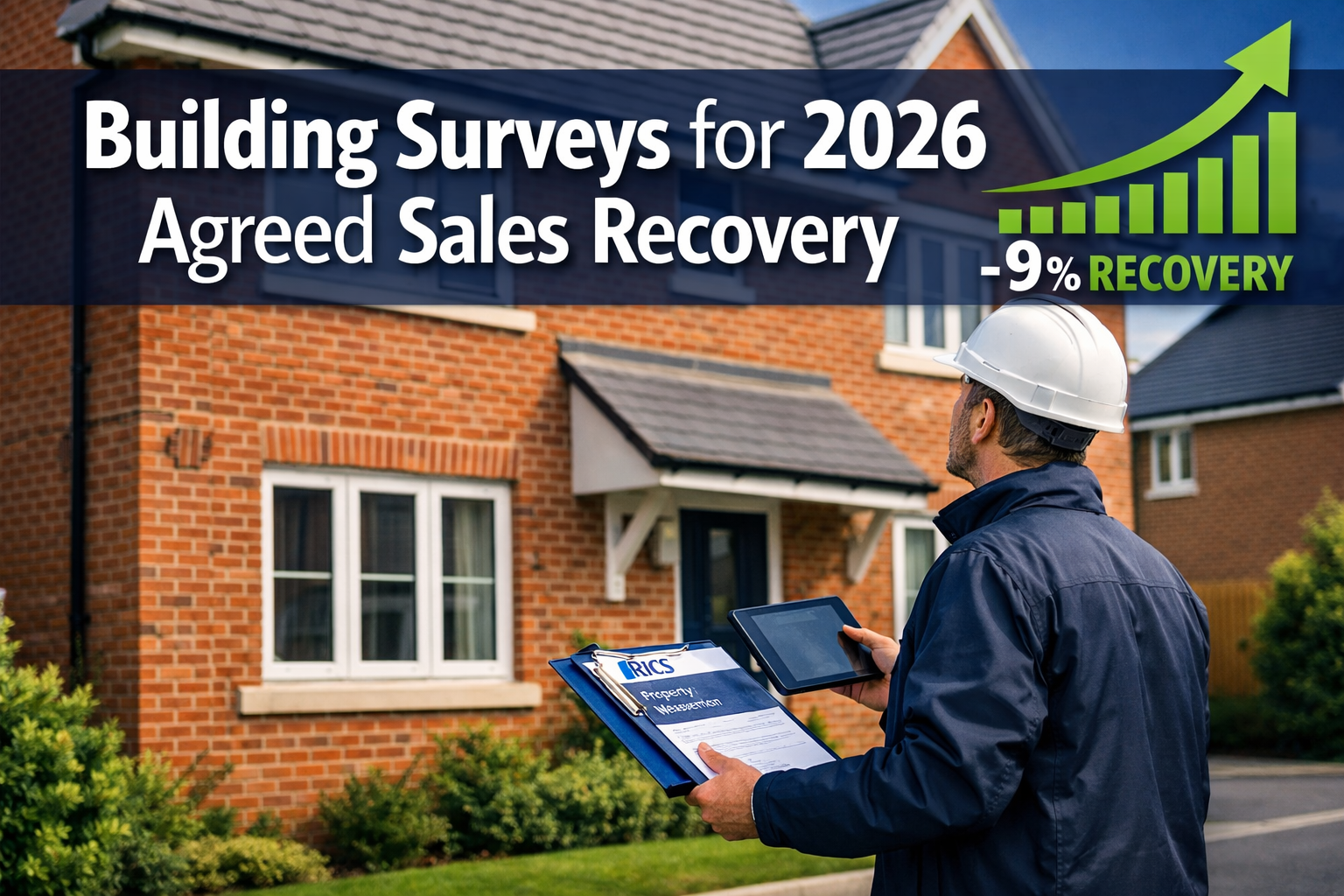
The UK residential property market is showing tentative signs of recovery in early 2026, with buyer enquiries demonstrating steady improvement despite ongoing economic headwinds. As the Royal Institution of Chartered Surveyors (RICS) reports a net balance improvement from -29% in November 2025 to -15% in January 2026[3], property professionals face a critical challenge: how to deliver comprehensive Building Survey Protocols for 2026 New Buyer Enquiries Surge: RICS Guidance on Accelerated Transaction Risk Assessments without compromising quality or due diligence. This emerging market dynamic demands updated survey methodologies that balance thoroughness with the accelerated pace buyers increasingly expect.
The February 2026 data reveals renewed market volatility, with buyer enquiries declining to -26%[1], underscoring the importance of robust survey protocols that can adapt to fluctuating demand. For chartered surveyors and property professionals, understanding how to implement Building Survey Protocols for 2026 New Buyer Enquiries Surge: RICS Guidance on Accelerated Transaction Risk Assessments becomes essential to serving clients effectively during this period of market uncertainty.
Key Takeaways
- 🔍 Market Recovery Signals: Buyer enquiries improved from -29% (November 2025) to -15% (January 2026), creating increased demand for expedited survey services[3]
- ⚡ Accelerated Protocols Required: Enhanced Level 3 survey methodologies enable thorough risk assessments within compressed timeframes without sacrificing quality
- 📊 RICS Standards Evolution: The upcoming Home Survey Standard 2nd edition addresses technological changes and consumer insights for modern property transactions[2]
- 🏠 Risk Assessment Priority: Comprehensive structural evaluation remains critical even as transaction speeds increase during market recovery phases
- 🎯 Regional Variation Impact: Survey protocols must account for significant regional divergence, with London's 12-month price expectations dropping from +56% to +7%[1]
Understanding the 2026 Market Context for Building Survey Protocols
The January 2026 Market Recovery
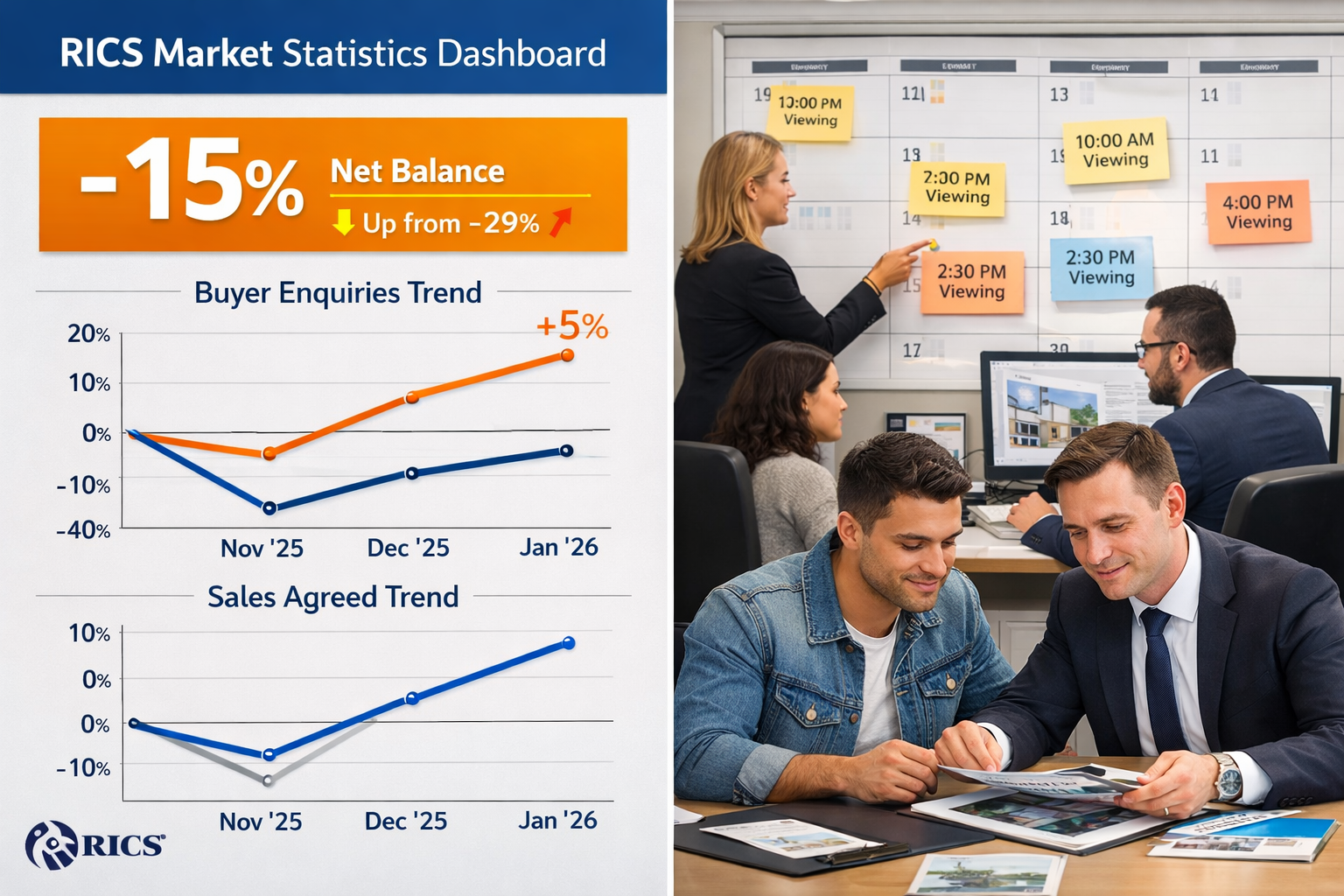
The early months of 2026 have presented a complex picture for the UK residential property market. January data showed genuine improvement, with buyer enquiries reaching a net balance of -15%, marking a significant recovery from the -29% recorded in November 2025[3]. This improvement suggested growing confidence among potential purchasers, creating increased pressure on survey professionals to deliver timely assessments.
However, February's data revealed the fragility of this recovery, with the headline net balance declining sharply to -26%, reflecting renewed concerns over the interest rate outlook[1]. This volatility underscores why Building Survey Protocols for 2026 New Buyer Enquiries Surge: RICS Guidance on Accelerated Transaction Risk Assessments must be flexible enough to accommodate both surges in demand and sudden contractions.
Price Stabilization and Regional Divergence
House prices at the national level appear to be stabilizing as of January 2026, with the net balance improving to -10% from a low of -19% in October 2025[3]. This stabilization creates a more predictable environment for property valuations, though significant regional variations persist.
The regional divergence is particularly striking in London, where 12-month price expectations dropped dramatically from +56% in January to just +7% in February[1]. For surveyors conducting RICS building surveys, these regional variations necessitate location-specific risk assessment protocols that account for local market dynamics.
Agreed Sales and Future Outlook
Agreed sales in February 2026 remained subdued at a net balance of -12%, though the longer-term 12-month sales outlook maintains positivity at +17%[1]. This disconnect between current activity and future expectations creates a unique environment where buyers who do enter the market are often highly motivated and seeking expedited transactions.
The positive 12-month outlook suggests that surveyors should prepare capacity for potential increases in instruction volumes, making efficient survey protocols essential. Those offering Level 2 homebuyer surveys and comprehensive Level 3 assessments must balance thoroughness with turnaround time expectations.
Implementing Building Survey Protocols for 2026 New Buyer Enquiries Surge: Enhanced Level 3 Methodologies
Core Components of Accelerated Level 3 Surveys
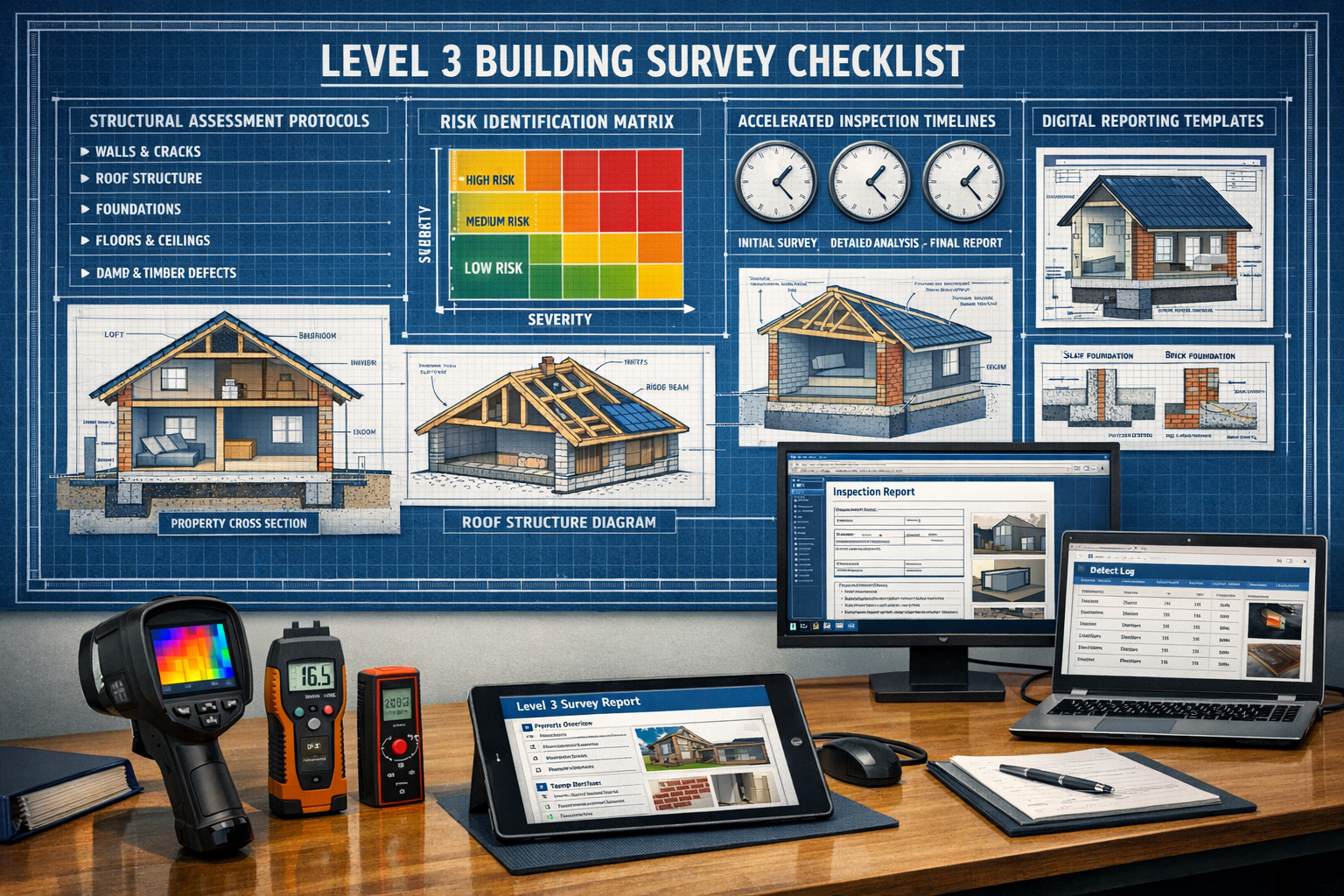
The RICS Level 3 Building Survey remains the most comprehensive inspection available to property buyers, particularly suited for older properties, those of unusual construction, or buildings requiring significant renovation. In 2026's recovering market, implementing accelerated protocols requires structured approaches that maintain inspection quality while reducing overall transaction timelines.
Essential Level 3 Survey Components:
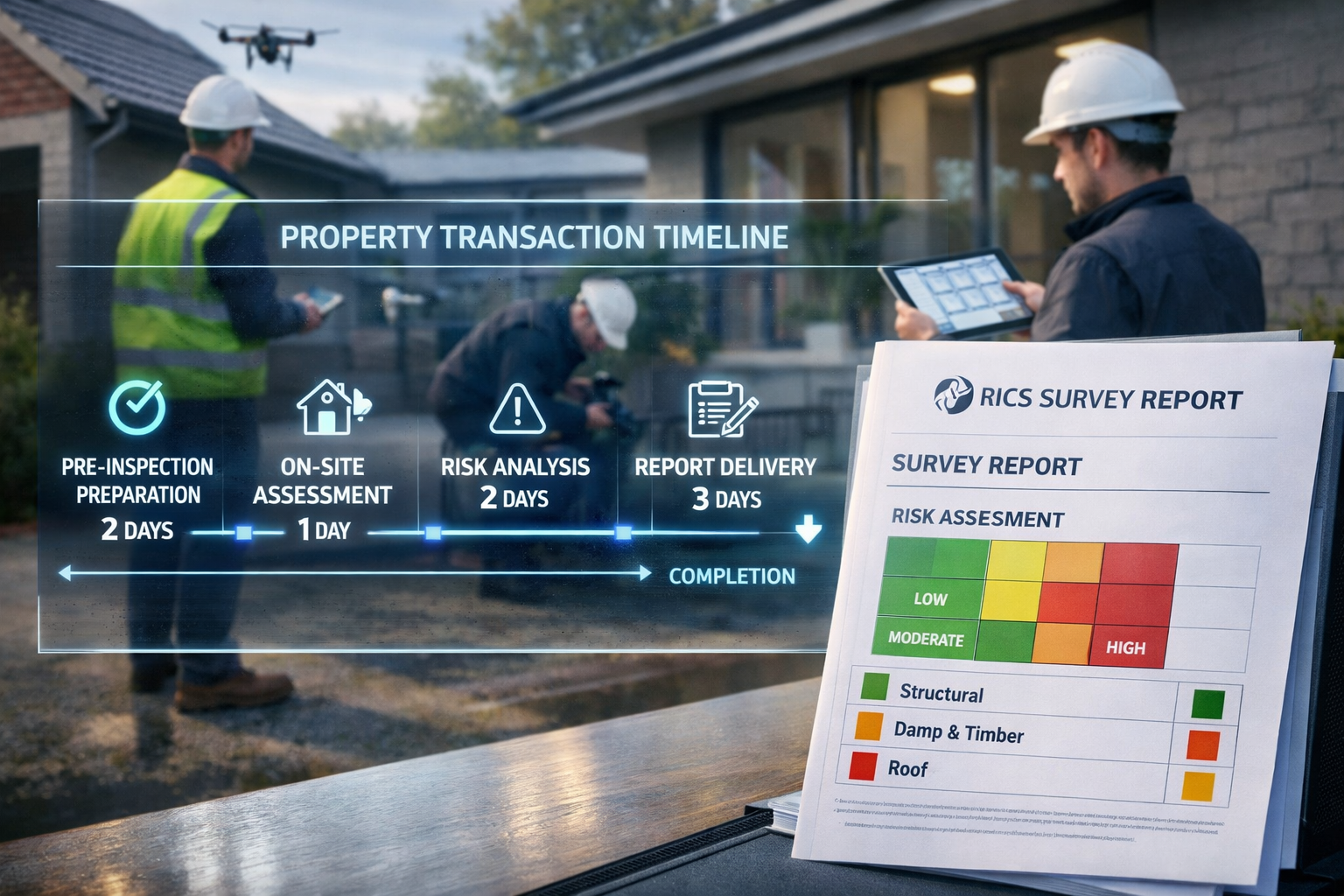
| Survey Element | Standard Timeframe | Accelerated Protocol | Risk Mitigation |
|---|---|---|---|
| Pre-inspection research | 2-3 days | 1 day (digital records) | Comprehensive database access |
| On-site inspection | 4-6 hours | 4-6 hours (unchanged) | No compromise on physical assessment |
| Specialist investigations | 3-5 days | 2-3 days (pre-booked) | Standing arrangements with specialists |
| Report compilation | 5-7 days | 3-4 days | Structured templates with AI assistance |
| Client consultation | 2-3 days | 1 day | Immediate digital delivery |
The on-site inspection duration should never be compressed, as this represents the core value proposition of a RICS Level 3 building survey. Time savings must come from administrative efficiency and preparation, not reduced inspection thoroughness.
Pre-Inspection Preparation Protocols
Effective accelerated surveys begin with comprehensive pre-inspection preparation. Surveyors should establish standardized checklists that ensure all necessary information is gathered before site attendance:
Pre-Inspection Checklist:
✅ Property History Research
- Land Registry records and title documentation
- Previous survey reports (if available)
- Planning permission history
- Building regulation approval records
- Environmental search data
✅ Technical Preparation
- Equipment calibration verification
- Weather forecast review for external inspections
- Access arrangements confirmed with all parties
- Specialist sub-contractor availability confirmed
- Digital reporting templates prepared with property-specific data
✅ Client Communication
- Survey scope and limitations clearly explained
- Timeline expectations established
- Fee structure confirmed
- Insurance documentation provided
- Emergency contact protocols established
On-Site Inspection Efficiency
While inspection duration should not be reduced, efficiency can be enhanced through systematic approaches. Modern surveying technology plays a crucial role in accelerated protocols without compromising assessment quality.
Technology-Enhanced Inspection Methods:
🔧 Digital Documentation
- Tablet-based inspection software with pre-populated property data
- Voice-to-text notation for real-time observations
- Geo-tagged photography with automatic categorization
- Thermal imaging for moisture and insulation assessment
- Drone surveys for roof and chimney inspection
🔧 Systematic Inspection Sequence
- Exterior envelope assessment (walls, roof, foundations)
- Interior structural elements (floors, walls, ceilings)
- Building services (heating, electrical, plumbing)
- Specific defect investigations requiring detailed examination
- Environmental concerns (damp, timber decay, asbestos)
Risk Assessment Matrix for Accelerated Transactions
The RICS guidance emphasizes that accelerated timelines must not compromise risk identification. Implementing a structured risk assessment matrix ensures critical issues receive appropriate attention regardless of transaction speed.
Priority Risk Categories:
Category 1: Immediate Safety Concerns ⚠️
- Structural instability requiring urgent attention
- Electrical hazards presenting immediate danger
- Gas safety issues
- Severe water ingress causing active damage
- Asbestos exposure risks
Category 2: Significant Defects Affecting Value 🔴
- Subsidence or settlement evidence
- Roof structure deterioration
- Damp penetration affecting multiple areas
- Defective drainage systems
- Timber decay in structural elements
Category 3: Maintenance and Future Planning 🟡
- Routine maintenance requirements
- Component lifecycle planning
- Energy efficiency improvements
- Cosmetic repairs
- Accessibility modifications
This prioritization ensures buyers receive clear guidance on which issues require immediate attention, negotiation leverage, or long-term planning, even when survey delivery is expedited.
RICS Standards Evolution and Building Survey Protocols for 2026 New Buyer Enquiries Surge
The Home Survey Standard 2nd Edition
RICS is progressing the Home Survey Standard 2nd edition, with feedback highlighting the need to strengthen certain areas and provide clarification reflecting consumer insight and technological changes[2]. This evolution directly addresses the challenges surveyors face in 2026's dynamic market environment.
The updated standard is expected to incorporate:
📋 Enhanced Consumer Communication
- Clearer explanation of survey scope and limitations
- Improved risk communication methodologies
- Standardized terminology across all survey levels
- Digital delivery standards and accessibility requirements
📋 Technology Integration Guidelines
- Acceptable use of remote inspection technologies
- Digital documentation standards
- Thermal imaging and moisture detection protocols
- Drone survey integration for inaccessible areas
📋 Accelerated Transaction Protocols
- Guidance on maintaining quality during expedited timelines
- Risk assessment prioritization frameworks
- Client expectation management strategies
- Professional liability considerations
Future Homes and Buildings Standards Impact
The UK Government's publication of Future Homes and Buildings Standards represents a significant development that RICS has welcomed as strengthening building regulations to deliver low-carbon, energy-efficient homes[2]. These standards have direct implications for survey protocols in 2026 and beyond.
Surveyors conducting RICS home surveys must now assess properties against evolving energy efficiency benchmarks, including:
🏡 Energy Performance Considerations
- Current EPC rating and improvement potential
- Insulation standards across walls, roof, and floors
- Heating system efficiency and low-carbon alternatives
- Window and door thermal performance
- Renewable energy installation feasibility
🏡 Future-Proofing Assessment
- Adaptability for heat pump installation
- Electrical capacity for vehicle charging
- Solar panel structural suitability
- Ventilation system adequacy
- Water efficiency measures
Integration with Commercial Survey Standards
While residential surveys dominate the 2026 buyer enquiry surge, commercial property transactions also benefit from accelerated protocols. Commercial building surveys require similar attention to risk assessment while accommodating business transaction timelines.
The principles of Building Survey Protocols for 2026 New Buyer Enquiries Surge: RICS Guidance on Accelerated Transaction Risk Assessments apply across both sectors, with commercial surveys requiring additional considerations:
- Compliance with business use regulations
- Health and safety assessment for employee occupation
- Accessibility requirements under equality legislation
- Environmental impact assessments
- Lease obligation compliance
Specialist Survey Requirements in Accelerated Transactions
Coordinating Specialist Investigations
Comprehensive Level 3 surveys often require specialist investigations that extend beyond the chartered surveyor's core expertise. Accelerated transaction protocols must include efficient coordination with specialist consultants.
Common Specialist Requirements:
🔬 Structural Engineering
When significant structural concerns are identified, residential structural engineering input becomes essential. Establishing relationships with structural engineers who can provide rapid response reduces overall transaction timelines.
🔬 Damp and Timber Specialists
Moisture-related issues remain among the most common defects identified in UK properties. Coordinating damp surveys as part of the initial inspection, rather than as a subsequent investigation, significantly accelerates the process.
🔬 Asbestos Surveys
For properties built before 2000, asbestos surveys may be necessary. Pre-booking asbestos consultants for same-day or next-day attendance ensures this critical safety assessment doesn't delay transactions.
🔬 Roof Specialists
When roof access is limited or safety concerns prevent direct inspection, roof surveys using specialist access equipment or drone technology provide comprehensive assessment without scheduling delays.
Digital Reporting and Client Communication
Modern survey reporting has evolved significantly from traditional paper-based documents. Digital reporting platforms enable accelerated delivery while enhancing client understanding through interactive features.
Digital Reporting Best Practices:
✍️ Structured Report Templates
- Pre-populated property information from Land Registry data
- Standardized section formatting for consistency
- Automated risk categorization based on surveyor inputs
- Integrated photographic evidence with annotations
✍️ Interactive Elements
- Clickable navigation between report sections
- Expandable technical explanations for non-specialist readers
- Video walkthroughs for complex defects
- Cost estimation tools for identified repairs
✍️ Immediate Delivery
- Secure cloud-based report delivery within hours of completion
- Mobile-optimized formats for on-the-go review
- Automated client notification systems
- Integrated follow-up consultation scheduling
Quality Assurance in Accelerated Survey Protocols
Maintaining Professional Standards Under Time Pressure
The fundamental challenge of Building Survey Protocols for 2026 New Buyer Enquiries Surge: RICS Guidance on Accelerated Transaction Risk Assessments lies in maintaining rigorous professional standards while meeting client expectations for speed. Quality assurance mechanisms become critical safeguards.
Quality Control Checkpoints:
🎯 Pre-Inspection Quality Gates
- Verification that all pre-inspection research is complete
- Equipment functionality testing
- Template accuracy verification
- Client instruction clarity confirmation
🎯 During-Inspection Protocols
- Systematic inspection sequence adherence
- Photographic evidence sufficiency checks
- Voice note transcription accuracy review
- Safety protocol compliance verification
🎯 Post-Inspection Review
- Peer review of complex or unusual findings
- Technical accuracy verification
- Report clarity and completeness assessment
- Risk categorization consistency check
Professional Indemnity Considerations
Accelerated survey protocols must not increase professional liability exposure. Insurance providers expect surveyors to maintain consistent standards regardless of transaction timelines.
Risk Management Strategies:
⚖️ Clear Scope Definition
- Written confirmation of survey level and inclusions
- Explicit limitation statements for areas not inspected
- Weather condition documentation affecting external assessment
- Access restriction documentation
⚖️ Evidence Documentation
- Comprehensive photographic records
- Detailed written observations supporting conclusions
- Specialist report integration and referencing
- Client communication records
⚖️ Continuing Professional Development
- Regular training on evolving survey technologies
- RICS guidance update implementation
- Building regulation change awareness
- Market condition understanding
Regional Considerations for Survey Protocols
Adapting to Local Market Dynamics
The significant regional variation evident in 2026 market data requires surveyors to adapt protocols to local conditions. A chartered surveyor in Berkshire may encounter different buyer expectations and property characteristics than colleagues working in other regions.
Regional Adaptation Factors:
🗺️ Property Age and Construction Types
- Victorian terraces in urban areas requiring specific assessment approaches
- Post-war construction common in suburban developments
- Modern new-build properties with warranty considerations
- Listed buildings requiring heritage expertise
🗺️ Local Market Conditions
- Areas experiencing price growth requiring different valuation contexts
- Regions with declining values affecting repair cost negotiations
- High-demand postcodes with competitive transaction timelines
- Rural areas with limited specialist availability
🗺️ Environmental Considerations
- Flood risk areas requiring detailed drainage assessment
- Coastal properties with salt erosion concerns
- Former industrial areas with contamination potential
- Conservation areas with planning restriction implications
Building Local Specialist Networks
Efficient accelerated protocols depend on established relationships with local specialists who understand regional property characteristics and can provide rapid response when required.
Network Development Priorities:
- Structural engineers familiar with local ground conditions
- Damp specialists experienced with regional climate patterns
- Drainage contractors understanding local infrastructure
- Roofing specialists knowledgeable about regional construction methods
- Asbestos consultants with rapid laboratory access
Client Education and Expectation Management
Explaining Survey Options in a Recovering Market
As buyer enquiries increase during market recovery phases, many clients are first-time purchasers or individuals who haven't transacted in property for many years. Educating clients about choosing the right property survey becomes essential for setting appropriate expectations.
Client Education Framework:
📚 Survey Level Comparison
- Level 1 (Condition Report): Basic overview for new-build or modern properties
- Level 2 (HomeBuyer Report): Standard assessment for conventional properties in reasonable condition
- Level 3 (Building Survey): Comprehensive inspection for older, unusual, or defective properties
📚 Timeline Expectations
- Realistic timeframes for each survey level
- Factors that may extend investigation periods
- Specialist investigation scheduling considerations
- Report delivery and consultation arrangements
📚 Cost-Benefit Analysis
- Survey costs relative to property purchase price
- Potential savings from negotiation leverage
- Risk mitigation value of comprehensive assessment
- Long-term maintenance planning benefits
Managing Accelerated Transaction Pressures
Buyers in competitive markets often face pressure to waive survey conditions or accept abbreviated inspections. Professional surveyors have an ethical obligation to advise clients about the risks of compromising due diligence.
Pressure Point Management:
⏱️ Vendor Pressure
When sellers demand rapid survey completion, surveyors should:
- Explain the minimum time required for thorough assessment
- Offer realistic accelerated timelines with quality maintenance
- Document any limitations imposed by rushed schedules
- Advise clients of increased risk from compressed inspections
⏱️ Competitive Bidding Situations
In multiple-offer scenarios, buyers may seek survey waivers. Guidance should include:
- Alternative approaches such as pre-offer surveys
- Risk assessment of proceeding without full inspection
- Insurance product availability for uninspected purchases
- Post-completion survey options and limitations
⏱️ Chain Pressure
When property chains create timeline pressure, strategies include:
- Coordinating simultaneous surveys across chain properties
- Prioritizing critical risk assessment over cosmetic details
- Phased reporting with preliminary findings followed by full documentation
- Clear communication with all chain parties about realistic timelines
Technology Integration in Modern Survey Protocols
Digital Tools Enhancing Survey Efficiency
The evolution of surveying technology has been accelerated by market demands for faster turnaround times without quality compromise. Modern surveyors leverage various digital tools to enhance efficiency.
Technology Toolkit:
💻 Mobile Inspection Software
- Cloud-synchronized data capture during site visits
- Offline functionality for properties with poor connectivity
- Automated report generation from field observations
- Integration with photographic evidence
💻 Diagnostic Equipment
- Thermal imaging cameras for moisture and insulation assessment
- Electronic moisture meters with data logging
- Laser distance measurers for accurate dimensioning
- Borescope cameras for cavity and void inspection
💻 Remote Assessment Technologies
- Drone surveys for roof and chimney inspection
- 3D scanning for accurate spatial documentation
- Video consultation for client walkthroughs
- Virtual reality property tours for pre-inspection familiarization
Artificial Intelligence and Survey Analysis
Emerging AI technologies offer potential for enhancing survey efficiency while maintaining human professional judgment. Applications include:
🤖 Pattern Recognition
- Automated defect identification from photographic evidence
- Historical defect pattern analysis for property types
- Risk probability assessment based on property characteristics
- Maintenance cost prediction algorithms
🤖 Report Generation Assistance
- Automated technical description generation
- Standardized terminology consistency checking
- Risk categorization suggestions based on observations
- Repair cost estimation from defect databases
🤖 Quality Assurance
- Completeness verification for inspection checklists
- Consistency checking across report sections
- Anomaly detection for unusual findings
- Peer comparison for professional development
Future Trends in Building Survey Protocols
Evolving Market Expectations
The 2026 market recovery provides insights into how buyer expectations continue to evolve. Future survey protocols will need to accommodate:
🔮 Sustainability Assessment Integration
- Comprehensive energy efficiency evaluation
- Carbon footprint estimation
- Renewable energy installation feasibility
- Climate resilience assessment
🔮 Smart Home Technology Evaluation
- Connected device infrastructure assessment
- Cybersecurity vulnerability identification
- System integration compatibility
- Future upgrade pathways
🔮 Health and Wellbeing Factors
- Indoor air quality assessment
- Natural light optimization evaluation
- Acoustic performance measurement
- Accessibility and aging-in-place considerations
Regulatory Developments
The Future Homes and Buildings Standards represent just one aspect of evolving regulatory frameworks affecting property surveys. Anticipated developments include:
📜 Enhanced Energy Performance Requirements
- Stricter minimum EPC standards for property transactions
- Mandatory retrofit assessments for older properties
- Renewable energy installation obligations
- Energy performance certificate validity extensions
📜 Building Safety Legislation
- Enhanced fire safety assessment requirements
- Structural integrity certification for certain building types
- Cladding safety verification protocols
- Resident safety information provision
📜 Climate Adaptation Measures
- Mandatory flood resilience assessment in risk areas
- Overheating risk evaluation for summer conditions
- Water efficiency and drought resilience measures
- Biodiversity net gain considerations
Conclusion
The Building Survey Protocols for 2026 New Buyer Enquiries Surge: RICS Guidance on Accelerated Transaction Risk Assessments represent a critical evolution in professional surveying practice. As market data demonstrates tentative recovery in buyer enquiries—improving from -29% in November 2025 to -15% in January 2026[3]—the property industry faces renewed demand for efficient yet comprehensive survey services.
The key to successful implementation lies in recognizing that acceleration must come from enhanced preparation, technology integration, and process efficiency, never from compromising inspection thoroughness or risk assessment quality. The comprehensive building surveys that protect buyers' interests remain as essential in 2026's recovering market as in any other period.
Actionable Next Steps for Property Professionals
For Chartered Surveyors:
- Review and update inspection protocols to incorporate digital documentation tools
- Establish relationships with specialist consultants for rapid response coordination
- Implement structured quality assurance checkpoints throughout the survey process
- Invest in continuing professional development focused on emerging technologies
- Develop client education materials explaining survey options and realistic timelines
For Property Buyers:
- Engage qualified chartered surveyors early in the property search process
- Understand the different survey levels and select appropriate scope for the property type
- Resist pressure to compromise survey thoroughness for transaction speed
- Review survey reports comprehensively and seek clarification on unclear findings
- Use survey findings strategically in purchase negotiations and long-term planning
For Industry Stakeholders:
- Support RICS standards development through consultation participation
- Advocate for realistic transaction timelines that accommodate proper due diligence
- Invest in technology infrastructure supporting efficient survey delivery
- Promote consumer education about the value of professional surveys
- Monitor market trends and adapt service offerings to evolving client needs
The February 2026 data showing renewed volatility, with buyer enquiries declining to -26%[1], reinforces that market conditions remain uncertain. However, the positive 12-month outlook at +17%[1] suggests that surveyors who implement robust, efficient protocols now will be well-positioned to serve clients effectively throughout the anticipated recovery period.
Professional building surveys remain the cornerstone of informed property purchasing decisions. By embracing enhanced protocols that balance thoroughness with efficiency, the surveying profession continues to protect buyers' interests while adapting to the dynamic demands of the 2026 property market.
References
[1] Uk Residential Survey February 2026 – https://www.rics.org/news-insights/uk-residential-survey-february-2026
[2] Rics Ceo Comments On The Publication Of The Future Homes And Building Standards – https://www.rics.org/news-insights/rics-ceo-comments-on-the-publication-of-the-future-homes-and-building-standards
[3] Uk Resi Survey Jan 2026 Report Shows Early Signs Market Recovery Despite Caution – https://www.rics.org/news-insights/uk-resi-survey-jan-2026-report-shows-early-signs-market-recovery-despite-caution