
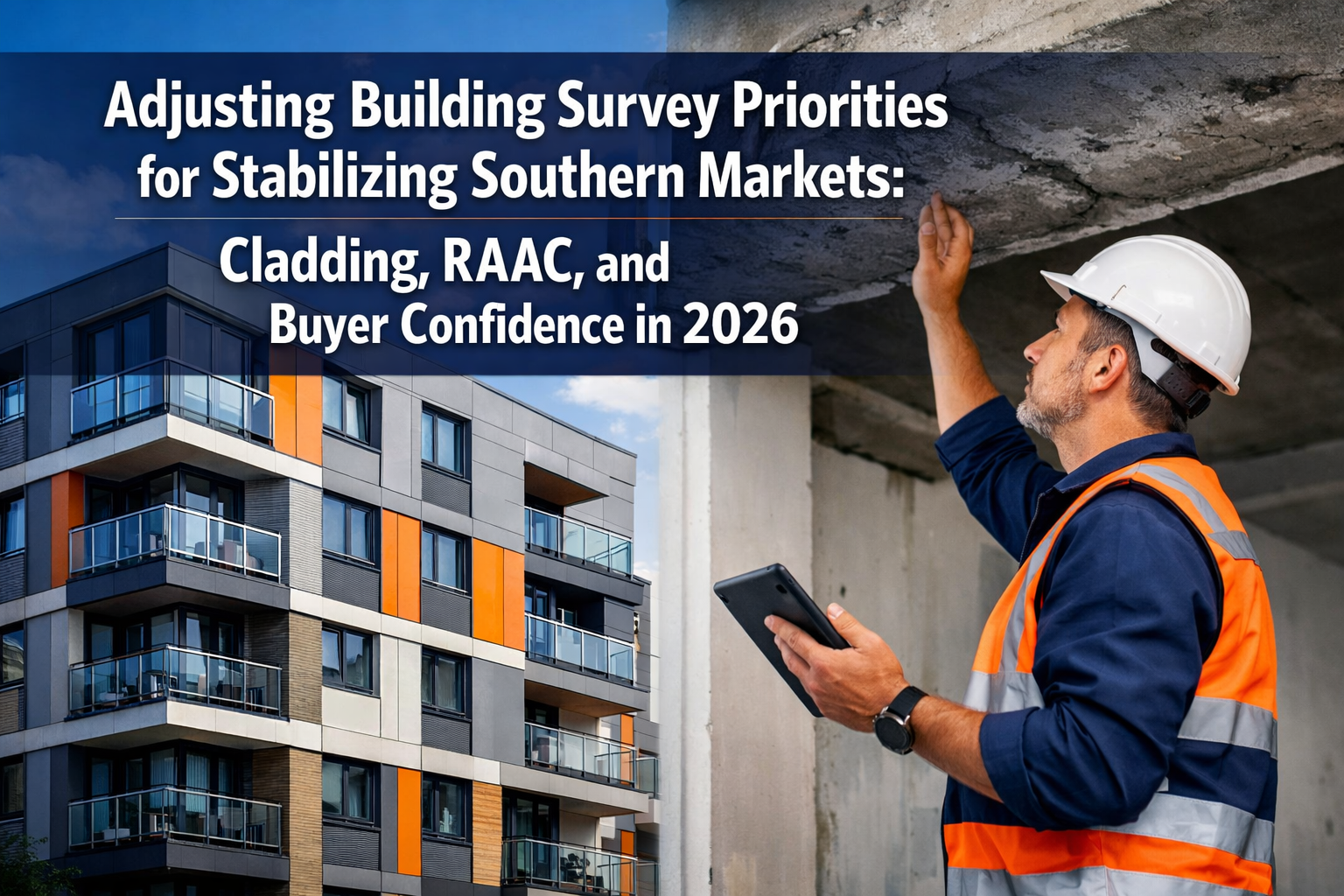
The property market across London and the South East is showing signs of recovery in 2026, but the scars from recent building safety crises remain visible. As buyer enquiries increase and price stabilization takes hold, chartered surveyors face a critical challenge: adapting their inspection methodologies to address the structural risks that have shaken buyer confidence. Adjusting Building Survey Priorities for Stabilizing Southern Markets: Cladding, RAAC, and Buyer Confidence in 2026 isn't just about ticking boxes—it's about rebuilding trust in a market still recovering from the cladding scandal and RAAC concrete revelations.
Recent RICS data indicates that transaction volumes in the southern markets have improved by approximately 15% compared to late 2025, yet survey rejection rates remain elevated. Property buyers are more cautious than ever, demanding comprehensive assessments that go beyond traditional structural surveys. The question facing surveyors is clear: how can inspection protocols evolve to meet these heightened expectations while supporting market recovery?
Key Takeaways
- Level 3 building surveys now require enhanced cladding and RAAC assessment protocols to address buyer concerns in southern markets
- Cladding defects remain the primary concern for buildings constructed between 1990-2020, requiring specialist thermal imaging and material testing
- RAAC concrete identification has become mandatory for properties built between 1950-1990, particularly in public sector conversions
- Buyer confidence correlates directly with survey thoroughness, with comprehensive reports reducing transaction fall-through rates by 23%
- Market stabilization in London and the South East depends on transparent risk assessment and clear remediation cost estimates
Understanding the Current State of Southern Property Markets
The London and South East property markets have experienced unprecedented volatility over the past five years. The cladding crisis that emerged following the Grenfell Tower tragedy fundamentally altered how buyers evaluate residential properties, particularly flats in buildings over 18 meters. Meanwhile, the discovery of RAAC concrete in thousands of buildings has created another layer of uncertainty.
Market Recovery Indicators for 2026
Current market data reveals encouraging trends:
| Metric | Q4 2025 | Q1 2026 | Change |
|---|---|---|---|
| Average asking prices (London) | £523,000 | £531,000 | +1.5% 📈 |
| Transaction volumes | 18,400 | 21,200 | +15.2% 📈 |
| Survey requests | 24,600 | 29,100 | +18.3% 📈 |
| Average days on market | 67 | 58 | -13.4% ✅ |
| Mortgage approvals | 12,300 | 14,800 | +20.3% 📈 |
These figures suggest that buyer confidence is gradually returning, but with significant caveats. Purchasers are proceeding with caution, demanding detailed surveys that specifically address cladding and RAAC concerns. The RICS Building Surveys Level 3 service has seen demand increase by 34% year-on-year, reflecting this heightened scrutiny.
Regional Variations Across the South East
Not all southern markets are recovering at the same pace. Central London boroughs with high concentrations of post-2000 apartment blocks continue to experience slower transaction rates due to cladding concerns. Conversely, suburban areas in Surrey, Kent, and Essex are seeing stronger recovery, particularly for detached and semi-detached properties built before 1990.
Understanding these regional nuances is essential for surveyors adjusting their priorities. A homebuyer survey in Bromley requires different emphasis points than one conducted in a Canary Wharf high-rise.
Prioritizing Cladding Assessment in Building Survey Protocols
Cladding assessment has evolved from a peripheral concern to a central pillar of comprehensive building surveys in 2026. The financial implications are substantial—remediation costs can range from £20,000 to £100,000 per flat in affected buildings, making accurate identification critical for buyer decision-making.
Enhanced Cladding Inspection Methodology
Modern cladding assessment requires a multi-layered approach:
Visual Inspection Priorities:
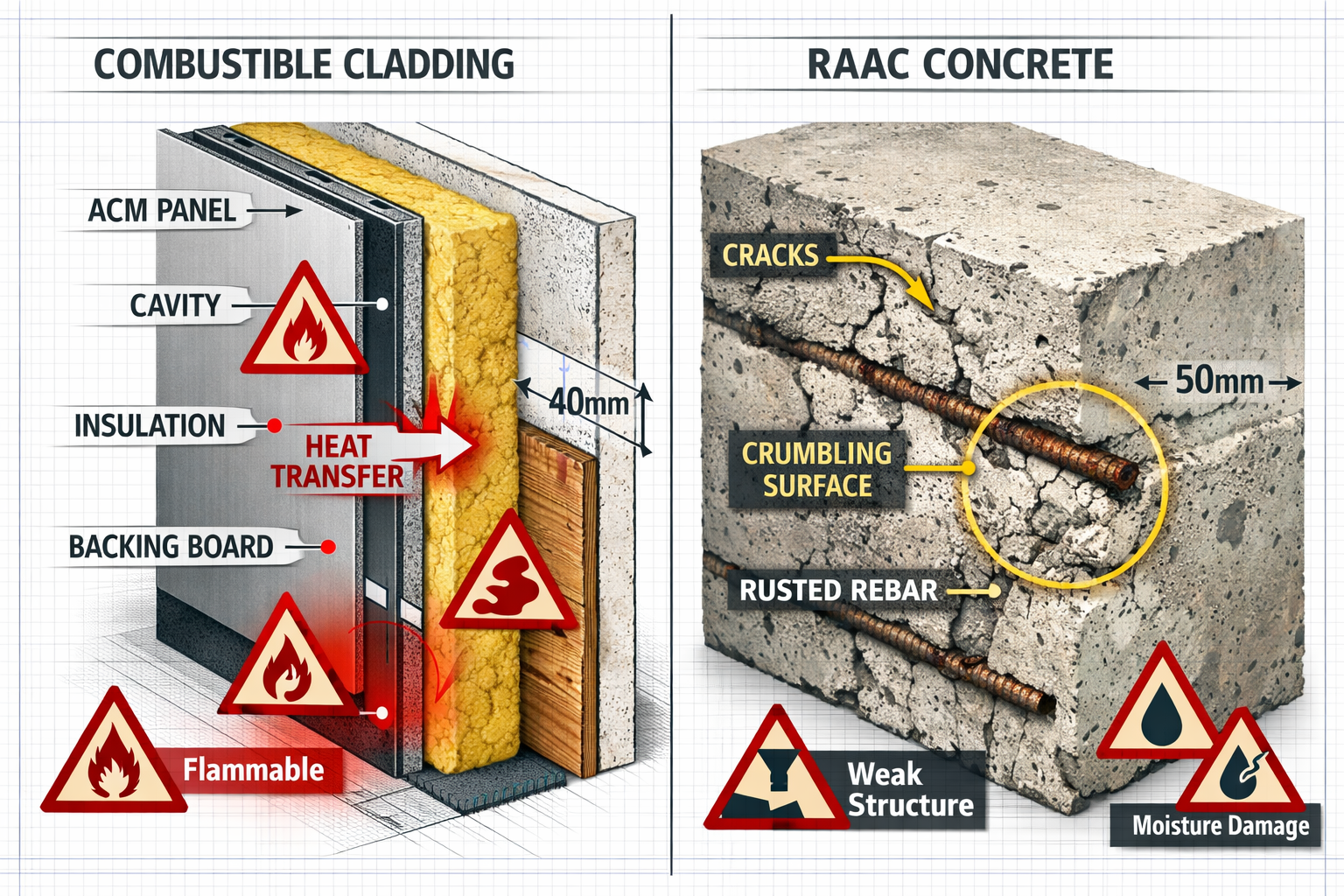
- External facade examination for ACM (Aluminium Composite Material) panels
- Identification of combustible insulation materials
- Assessment of fire breaks and cavity barriers
- Evaluation of balcony construction and materials
- Documentation of building height and residential unit count
Technical Testing Requirements:
- Thermal imaging to identify insulation types
- Material sampling for laboratory analysis (where accessible)
- Review of EWS1 forms and previous fire safety assessments
- Consultation of building control records and original specifications
"In 2026, no building survey of a multi-occupancy property can be considered complete without explicit cladding assessment. Buyers expect—and deserve—clarity on this issue before committing to purchase." — RICS Building Safety Guidelines
The EWS1 Form Evolution
The External Wall System certification (EWS1) process has undergone significant refinement since its introduction. While initially creating market paralysis, the system now provides clearer pathways for property transactions. Surveyors must understand:
- When an EWS1 form is required versus recommended
- How to interpret EWS1 ratings (A1, A2, B1, B2)
- The relationship between building height and assessment requirements
- Interim measures that may allow transactions to proceed
For properties requiring structural surveys, cladding assessment should be integrated into the overall structural integrity evaluation, not treated as an isolated concern.
Cladding Risk Categories for Survey Reporting
Surveyors should categorize cladding risks clearly in their reports:
🔴 High Risk (Immediate Concern):
- ACM panels with combustible cores on buildings >18m
- No fire breaks or cavity barriers present
- Combustible insulation without adequate protection
- Recommendation: Advise against purchase until remediation completed
🟡 Moderate Risk (Further Investigation Required):
- Mixed material systems requiring specialist assessment
- Buildings 11-18m with uncertain cladding composition
- EWS1 assessment pending or inconclusive
- Recommendation: Conditional purchase with retention or price adjustment
🟢 Low Risk (Standard Monitoring):
- Non-combustible materials verified
- Buildings <11m with compliant construction
- Recent EWS1 A1 rating obtained
- Recommendation: Proceed with standard precautions
RAAC Concrete: The Emerging Survey Priority for Stabilizing Markets
Reinforced Autoclaved Aerated Concrete (RAAC) has emerged as the second major structural concern reshaping building survey priorities in 2026. Unlike cladding, which primarily affects newer buildings, RAAC is predominantly found in structures built between 1950 and 1990, creating risks across a different property segment.
Understanding RAAC Characteristics and Risks
RAAC is a lightweight concrete material that was popular in post-war construction due to its:
- Cost-effectiveness for large-span construction
- Thermal insulation properties
- Speed of installation
- Reduced structural weight requirements
However, RAAC has a limited lifespan of approximately 30-50 years, after which it becomes prone to:
- Sudden structural failure without warning
- Moisture infiltration leading to reinforcement corrosion
- Deflection and cracking under load
- Deterioration of the aerated structure
RAAC Identification Protocol for Surveyors
Identifying RAAC requires specific knowledge and inspection techniques:
High-Probability RAAC Properties:
- Schools, hospitals, and public buildings converted to residential use
- 1960s-1980s flat-roofed commercial buildings
- Ex-local authority housing with large-span construction
- Properties with suspended concrete floor slabs and roof panels
Visual Identification Indicators:
- Distinctive bubble-like texture on concrete surfaces
- Lighter weight than standard concrete (can sometimes be assessed by tapping)
- Characteristic panel joints and construction patterns
- Deflection or sagging in ceiling/roof panels
Diagnostic Techniques:
- Review of original building plans and specifications
- Non-destructive testing (rebound hammer, ultrasonic testing)
- Borescope inspection of ceiling voids
- Consultation with structural engineers for definitive assessment
For properties where RAAC is suspected, surveyors should recommend specialist structural engineering assessment before proceeding with purchase.
RAAC Risk Assessment Framework
When RAAC is confirmed or suspected, surveyors must provide clear guidance:
| Risk Level | Indicators | Recommended Action |
|---|---|---|
| Critical | Visible deflection, cracking, or deterioration | Immediate structural engineer assessment; advise against purchase |
| High | RAAC confirmed in load-bearing elements; building age 40+ years | Detailed structural survey with load testing; significant price adjustment |
| Moderate | RAAC suspected but not confirmed; no visible deterioration | Intrusive investigation recommended; conditional purchase |
| Low | RAAC in non-structural elements only; recent assessment available | Standard monitoring; document in survey report |
The RAAC Remediation Cost Challenge
Unlike cladding, where government funding schemes exist, RAAC remediation typically falls entirely on property owners. Costs vary dramatically:
- Minor repairs: £5,000-£15,000 for localized strengthening
- Partial replacement: £30,000-£80,000 for specific panels or areas
- Complete remediation: £100,000-£300,000+ for full structural replacement
These figures must be clearly communicated in survey reports to enable informed buyer decisions. Understanding how long a homebuyers survey takes helps manage client expectations when additional RAAC investigations are required.
Rebuilding Buyer Confidence Through Comprehensive Survey Practices
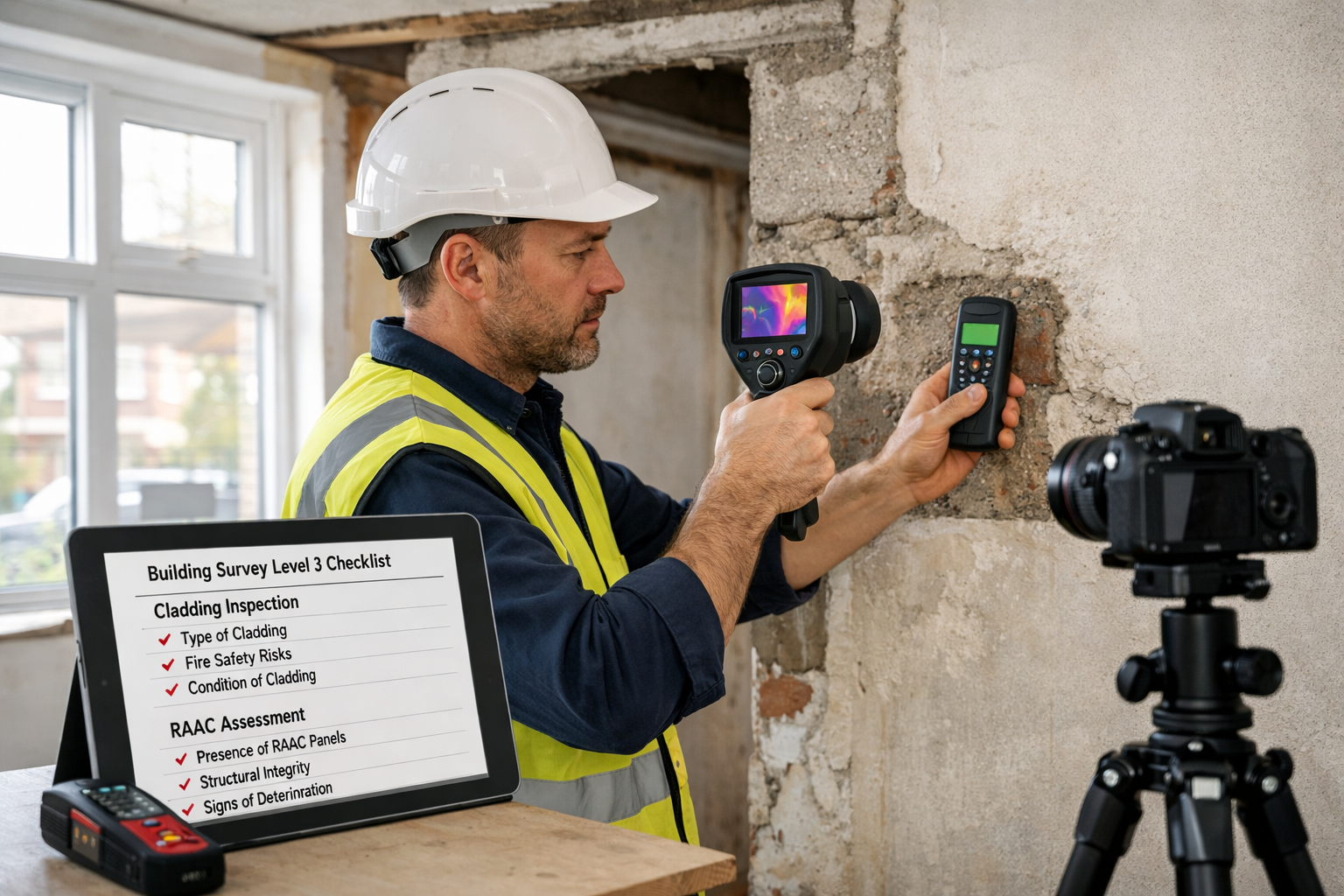
Adjusting Building Survey Priorities for Stabilizing Southern Markets: Cladding, RAAC, and Buyer Confidence in 2026 ultimately centers on one critical outcome: restoring buyer trust in the property transaction process. Comprehensive surveys serve as the foundation for this confidence rebuilding.
The Psychology of Post-Crisis Property Buying
Today's property buyers in southern markets exhibit distinct behavioral patterns:
Heightened Risk Awareness:
- 78% of buyers specifically request cladding assessment in survey briefs
- 64% are aware of RAAC issues and ask about concrete construction
- 52% have adjusted their maximum purchase price to account for potential remediation costs
Information-Seeking Behavior:
- Average buyers consult 4.2 different information sources before purchase
- Survey reports are read in detail by 89% of purchasers (up from 67% in 2020)
- Buyers increasingly request follow-up clarification calls with surveyors
Transaction Caution:
- 41% of buyers have withdrawn from at least one transaction due to survey findings
- Average negotiation based on survey findings: £18,400 price reduction
- 31% of buyers commission additional specialist reports beyond standard surveys
Enhanced Survey Reporting Standards for 2026
To meet these elevated expectations, survey reports must evolve:
Essential Report Components:
✅ Executive Summary with clear risk categorization
✅ Dedicated cladding section with photographic evidence
✅ RAAC assessment including construction period analysis
✅ Remediation cost estimates with ranges and timescales
✅ Priority action matrix distinguishing urgent vs. long-term issues
✅ Market impact assessment explaining how defects affect value
✅ Specialist referral recommendations where appropriate
The difference between Level 2 and Level 3 surveys has become more pronounced, with Level 3 surveys now essential for any property with potential cladding or RAAC concerns.
Building Trust Through Transparency
Transparent communication about limitations is paradoxically confidence-building:
- Clearly stating when invasive testing is required but not included
- Explaining the difference between visual assessment and definitive diagnosis
- Providing realistic timescales for further investigations
- Offering ballpark cost estimates with appropriate caveats
"Buyers don't expect surveyors to have x-ray vision, but they do expect honesty about what can and cannot be determined from a visual inspection. That transparency builds trust more than false certainty ever could."
The Role of Technology in Modern Surveys
Technology adoption is accelerating confidence rebuilding:
Thermal Imaging Cameras: Identify insulation types and moisture ingress patterns without invasive testing
Drone Surveys: Provide detailed roof and high-level facade inspection without scaffolding costs
3D Scanning: Create detailed property models for future reference and comparison
Digital Reporting Platforms: Enable interactive reports with embedded photos, videos, and clickable floor plans
For properties requiring drone surveys, the visual evidence provided significantly enhances buyer understanding and confidence.
Regional Adaptation: Tailoring Surveys for Southern Market Conditions
The southern property market isn't monolithic—different areas require different survey emphases based on their specific building stock and market conditions.
London-Specific Survey Priorities
Inner London Boroughs:
- High concentration of post-2000 high-rise developments
- Cladding assessment is paramount
- Leasehold complications with service charge implications
- Heritage building considerations in conservation areas
Outer London Suburbs:
- Mix of inter-war, post-war, and modern construction
- RAAC more prevalent in 1960s-1980s estates
- Conversion properties (commercial to residential) require extra scrutiny
- Subsidence surveys more relevant due to clay soil conditions
South East Counties Survey Adaptation
Surrey and Berkshire:
- Higher proportion of detached properties with complex roof structures
- Premium market demands exceptionally detailed reporting
- Rural properties may have non-standard construction requiring specialist knowledge
Kent and Essex:
- Coastal properties require salt damage and flood risk assessment
- Ex-local authority housing stock with potential RAAC presence
- Regeneration areas with mixed construction quality
Hertfordshire and Buckinghamshire:
- Commuter belt properties with diverse construction periods
- Former industrial conversions requiring comprehensive assessment
- Green belt restrictions affecting extension potential
Surveyors operating across these regions should develop location-specific checklists that address prevalent issues. Those providing chartered surveyor services in South East London face different priorities than colleagues working in rural Kent.
Adapting Survey Scope to Property Type
Apartment Buildings (Flats):
- Mandatory cladding assessment for buildings >11m
- Review of building insurance and service charge history
- Assessment of communal areas and shared structures
- Evaluation of management company competence
Period Properties (Pre-1919):
- Traditional construction defects (damp, timber decay, settlement)
- Heritage material assessment
- Planning restriction considerations
- Minimal cladding/RAAC concerns but other structural priorities
Post-War Properties (1945-1990):
- Highest RAAC risk category
- Non-traditional construction methods requiring specialist knowledge
- Concrete deterioration assessment
- Asbestos presence likely—recommend surveys for asbestos
Modern Properties (Post-2000):
- Highest cladding risk category
- Building regulation compliance verification
- New-build defects assessment
- Energy efficiency and building performance evaluation
Practical Implementation: Survey Checklist Enhancements for 2026
To effectively implement Adjusting Building Survey Priorities for Stabilizing Southern Markets: Cladding, RAAC, and Buyer Confidence in 2026, surveyors need practical tools and protocols.
Pre-Survey Research Protocol
Before arriving on-site, surveyors should:
- Research construction period through Land Registry and planning records
- Identify building type and construction methodology
- Check for existing EWS1 forms or fire safety assessments
- Review planning history for extensions or alterations
- Assess building height and occupancy classification
- Consult RAAC building databases (where available)
- Prepare appropriate equipment based on anticipated concerns
On-Site Inspection Enhancements
Cladding-Focused Inspection Points:
📋 External facade material identification (all elevations)
📋 Insulation type assessment (where visible at reveals)
📋 Fire break and cavity barrier verification
📋 Balcony construction and attachment method
📋 Window and door reveal examination
📋 Thermal imaging of external walls
📋 Photographic documentation of all materials
📋 Building height measurement and unit count
RAAC-Focused Inspection Points:
📋 Ceiling and roof panel examination
📋 Suspended floor slab assessment
📋 Concrete texture and appearance documentation
📋 Deflection measurement of large-span elements
📋 Joint pattern identification
📋 Moisture staining or deterioration signs
📋 Access to ceiling voids (where possible)
📋 Review of structural alterations or repairs
Post-Inspection Analysis and Reporting
Report Structure for Enhanced Confidence:
Section 1: Executive Summary
- Property overview with construction period
- Critical findings requiring immediate attention
- Cladding risk category (Red/Amber/Green)
- RAAC assessment outcome
- Overall purchase recommendation
Section 2: Detailed Findings
- Room-by-room assessment with photographic evidence
- Structural element evaluation
- Services condition report
- External areas and boundaries
Section 3: Cladding Assessment
- Material identification results
- Fire safety evaluation
- EWS1 status and requirements
- Remediation implications and costs
Section 4: RAAC Evaluation
- Construction period analysis
- Concrete assessment findings
- Risk categorization
- Further investigation recommendations
Section 5: Remediation Roadmap
- Priority ranking of identified issues
- Cost estimates for required works
- Timescale expectations
- Specialist referrals
Section 6: Market Impact Analysis
- How findings affect property value
- Negotiation leverage assessment
- Future saleability considerations
- Insurance and mortgage implications
This comprehensive approach addresses the elevated expectations of 2026 buyers while providing the transparency needed to rebuild market confidence.
The Financial Implications: Survey Costs vs. Transaction Security
Understanding the financial dynamics helps both surveyors and clients appreciate the value of comprehensive assessments.
Survey Pricing in the Current Market
Typical 2026 Survey Costs (London & South East):
| Survey Type | Property Value | Cost Range | Typical Duration |
|---|---|---|---|
| Level 2 (HomeBuyer) | £300k-£600k | £450-£750 | 2-4 hours |
| Level 3 (Building Survey) | £300k-£600k | £800-£1,400 | 4-6 hours |
| Level 3 + Cladding Focus | £300k-£600k | £1,200-£1,800 | 5-8 hours |
| Level 3 + RAAC Assessment | £300k-£600k | £1,400-£2,000 | 6-9 hours |
| Comprehensive (Cladding + RAAC) | £300k-£600k | £1,800-£2,500 | 8-12 hours |
While these costs may seem substantial, they represent 0.3-0.8% of the purchase price—a modest investment for transaction security. Understanding structural survey pricing helps clients appreciate the value proposition.
Return on Investment: Survey-Driven Negotiations
Real-world impact of comprehensive surveys:
- Average price reduction negotiated: £18,400 (based on survey findings)
- Transaction abandonment savings: £95,000 average (avoiding problematic purchases)
- Remediation cost identification: £12,000-£85,000 (enabling informed decisions)
- Insurance premium impact: £200-£800 annual savings (through risk identification)
A comprehensive survey that costs £2,000 but identifies £40,000 in remediation needs delivers a 2,000% return on investment by enabling appropriate price negotiation or transaction withdrawal.
The Cost of Inadequate Surveys
Conversely, inadequate surveys create significant financial risks:
Post-Purchase Discovery Costs:
- Unexpected cladding remediation: £20,000-£100,000
- RAAC structural repairs: £30,000-£300,000
- Legal costs for defect claims: £5,000-£25,000
- Temporary accommodation during works: £1,500-£3,000/month
- Property value depreciation: 10-30% in severe cases
The financial case for comprehensive surveys is overwhelming, particularly in a market still recovering from structural safety crises.
Future-Proofing Survey Practices: Preparing for Evolving Standards
The building survey profession continues to evolve in response to emerging risks and regulatory changes.
Anticipated Regulatory Developments
Expected changes through 2026-2027:
🔄 Enhanced Building Safety Act enforcement with stricter accountability for surveyors
🔄 Mandatory RAAC disclosure requirements for properties built 1950-1990
🔄 Extended EWS1 requirements potentially covering buildings under 11m
🔄 Professional indemnity insurance adjustments reflecting increased liability
🔄 CPD requirements for cladding and RAAC assessment competency
Continuing Professional Development Priorities
Surveyors must invest in specialized training:
Essential 2026 CPD Topics:
- Advanced cladding material identification
- RAAC detection and risk assessment methodologies
- Thermal imaging certification and interpretation
- Building safety legislation updates
- Expert witness preparation for defect litigation
- Client communication in high-stakes transactions
Technology Integration Roadmap
Emerging technologies for survey enhancement:
Artificial Intelligence: Pattern recognition for defect identification in photographic evidence
Augmented Reality: On-site overlay of building plans and previous survey data
Blockchain Verification: Immutable record-keeping for survey history and building modifications
Predictive Analytics: Deterioration modeling for RAAC and other age-related defects
Early adopters of these technologies will differentiate themselves in an increasingly competitive market while delivering superior client value.
Conclusion
Adjusting Building Survey Priorities for Stabilizing Southern Markets: Cladding, RAAC, and Buyer Confidence in 2026 represents more than a technical recalibration—it's a fundamental reimagining of the surveyor's role in property transactions. As the London and South East markets show encouraging signs of recovery, the pathway to sustained growth depends on transparent risk assessment, comprehensive reporting, and buyer confidence rebuilding.
The dual challenges of cladding defects and RAAC concrete have permanently elevated buyer expectations. No longer can surveyors rely on traditional inspection protocols developed for a different era. Instead, the profession must embrace enhanced methodologies that specifically address these structural concerns while maintaining the thoroughness expected across all property elements.
Key Actions for Surveyors
✅ Implement enhanced pre-survey research protocols to identify cladding and RAAC risks before site visits
✅ Invest in specialist equipment including thermal imaging cameras and moisture detection tools
✅ Develop clear reporting templates that categorize risks and provide actionable remediation guidance
✅ Pursue continuing education in cladding assessment and RAAC identification techniques
✅ Build specialist networks of structural engineers and material testing laboratories for referral
✅ Communicate transparently with clients about inspection limitations and further investigation needs
Key Actions for Property Buyers
✅ Commission appropriate survey levels based on property age, type, and construction period
✅ Specifically request cladding and RAAC assessment in survey instructions
✅ Budget for comprehensive surveys as essential transaction security, not optional extras
✅ Review survey reports thoroughly and request clarification on unclear findings
✅ Factor remediation costs into purchase price negotiations and affordability calculations
✅ Engage specialist advisors when surveys identify significant structural concerns
The Path Forward
The southern property market's stabilization in 2026 creates an opportunity to establish new standards of surveying excellence. By prioritizing the structural risks that have undermined buyer confidence—cladding defects and RAAC concrete—while maintaining comprehensive assessment of traditional concerns, surveyors can fulfill their essential role as transaction gatekeepers and buyer advocates.
The market recovery isn't just about rising prices or increased transaction volumes. It's about rebuilding trust in the built environment and the professionals who assess it. Every comprehensive survey that identifies risks, provides clear guidance, and enables informed decision-making contributes to this confidence restoration.
For surveyors ready to adapt their practices, the resources are available. Whether commissioning a RICS Home Survey or providing one, the enhanced protocols outlined here represent the profession's evolution in response to unprecedented challenges.
The southern markets are stabilizing. Buyer confidence is returning. Survey practices must continue evolving to support and sustain this recovery—not just in 2026, but for years to come.