

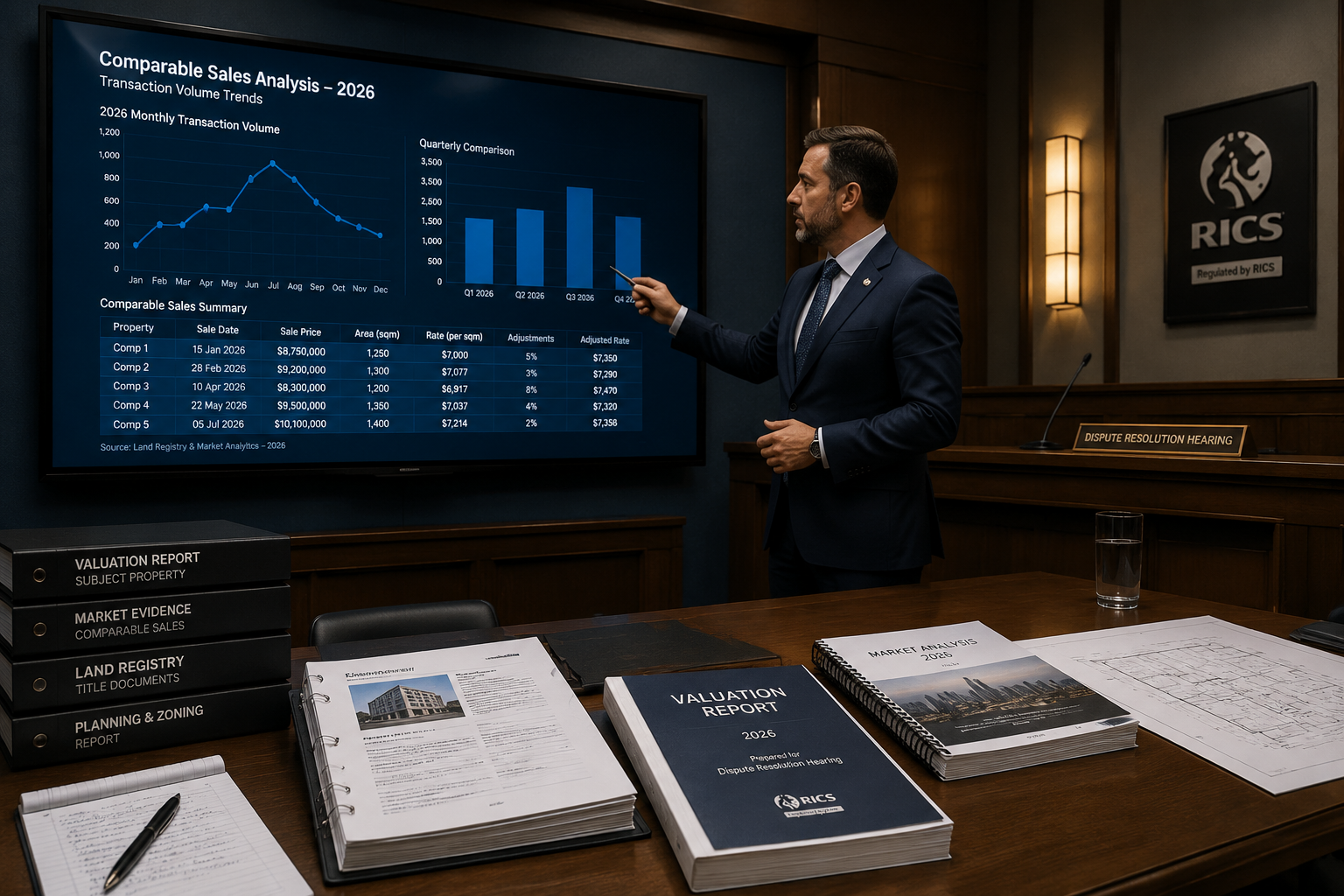
A net balance of +35% of UK property professionals expected rising sales volumes at the start of 2026 — yet the National Association of Realtors' chief economist simultaneously downgraded the US existing home sales growth forecast from 14% to just 4% year-on-year [5]. That tension between optimism and caution defines the environment in which expert witnesses now operate. Understanding Expert Witness Roles in Stabilizing 2026 Sales Volumes: Defending Valuations Amid Recovery Optimism is no longer a niche concern for litigation specialists; it is a core competency for every RICS-accredited surveyor involved in dispute resolution, lending, or investment appraisal.
Key Takeaways
- The 2026 property market is characterized by cautious recovery optimism, creating a larger but less internally consistent pool of comparable sales that expert witnesses must navigate with discipline.
- RICS standards and the Civil Procedure Rules (CPR) Part 35 framework remain the non-negotiable baseline for expert witness testimony in valuation disputes.
- Increased transaction volumes, rate anchoring behavior, and commercial real estate volatility are all driving a surge in demand for qualified valuation experts.
- Expert witnesses must be able to defend methodology transparently — from comparables selection through to final opinion of value — under cross-examination.
- Surveyors who invest in structured dispute preparation, including robust documentation and knowledge of current market conditions, are best placed to withstand challenge.
Why 2026 Is a Pivotal Year for Valuation Disputes
The surge in lending activity throughout 2026 has produced unprecedented demand for qualified expert witnesses in valuation disputes [1]. Several forces have converged to create this environment.
Transaction volumes are rising, but unevenly. A survey by The Real Brokerage found that 78% of real estate agents expect home sale transaction volumes to increase in 2026, with 60% anticipating further price gains [6]. Yet the CRE market has experienced repeated patterns of improving conditions being derailed by external economic and geopolitical events, with the first quarter of 2026 providing fresh evidence of that fragility [4].
Rate anchoring is distorting buyer behavior. Many borrowers remain anchored to ultra-low, pandemic-era mortgage rates, influencing both purchase decisions and refinance activity [9]. When a buyer's expectation of value is shaped by a rate environment that no longer exists, the gap between agreed price and lender valuation widens — and disputes follow.
Institutional capital is recalibrating. Private equity firms entering 2026 have shifted from growth-at-any-cost strategies toward operational value creation and disciplined risk underwriting [7]. As institutional investors reassess portfolios and adjust asset allocations, demand for appraisal and risk management services has grown sharply [3]. Each reassessment carries the potential for a contested valuation.
Deal activity is accelerating. Investment bankers are signaling a meaningful shift in market sentiment as of mid-2026, with deal activity accelerating and forward-looking confidence strengthening [8]. More deals mean more valuations, and more valuations in a volatile market mean more disputes.
For surveyors, understanding the methods of valuation that underpin these transactions is the starting point for credible expert evidence.
The RICS Framework: Non-Negotiable Standards for Expert Witnesses
Expert witnesses in property valuation disputes operate within a layered framework of professional and legal obligations. Failing to understand any layer creates vulnerability under cross-examination.
RICS Red Book and Professional Standards
The RICS Valuation — Global Standards (the Red Book) sets the baseline for all RICS-registered valuers providing evidence in dispute proceedings. It mandates:
- A clear statement of the basis of value used (market value, investment value, etc.)
- Transparent disclosure of assumptions and special assumptions
- A methodology that is consistent, documented, and defensible
- Independence from the instructing party
Working with registered RICS valuers ensures that the professional providing expert evidence meets these baseline standards before any dispute even begins.
Civil Procedure Rules Part 35
In English civil proceedings, CPR Part 35 governs expert evidence. Key obligations include:
| Obligation | Practical Implication |
|---|---|
| Duty to the court, not the client | The expert cannot advocate for the instructing party |
| Single joint expert preference | Courts increasingly appoint one expert rather than two |
| Written questions procedure | Opposing parties can submit written questions to the expert |
| Overriding objective compliance | Evidence must be proportionate and focused |
An expert who loses sight of the duty to the court — however subtly — will be exposed in cross-examination. This is especially important in 2026, when heightened regulatory scrutiny means judges are more alert to partisan expert testimony [1].
The Role of Valuation Factors in Dispute Testimony
Every opinion of value rests on a set of factors that must be identified, weighted, and explained. Understanding valuation factors — from location and condition through to tenure and planning constraints — is not merely good practice; it is the substance of expert evidence. An expert who cannot articulate why a particular factor was weighted as it was will struggle to survive challenge.
Defending Valuations: Comparables, Methodology, and Expert Witness Roles in Stabilizing 2026 Sales Volumes
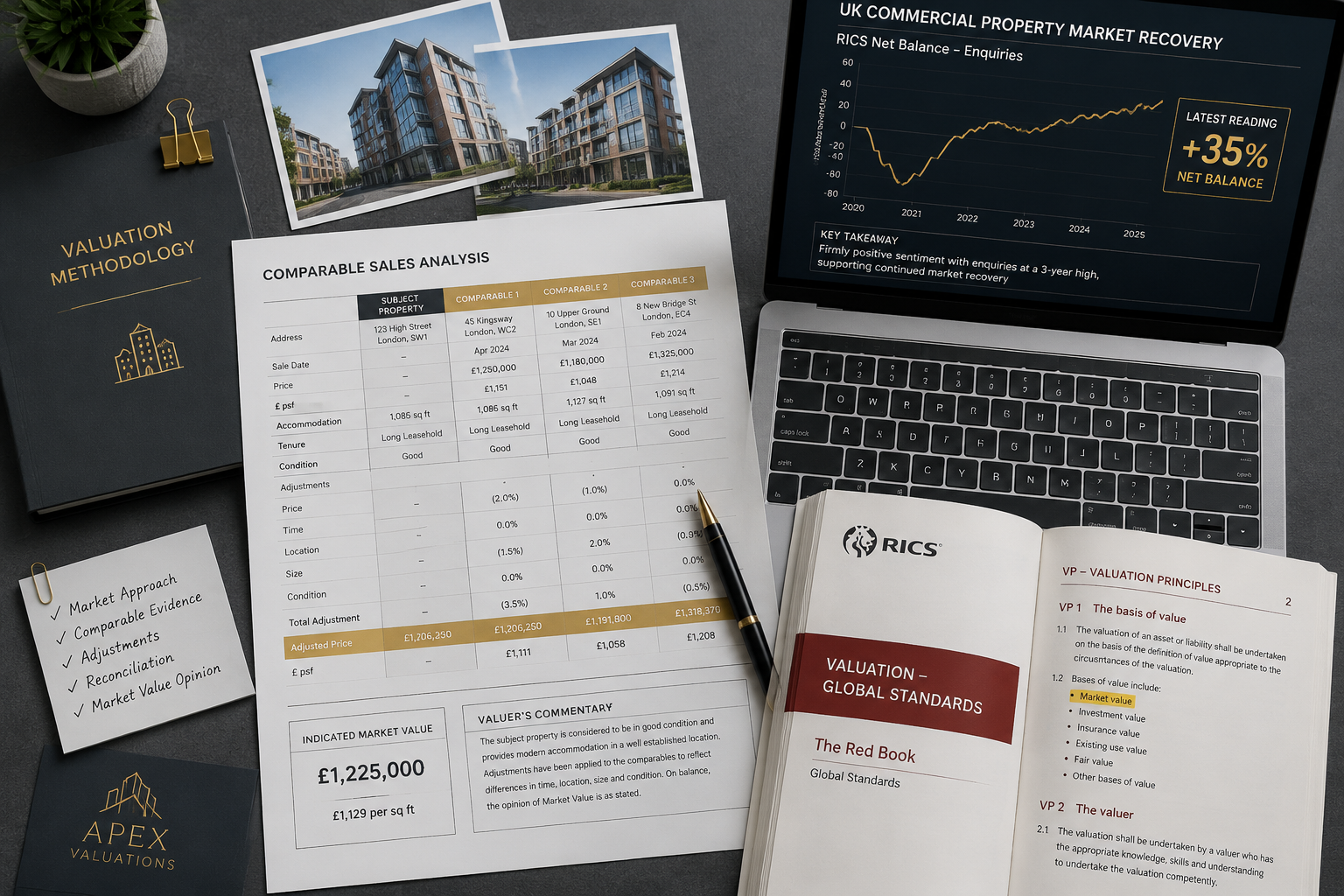
The most contested element of any valuation dispute is the comparables analysis. In a stabilizing interest rate environment, transaction volumes fluctuate, creating a comparables pool that is larger yet less internally consistent [2]. This complexity demands a disciplined, documented approach.
Building a Defensible Comparables Pool
A robust comparables pool for 2026 dispute testimony should:
- Include a sufficient number of transactions to demonstrate market depth, while excluding outliers that distort the picture
- Reflect genuine arm's-length transactions — related-party sales, distressed disposals, and off-market deals require explicit adjustment or exclusion
- Be time-adjusted where market conditions between the comparable date and the valuation date have shifted materially
- Be location-adjusted with reference to objective evidence, not assertion
- Account for physical differences systematically, using a consistent adjustment grid
The challenge in 2026 is that the larger comparables pool can tempt experts to cherry-pick. Courts are alert to this. A well-prepared expert will demonstrate that the selection criteria were established before the analysis, not after.
Leasehold and Freehold Complexities
Disputes involving leasehold properties add a further layer of complexity. The unexpired term of a lease, the ground rent structure, and the cost of extension all affect value materially. Expert witnesses dealing with leasehold assets should be familiar with lease extension valuation principles and the Leasehold Reform, Housing and Urban Development Act framework. Similarly, disputes involving freehold reversions require a clear understanding of freehold valuation methodology, including the investment method and the enfranchisement calculation.
Commercial Valuation Disputes
The CRE market's uneven recovery path [4] has produced a distinctive category of dispute: the institutional investor who disagrees with a lender's valuation of a commercial asset against a backdrop of partial recovery. In these cases, the expert witness must:
- Demonstrate knowledge of sector-specific yield movements
- Address the impact of vacancy rates and lease incentives on passing income
- Explain how the investment method interacts with the comparable evidence method
For commercial disputes, a thorough commercial valuation approach — one that integrates both income and capital evidence — is essential. Where a commercial property is also subject to a rent review, the expert may need to address rent review evidence as part of the overall valuation opinion.
Capital Gains Tax and Non-Domicile Valuation Disputes
Not all valuation disputes arise from lending. A growing category in 2026 involves tax-related valuations, where HMRC challenges an opinion of value used to calculate a capital gains tax liability or a non-domicile tax position. Expert witnesses in these cases must align their evidence with HMRC's own valuation guidance while remaining independent. Familiarity with capital gains tax valuation and non-domicile tax valuation requirements is therefore directly relevant to dispute preparation.
Practical Preparation: How Surveyors Should Approach Expert Witness Roles in Stabilizing 2026 Sales Volumes: Defending Valuations Amid Recovery Optimism
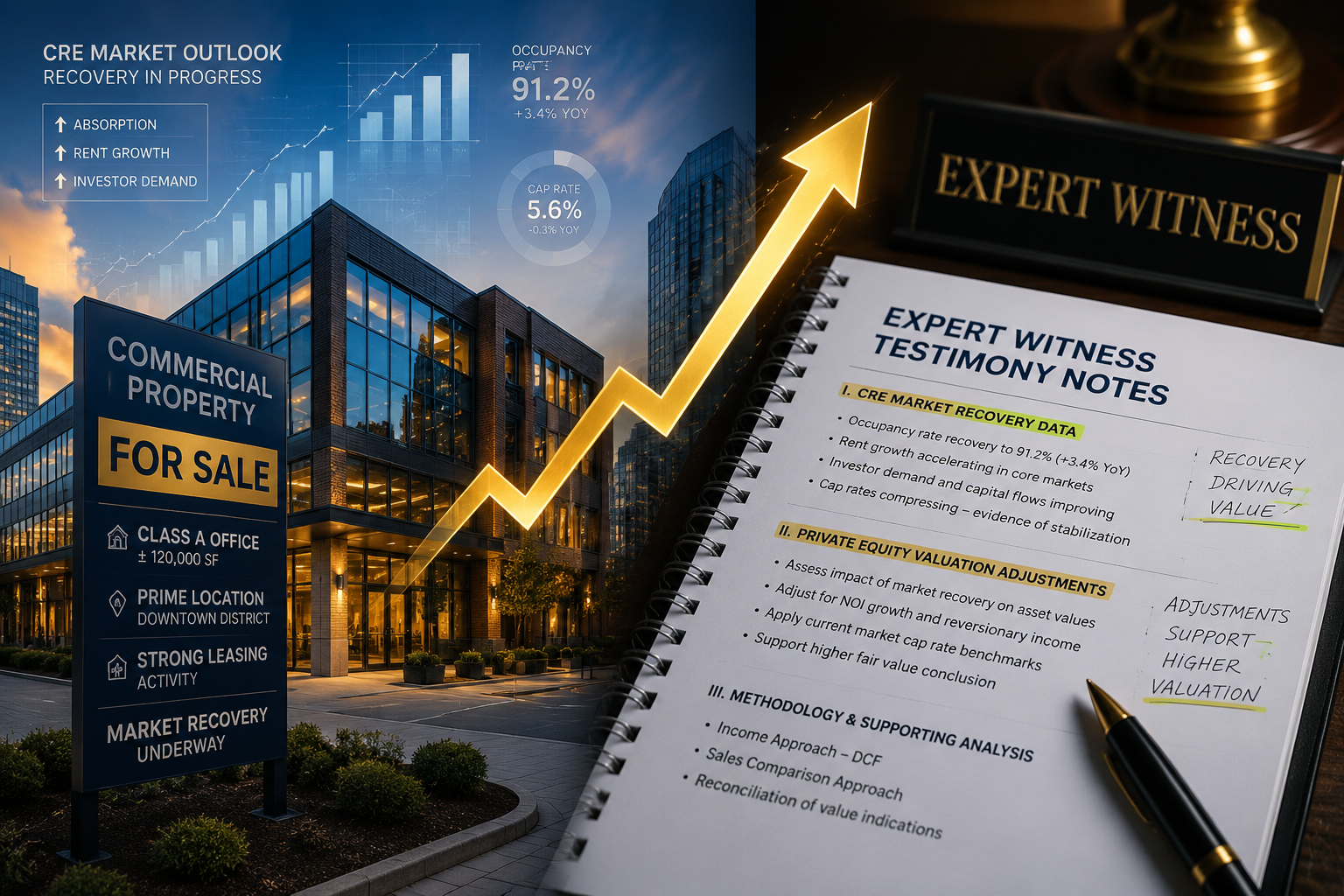
Preparation is where disputes are won or lost. The following framework reflects current best practice for surveyors preparing expert witness evidence in 2026.
Step 1: Establish Independence Early
Document the basis on which the instruction was accepted, confirm there is no conflict of interest, and record that the duty to the court has been explained to the instructing solicitor. This documentation protects the expert if independence is challenged later.
Step 2: Conduct a Structured Market Analysis
Before selecting comparables, prepare a written market analysis covering:
- Transaction volume trends in the relevant sector and geography
- Yield or price movement over the relevant period
- Any external events (rate changes, geopolitical disruption) that affected the market around the valuation date
This analysis provides the context within which the comparables selection will be evaluated by the court.
Step 3: Document Every Adjustment
Each adjustment to a comparable — whether for time, location, size, condition, or tenure — must be documented with a reasoned basis. Unsupported adjustments are the most common point of attack in cross-examination.
Step 4: Prepare a Clear Written Report
The expert's report must comply with CPR Part 35 and Practice Direction 35. It should:
- State the expert's qualifications and experience
- Identify the instructions received
- Set out the methodology used and why it was chosen
- Present the comparables analysis transparently
- State the opinion of value clearly, with a range if appropriate
- Include a statement of truth
"The expert's overriding duty is to the court, not to the party who instructed them. A report that reads as advocacy will be treated as advocacy — and discounted accordingly."
Step 5: Prepare for Cross-Examination
Cross-examination in valuation disputes typically focuses on:
- Why certain comparables were included or excluded
- The basis and quantum of adjustments
- Whether the expert's methodology is consistent with RICS standards
- Whether the expert has changed their opinion and, if so, why
Preparation should include a mock cross-examination with the instructing solicitor, a review of any written questions submitted under CPR 35.6, and a re-read of the opposing expert's report with specific attention to points of difference.
Step 6: Engage with the Single Joint Expert Process
Where the court appoints a single joint expert, the surveyor must be prepared to receive questions from both parties and to respond in writing within the timeframe set. The discipline of answering questions from an adversarial party — without advocacy — is a skill that benefits from practice.
The Broader Market Context: Recovery Optimism and Its Limits
Understanding the market context is not merely background knowledge for an expert witness — it is evidence. The cautious optimism characterizing 2026 has specific implications for valuation defense.
The optimism is real but fragile. The +35% net balance of professionals expecting rising sales volumes reflects genuine confidence. But NAR's Lawrence Yun has revised the existing home sales growth forecast down from 14% to 4% [5], and the CRE market has shown that external disruptions can rapidly reverse improving trends [4].
Recovery is sector-specific. Residential markets in high-demand urban areas may be recovering faster than suburban or rural markets. Industrial and logistics assets have performed differently from retail and office. An expert who applies a uniform recovery narrative to a specific asset will be challenged on whether that narrative actually applies.
Rate anchoring creates valuation gaps. Where buyers are anchoring to pandemic-era rate expectations, they may be willing to pay prices that a current-rate stress test does not support [9]. This creates a structural tension between transaction prices and lender valuations — precisely the tension that generates disputes.
Institutional demand for accuracy is rising. As private equity firms adopt more disciplined risk underwriting [7] and deal activity accelerates [8], the tolerance for imprecise valuations is falling. Expert witnesses who can demonstrate rigorous methodology will be in greater demand.
Conclusion: Actionable Next Steps for Surveyors in 2026
The intersection of rising transaction volumes, market volatility, rate anchoring, and institutional recalibration has created a dispute environment unlike any seen in recent years. Expert Witness Roles in Stabilizing 2026 Sales Volumes: Defending Valuations Amid Recovery Optimism demand a level of preparation, independence, and methodological rigor that goes beyond standard valuation practice.
Actionable next steps for surveyors:
- Review RICS Red Book compliance for all current valuation instructions, particularly in relation to assumptions and special assumptions that could be challenged in dispute proceedings.
- Build a structured comparables database for the sectors and geographies in which disputes are most likely, documenting selection criteria before analysis begins.
- Engage with CPR Part 35 training if not already completed, and consider mock cross-examination practice with litigation solicitors.
- Understand the specific market conditions affecting the asset type in dispute — residential, commercial, leasehold, or tax-related — and document that understanding in the expert report.
- Maintain independence documentation from the point of instruction, ensuring that the duty to the court is recorded and understood.
- Stay current with market data — the gap between the optimism reflected in agent surveys and the caution reflected in revised forecasts is itself evidence that must be addressed, not ignored.
Surveyors who approach expert witness work with this level of discipline will not only withstand cross-examination — they will contribute meaningfully to the fair resolution of disputes in a market that needs reliable, independent valuation evidence more than ever.
References
[1] Expert Witness Roles In 2026 Lender Valuation Disputes Evidence Standards Amid Rising Transactions – https://wimbledonsurveyors.com/expert-witness-roles-in-2026-lender-valuation-disputes-evidence-standards-amid-rising-transactions/?utm_source=openai
[2] Expert Witness Preparation For Mortgage Valuation Challenges Navigating Stabilising Rates In 2026 – https://www.canterburysurveyors.com/blog/expert-witness-preparation-for-mortgage-valuation-challenges-navigating-stabilising-rates-in-2026/?utm_source=openai
[3] Why Appraisal Services Are In High Demand Now – https://www.globest.com/2026/03/23/why-appraisal-services-are-in-high-demand-now/?utm_source=openai
[4] Cre Recovery Faces Another Setback Valtrends Report 1q 2026 – https://www.situsamc.com/resources-insights/articles/cre-recovery-faces-another-setback-valtrends-report-1q-2026?utm_source=openai
[5] Nars Yun Has A New 2026 Prediction A Slower Less Certain Market Recovery – https://www.inman.com/2026/04/23/nars-yun-has-a-new-2026-prediction-a-slower-less-certain-market-recovery/?utm_source=openai
[7] 2026 Private Equity Predictions – https://www.bdo.com/insights/industries/private-equity/2026-private-equity-predictions?utm_source=openai
[8] Deals In Motion 2026 – https://www.fticonsulting.com/insights/articles/deals-in-motion-2026?utm_source=openai
[9] Rate Anchoring Mortgage 2026 – https://www.housingwire.com/articles/rate-anchoring-mortgage-2026/?utm_source=openai