Structural settlement claims cost UK property buyers an estimated hundreds of millions of pounds each year — yet the earliest warning signs are visible to a trained eye long before a building becomes dangerous or unsellable. Understanding building survey red flags for structural settlement: early detection and valuation impact in 2026 is no longer just a technical concern for engineers. In today's cautious property market, it is a financial survival skill for buyers, sellers, and investors alike.
Key Takeaways 🔑
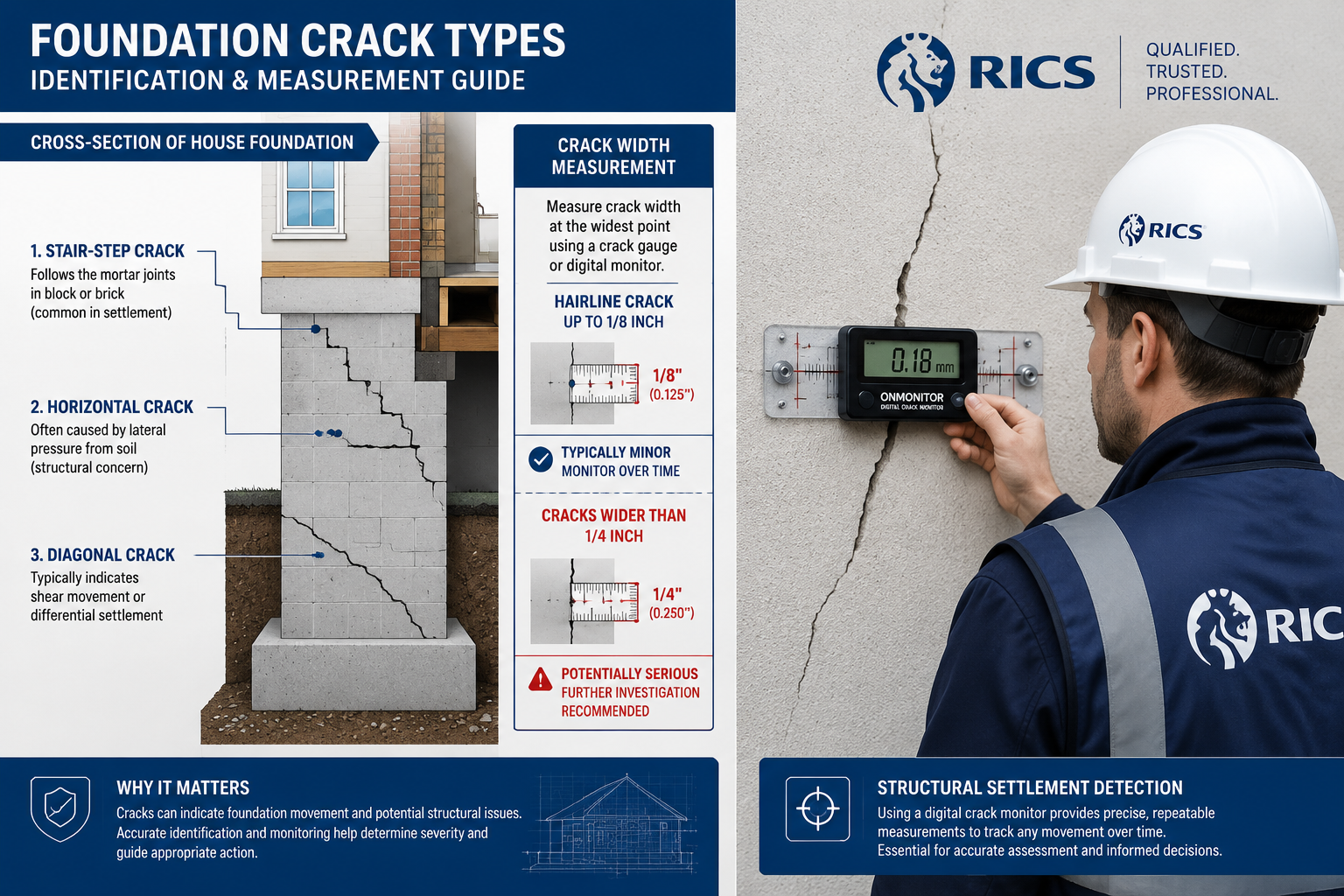
- Crack width matters enormously: Fractures exceeding 1/8 inch in masonry walls cross from cosmetic into structural emergency territory.
- Not all settlement is equal: Differential settlement distorts frames and misaligns openings; uniform settlement may only need monitoring.
- Horizontal cracks carry the highest collapse risk of all crack orientations found during a survey.
- Undetected settlement can reduce property valuations by 15–20% or derail sales entirely.
- A RICS Level 3 Building Survey is the most reliable tool for catching these red flags before exchange of contracts.
Understanding Structural Settlement: What Surveyors Are Actually Looking For
Structural settlement occurs when the ground beneath a building shifts, compresses, or erodes unevenly, causing the structure above to move. Some degree of settlement is normal — particularly in older UK properties. The critical distinction that shapes every building survey assessment of structural settlement is whether that movement is uniform or differential.
Uniform vs. Differential Settlement
| Type | Description | Typical Outcome |
|---|---|---|
| Uniform Settlement | Whole structure sinks evenly | Minor cosmetic cracking; often monitor-only |
| Differential Settlement | One area moves more than another | Distorted frames, misaligned openings, structural risk |
Differential settlement is the real danger. When one corner of a building drops while another stays level, the forces acting on walls, beams, and floors create shear stress that can fracture masonry, buckle timbers, and warp door frames [4]. A structural survey by a qualified engineer is the definitive way to distinguish one from the other.
Why Early Detection Matters So Much in 2026
Mortgage lenders in 2026 are applying stricter scrutiny to properties with any history of movement. A settlement issue caught at hairline stage — and properly documented — is a manageable negotiating point. The same issue discovered after years of unchecked progression can make a property unmortgageable. Early detection through a professional RICS Building Survey is the single most cost-effective intervention available to buyers.
The Critical Red Flags: A Surveyor's Checklist for Structural Settlement
Experienced surveyors follow a systematic visual inspection protocol. The following signs, individually or in combination, constitute the core building survey red flags for structural settlement that demand further investigation.
🚨 1. Crack Type, Pattern, and Width
Not all cracks are created equal. Width, orientation, and pattern each tell a different story.
Stair-Step Cracks
These jagged, zig-zag fractures follow mortar joints diagonally across brickwork. They are a definitive indicator of foundation shifting caused by differential settlement or expansive soils. Poor drainage accelerates the problem by increasing hydrostatic pressure against foundations [4].
Horizontal Cracks
Horizontal fractures across basement or retaining walls signal lateral soil pressure or hydrostatic forces pushing walls inward. These carry a significantly higher collapse risk than vertical cracks and should be treated as emergencies [4].
Diagonal Cracks
Diagonal fractures trace back to structural stress concentration points. Any diagonal crack approaching 1/8 inch in width or showing evidence of recent growth warrants immediate structural engineer review and dated photographic documentation [4].
Vertical Cracks
Often caused by normal concrete curing shrinkage, vertical cracks are generally lower risk — but should still be measured and monitored over a 30-day period to confirm they are not widening [4].
💬 Pull Quote: "A crack exceeding 1/8 inch in brick or block walls is not a cosmetic issue — it is a structural emergency requiring a licensed foundation engineer." [4]
Width Thresholds at a Glance:
| Crack Width | Action Required |
|---|---|
| Under 1/16 inch | Document; monitor |
| 1/16 – 1/8 inch | Monitor within 30 days; assess for underpinning |
| Over 1/8 inch | Emergency: licensed engineer assessment immediately |
| 1/4 inch at wall-floor/ceiling joints | Structural engineer escalation required |
🚨 2. Uneven, Sloping, or Sagging Floors
Floors that tilt more than 1 inch over 8 feet indicate serious structural trouble. This level of slope typically stems from foundation settlement, joist deterioration, or prolonged water damage [4]. Sagging floors and ceilings are particularly telling — they specifically point to failing timbers or moisture-related structural decay rather than simple cosmetic ageing [1].
Uneven floor levels across a property are one of the most reliable indicators of subsidence or long-term soil moisture change beneath the structure [1]. This distinguishes active structural movement from the cosmetic settling that naturally occurs in older buildings over decades.
A subsidence survey can confirm whether floor irregularities are linked to active ground movement.
🚨 3. Misaligned Doors and Windows
Stuck doors, doors that swing open or closed on their own, and window frames that no longer sit square in their openings are all settlement markers that homeowners frequently dismiss as minor inconveniences [3]. In reality, they signal that the structural frame has distorted — a direct consequence of differential settlement changing the geometry of the building.
When multiple doors and windows in the same area of a property show alignment problems simultaneously, the pattern becomes highly significant.
🚨 4. Wall-to-Floor and Wall-to-Ceiling Separation
Separation between wall and ceiling joints, or wall and floor joints, reaching approximately 1/4 inch is a clear threshold for concern. This gap indicates shear stress acting on the building's connections — evidence that different parts of the structure are moving independently [4].
🚨 5. Cracks in Load-Bearing Walls
Large or widening cracks specifically in load-bearing walls represent among the most serious findings in any survey. These walls carry the weight of the structure above them; any compromise to their integrity can affect the entire building's stability [1].
A specialist defect survey is often recommended when load-bearing wall cracks are identified during a standard inspection.
How RICS Surveys Capture and Communicate Settlement Red Flags
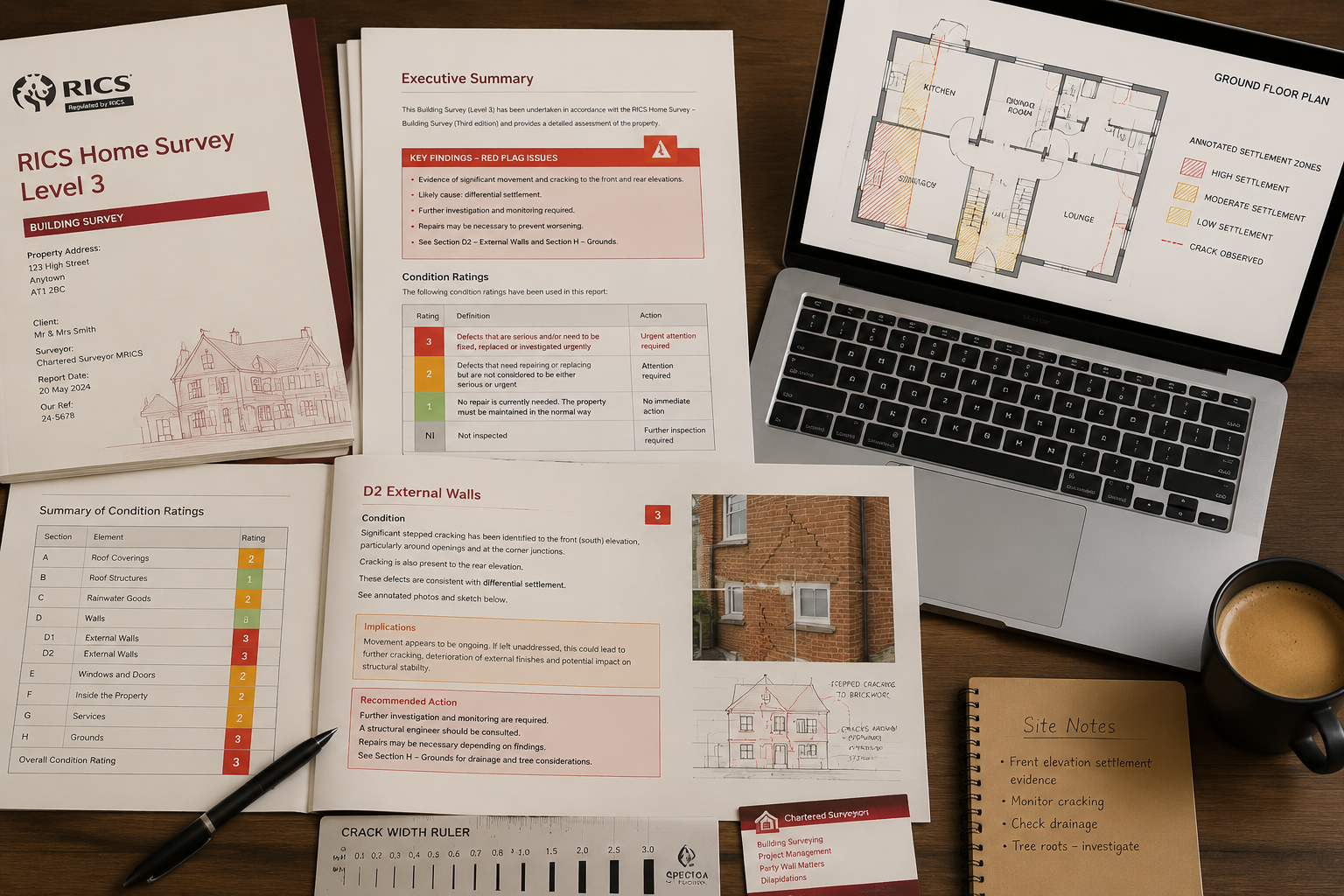
The RICS condition rating system provides a standardised framework for communicating the severity of settlement findings to buyers and their advisors.
The RICS Condition Rating System
| Rating | Meaning | Settlement Context |
|---|---|---|
| Condition 1 (Green) | No action required | Hairline shrinkage cracks; cosmetic only |
| Condition 2 (Amber) | Repairs or maintenance needed | Moderate cracking; monitoring recommended |
| Condition 3 (Red) | Urgent repair or investigation required | Active settlement indicators; structural risk |
Red ratings in a RICS survey report highlight issues requiring repair or further investigation before a buyer commits to purchase [5]. A property with multiple Condition 3 ratings related to structural movement is a clear signal that specialist structural input is needed before exchange.
A RICS Level 3 Building Survey — the most comprehensive residential survey available — provides the depth of inspection necessary to identify subtle settlement patterns that shorter reports may miss. This level of survey is particularly important for:
- Properties built before 1900
- Buildings with extensions or structural alterations
- Homes on clay-heavy soils (common across much of southern England)
- Properties near large trees or water courses
What a Structural Survey Adds
Where a building survey flags concerns, a dedicated structural survey by a structural engineer provides the technical analysis needed to quantify risk, specify remediation, and support insurance or mortgage applications. The two types of survey work in sequence — the building survey identifies the red flags; the structural survey explains the cause and prescribes the cure.
The Role of Drainage in Settlement
Poor drainage is one of the most commonly overlooked accelerators of structural settlement. Water pooling against foundations, blocked drains, and leaking underground pipes all alter the moisture content of soils — causing clay soils to shrink and swell seasonally, and sandy soils to erode [4]. A drainage survey should be considered alongside any structural investigation where settlement is suspected near drainage runs.
Similarly, damp surveys can reveal moisture ingress patterns that correlate with foundation saturation and timber decay contributing to floor-level settlement.
Valuation Impact: How Settlement History Affects Property Prices in 2026
Settlement findings do not just affect safety — they have direct, measurable consequences for property valuations in 2026's risk-aware market.

The Discount Effect of Unresolved Settlement
Properties with active or unresolved settlement issues typically attract price reductions of 15–20% below comparable unaffected properties. In some cases — particularly where mortgage lenders decline to lend — the effective discount can be larger still, as the buyer pool shrinks to cash purchasers only.
The key variables that determine the size of the valuation discount include:
- Activity: Is the movement ongoing or historic?
- Cause: Is the cause identified and addressable?
- Documentation: Is there an engineer's report confirming stabilisation?
- Remediation: Has underpinning, drainage improvement, or tree removal been completed?
- Insurance: Is the property insurable at standard rates?
Historic vs. Active Settlement
A crucial distinction for valuers and buyers alike is whether settlement is historic (movement that occurred in the past and has since stabilised) or active (ongoing movement). Historic settlement with proper documentation and no evidence of recent progression is far less damaging to value than active movement of unknown cause.
Monitoring surveys — where crack gauges are installed and readings taken over weeks or months — provide the evidence base needed to confirm stability. A monitoring survey is often the most persuasive document a seller can provide to reassure a cautious buyer or lender.
Insurance Reinstatement and Structural Settlement
Settlement history also affects insurance reinstatement valuations. Properties that have undergone underpinning or significant structural remediation may have higher reinstatement costs than their market value suggests. An accurate insurance reinstatement valuation ensures that a property is neither under-insured (leaving the owner exposed) nor over-insured (paying unnecessary premiums).
Negotiation Leverage for Buyers
For buyers, a RICS survey that identifies settlement red flags is a powerful negotiating tool. A Condition 3 rating on structural movement provides documented grounds to:
- Renegotiate the purchase price to reflect remediation costs
- Request specialist reports at the seller's expense before exchange
- Withdraw from the transaction without penalty if findings are too severe
- Require remediation works to be completed prior to completion
💬 Pull Quote: "In 2026's cautious lending environment, a single unresolved structural red flag can transform a straightforward purchase into a complex negotiation — or kill the deal entirely."
The Cost of Inaction
Buyers who proceed without a thorough survey — or who dismiss settlement red flags identified in a survey — face potentially significant repair costs. Underpinning costs in the UK typically range from £10,000 to £50,000+ depending on the extent of foundation failure, the soil type, and the method required. This is before factoring in associated works such as drainage improvement, crack stitching, and internal redecoration.
Understanding structural survey pricing in advance helps buyers budget appropriately for the full due diligence process.
Conclusion: Act Early, Protect Your Investment
The evidence is clear: building survey red flags for structural settlement — early detection and valuation impact in 2026 are not abstract technical concerns. They are the difference between a sound investment and a costly mistake.
Actionable Next Steps ✅
- Commission a RICS Level 3 Building Survey for any property that is older, extended, or showing visible signs of movement — before exchange of contracts.
- Never dismiss misaligned doors, stair-step cracks, or sloping floors as cosmetic. These are the early warning signals that precede expensive structural failure.
- Request a specialist structural survey if a building survey returns Condition 3 ratings related to cracking or movement.
- Consider a monitoring survey to confirm whether identified movement is historic or active — this data is essential for both valuation and mortgage purposes.
- Factor remediation costs into your offer price using documented evidence from your surveyor's report.
- Ensure your insurance reinstatement valuation reflects any structural history on the property.
The cost of a comprehensive survey is a fraction of the cost of undetected settlement. In 2026's property market, professional due diligence is not optional — it is the foundation of every sound purchase decision.
References
[1] What Do Red Flags In A Home Survey Mean A Clear Guide For Buyers – https://harrisonclarke.co.uk/what-do-red-flags-in-a-home-survey-mean-a-clear-guide-for-buyers/
[2] 5 Alta Survey Red Flags That Can Derail A Real Estate Closing – https://naturaconsultingllc.com/5-alta-survey-red-flags-that-can-derail-a-real-estate-closing/
[3] Structural Red Flags To Watch For During Property Due Diligence – https://rshengineering.com/blog/structural-red-flags-to-watch-for-during-property-due-diligence/
[4] 15 Signs Structural Damage Buildings – https://rimkus.com/article/15-signs-structural-damage-buildings/
[5] Watch – https://www.youtube.com/watch?v=6b9BTmaD3ZE
[6] March 2026 Home Inspection Update Identifying Structural Red Flags – https://theiliffgroup.com/blog/March-2026-Home-Inspection-Update–Identifying-Structural-Red-Flags
[7] Annual Structural Health Checklist For The Year 2026 What Every Homeowner Must Check – https://vaengineer.com/annual-structural-health-checklist-for-the-year-2026-what-every-homeowner-must-check/