
Nearly one in five UK property transactions collapses after a survey uncovers unexpected defects — yet a significant proportion of buyers still choose the cheapest or most familiar survey option without fully understanding what it covers. The decision between a homebuyer survey vs building survey — and choosing the right level of property inspection for your needs — can be the difference between a confident purchase and a costly mistake.
In 2026, this choice matters more than ever. The Royal Institution of Chartered Surveyors (RICS) released the 2nd Edition of its Home Survey Standard in April 2026, introducing updated mandatory procedures and greater transparency across all survey types [7]. Meanwhile, proposed homebuying reforms are pushing for upfront surveys to become standard practice, fundamentally changing how buyers engage with the inspection process [4].
This guide cuts through the confusion, explaining each survey level clearly so buyers, sellers, and property professionals can make informed, confident decisions.
Key Takeaways 🏠
- RICS classifies surveys into three levels: Level 1 (Condition Report), Level 2 (Homebuyer Survey), and Level 3 (Building Survey) — each suited to different property types and buyer needs.
- A Homebuyer Survey (Level 2) suits modern, standard-construction homes in reasonable condition; a Building Survey (Level 3) is essential for older, larger, or structurally complex properties.
- The 2026 RICS Home Survey Standard 2nd Edition introduced mandatory consistency rules, making it easier to compare firms and trust results [7].
- Cost should not be the deciding factor — the right survey level protects buyers from far greater financial exposure down the line.
- Specialist surveys (damp, structural, asbestos) can complement any level when specific concerns arise.
Understanding the RICS Survey Framework: Levels 1, 2, and 3
Before diving into the homebuyer survey vs building survey debate and choosing the right level of property inspection for your needs, it helps to understand how RICS structures the entire framework.
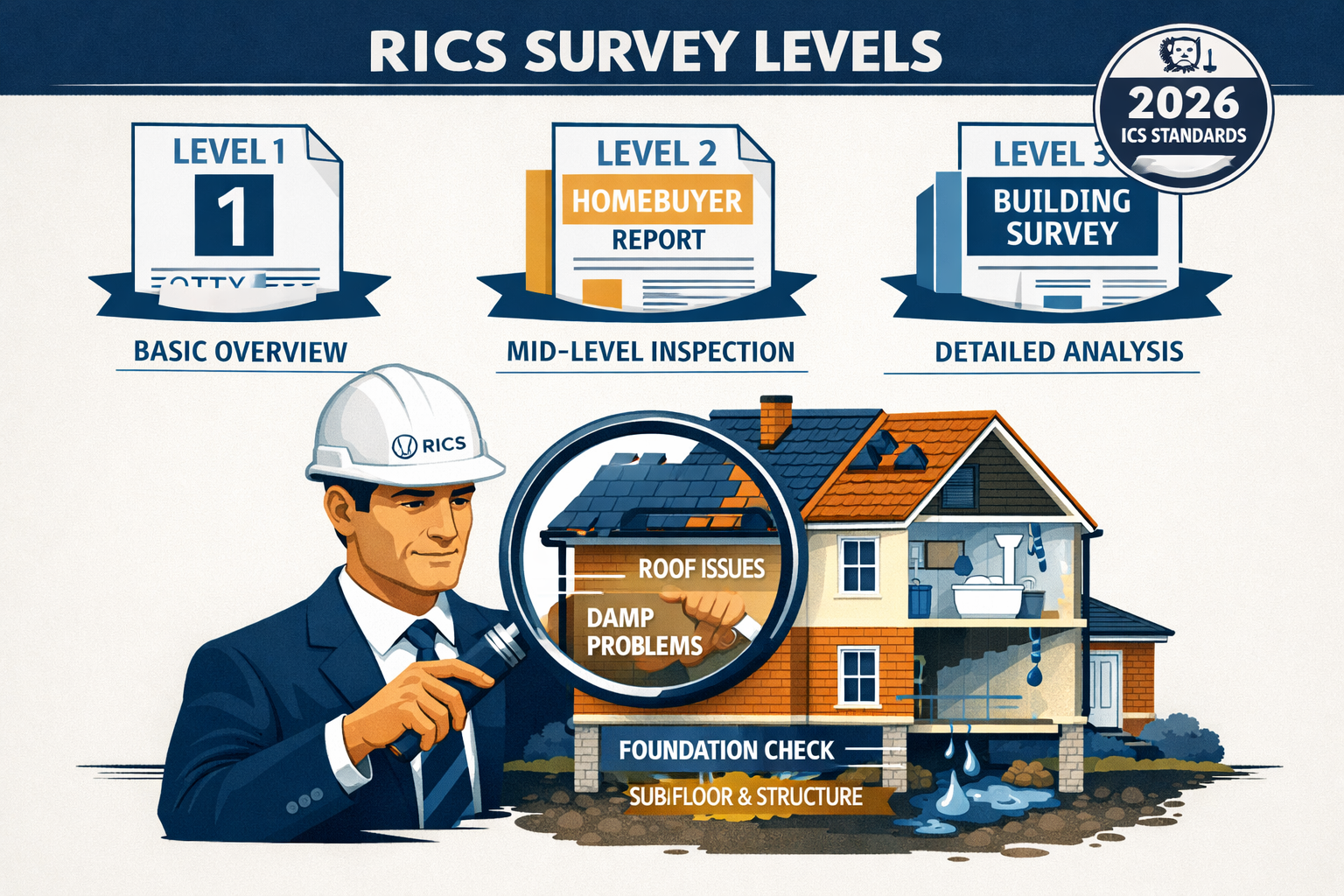
RICS currently recognises three distinct survey levels [2]:
| Survey Level | Common Name | Best For |
|---|---|---|
| Level 1 | Condition Report | New-build or recently renovated homes |
| Level 2 | Homebuyer Survey | Standard modern properties in good condition |
| Level 3 | Building Survey | Older, larger, unusual, or run-down properties |
All three levels now follow the updated mandatory steps introduced by the RICS Home Survey Standard 2nd Edition (April 2026), which ensures every survey — regardless of which firm carries it out — meets the same baseline of efficiency, professional advice, transparency, and trusted assurance [7].
💡 Pull Quote: "The 2026 RICS update means buyers can now compare survey reports across different firms with far greater confidence — the goalposts are the same everywhere."
Level 1: Condition Report
The Condition Report is the most basic option. It provides a traffic-light rating of visible conditions but offers no advice on repairs or maintenance. It is appropriate only for new-build properties or homes that have been comprehensively renovated recently.
For most buyers, this level offers insufficient detail for a property that represents the largest financial commitment of their lives.
Level 2: The RICS Homebuyer Survey
The RICS Level 2 Homebuyer Survey is the most widely used survey type in the UK. It covers:
- ✅ Visible defects and structural concerns
- ✅ Damp, timber, and insulation issues (where visible)
- ✅ Condition ratings (Red, Amber, Green) for key elements
- ✅ A market valuation and insurance rebuild cost (if requested)
- ✅ Recommendations for further specialist investigations
What it does NOT include:
- ❌ Inspection of areas that are concealed or inaccessible
- ❌ Detailed advice on repair methods or costs
- ❌ In-depth structural analysis
The Level 2 survey is conducted to a standardised format, which — following the 2026 RICS update — now follows mandatory procedural steps to ensure consistency across all chartered surveying firms [2].
Level 3: The Building Survey
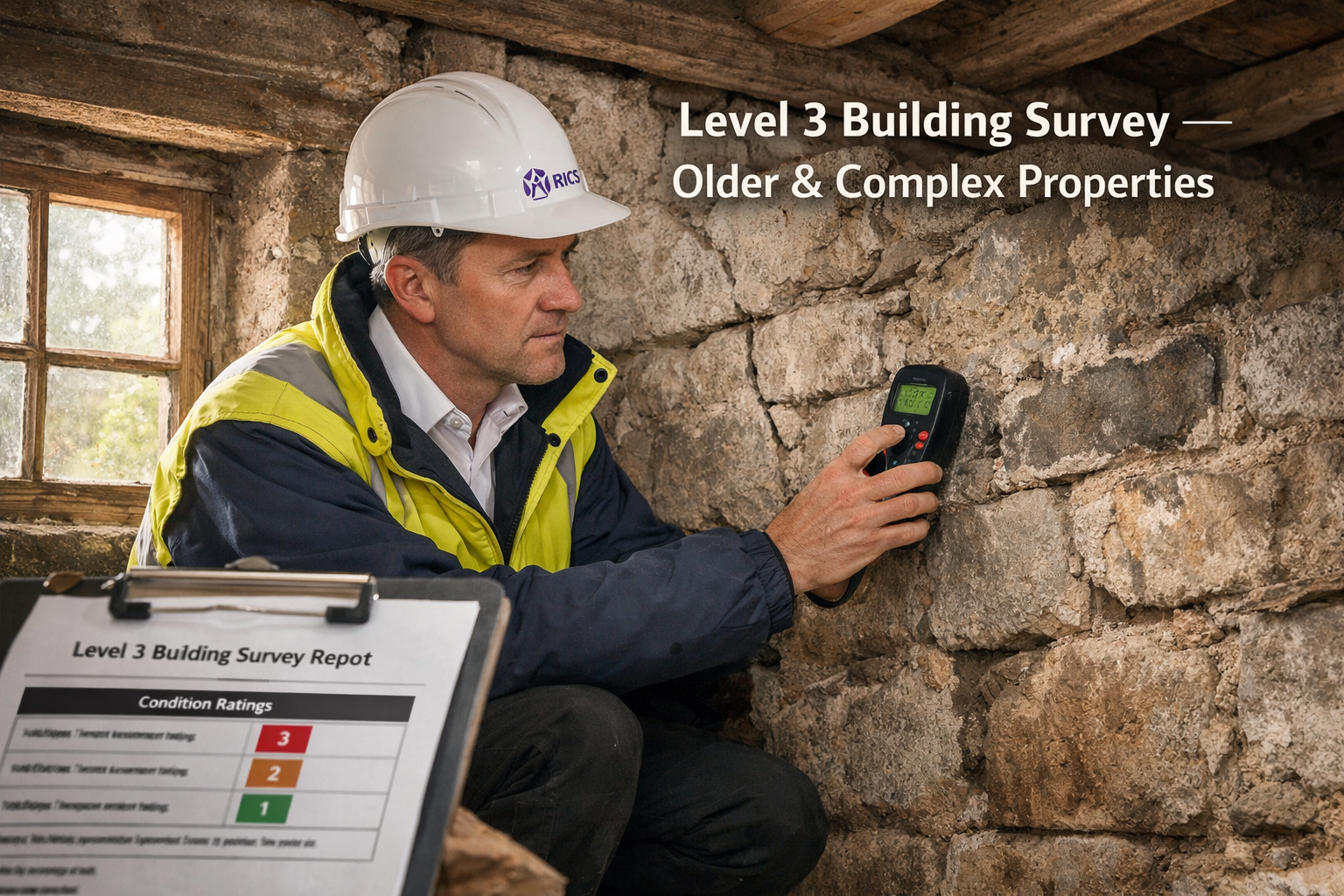
The RICS Level 3 Building Survey is the most comprehensive inspection available for residential properties. It is sometimes referred to as a "full structural survey," though this term is not an official RICS designation.
A Level 3 survey covers:
- ✅ All accessible areas, including roof spaces and underfloor voids
- ✅ Detailed assessment of construction methods and materials
- ✅ Specific advice on defects, their causes, and likely repair approaches
- ✅ Recommendations for urgent, short-term, and long-term maintenance
- ✅ Assessment of risk from issues such as subsidence, damp, or structural movement
For a comprehensive overview of all available RICS building survey options, it is worth reviewing the full range before making a decision.
Homebuyer Survey vs Building Survey: Choosing the Right Level of Property Inspection for Your Needs
This is the central question — and the answer depends on five key factors.
1. 🏗️ Age of the Property
Properties built after 1950 using standard brick-and-block construction are generally well-suited to a Level 2 Homebuyer Survey, provided they appear in reasonable condition.
Properties built before 1919 — Victorian terraces, Edwardian semis, Georgian townhouses — are far more likely to contain:
- Non-standard construction materials (solid brick walls, lime mortar, timber frames)
- Historic damp issues
- Outdated drainage and services
- Structural movement or subsidence
For these properties, a Level 3 Building Survey is strongly recommended. You can explore detailed building survey services tailored to older and more complex homes.
2. 🔧 Condition and Visible Defects
If a property shows visible signs of concern during a viewing — cracks in walls, sagging ceilings, evidence of damp, or poorly executed extensions — a Level 3 survey is the appropriate choice regardless of age.
A damp survey or structural survey may also be advisable as a standalone specialist report where specific issues have been flagged.
3. 💷 Purchase Price and Financial Exposure
The higher the purchase price, the more a thorough inspection is justified. A Level 3 survey typically costs between £600 and £1,500 depending on property size and location — a fraction of the cost of undiscovered structural repairs that can run into tens of thousands of pounds.
For a realistic picture of what professional inspection services cost, the surveyor pricing guide provides a useful breakdown of typical rates.
4. 🏚️ Planned Renovations or Extensions
If a buyer intends to carry out significant works — a loft conversion, rear extension, or structural alterations — a Level 3 survey provides the detailed baseline information needed for planning and budgeting. Understanding the existing structure's condition before committing to major works is essential.
5. 📋 Non-Standard Construction
Properties built using non-standard methods — timber frame, prefabricated concrete (PRC), steel frame, or thatched roofs — require a Level 3 survey as a minimum. Some may also need specialist structural engineering input.
Quick Decision Guide 🗺️
| Property Type | Recommended Survey |
|---|---|
| New-build (within 10 years) | Level 1 or Snagging List |
| Modern standard construction, good condition | Level 2 Homebuyer Survey |
| Pre-1950 property, standard construction | Level 2 or Level 3 (assess on viewing) |
| Pre-1919 property | Level 3 Building Survey |
| Visible defects, damp, or cracks | Level 3 Building Survey |
| Non-standard construction | Level 3 + Specialist Input |
| Listed building | Level 3 + Conservation Specialist |
For buyers who are still uncertain, the guide to choosing the right property survey offers additional decision-making support.
Beyond the Standard Levels: Specialist Surveys and When They Apply
A homebuyer survey or building survey may not always be sufficient on its own. Several specialist surveys can complement the standard RICS levels — or stand alone when a specific concern needs investigation.
Structural Surveys and Subsidence
Where a property shows signs of movement — diagonal cracks, sticking doors, sloping floors — a structural survey provides a targeted engineering assessment. Properties in areas with clay-heavy soils are particularly susceptible to subsidence, which requires specialist evaluation beyond the scope of a standard Level 2 report.
Asbestos Surveys
Properties built or renovated between 1950 and 1999 may contain asbestos-containing materials (ACMs). An asbestos survey is a legal requirement before any demolition or refurbishment work and is strongly advisable for buyers planning renovations.
Snagging Lists for New Builds
New-build buyers have a different set of concerns. Rather than structural defects, the focus is on incomplete finishes, poor workmanship, and items the developer needs to rectify before handover. A snagging list inspection is the appropriate tool here, distinct from a standard RICS survey.
Specific Defect Reports
When a buyer or their solicitor has identified a single specific concern — a crack, a roof issue, or a chimney — a specific defect report provides a focused, cost-effective assessment without commissioning a full survey.
What the 2026 RICS Updates Mean for Buyers
The April 2026 release of the RICS Home Survey Standard 2nd Edition represents the most significant update to residential survey standards in recent years [7]. Key implications for buyers include:
- Mandatory consistency: Every RICS-accredited surveyor must now follow the same standardised procedures, making it easier to compare reports from different firms [2].
- Greater transparency: Surveyors are required to be clearer about what has and has not been inspected, and why.
- Trusted assurance: The updated standard reinforces professional accountability, giving buyers stronger grounds for recourse if a survey is found to be deficient [7].
Additionally, proposed homebuying process reforms in 2026 are moving toward mandatory upfront surveys, which would require sellers to commission a survey before listing a property [4]. If implemented, this would shift the current dynamic significantly — buyers would receive survey information earlier in the process, reducing the risk of late-stage transaction collapse.
💡 Pull Quote: "Mandatory upfront surveys, if legislated, could save buyers thousands by surfacing deal-breaking defects before legal costs accumulate." [4]
It is also worth noting that Party Wall Surveys sit entirely outside this framework. These are separate legal instruments focused on agreements and disputes between neighbours regarding shared walls — not a substitute for a property condition survey [2].
Common Mistakes Buyers Make When Choosing a Survey
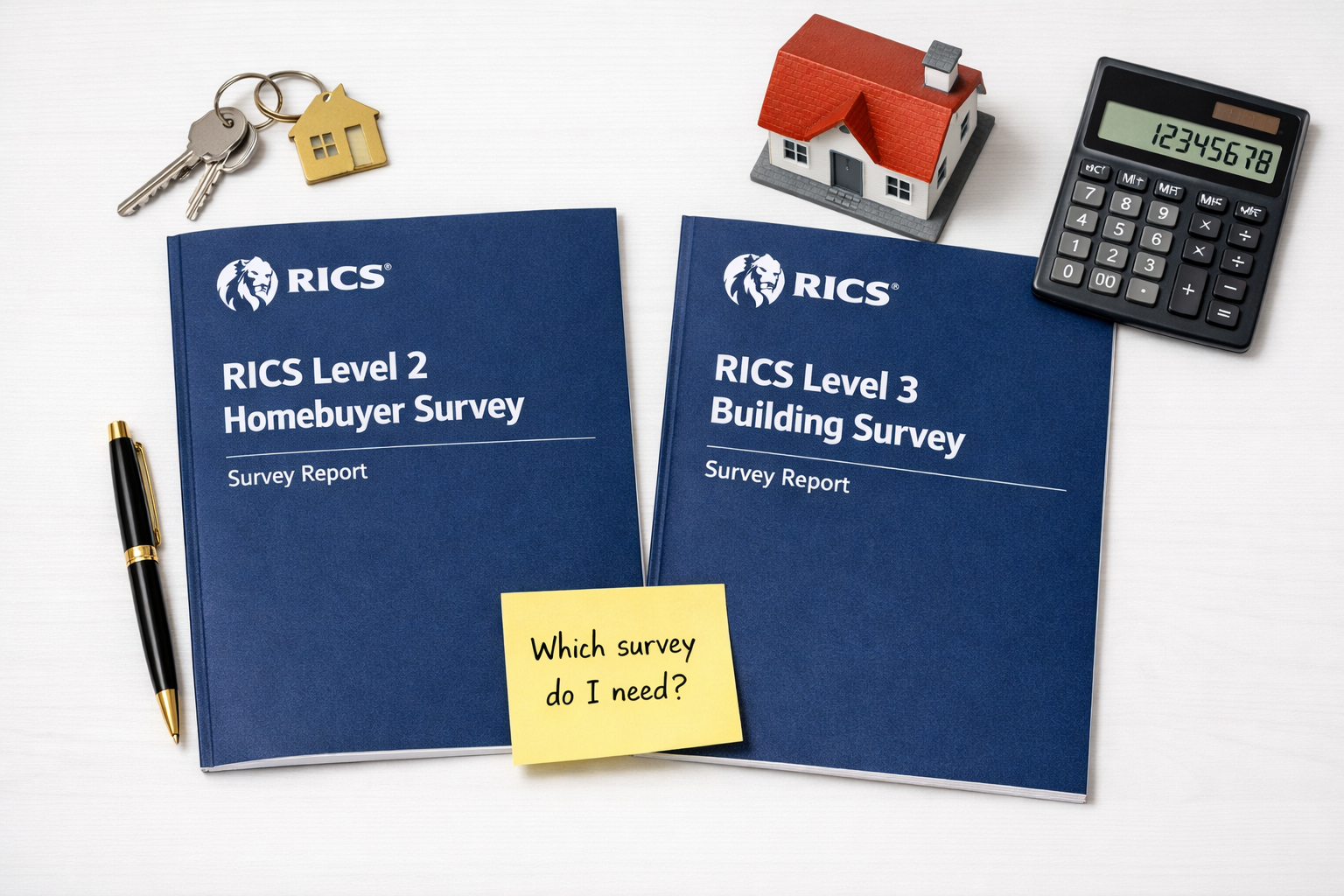
Understanding the homebuyer survey vs building survey distinction — and choosing the right level of property inspection for your needs — also means knowing what to avoid.
❌ Mistake 1: Defaulting to the cheapest option
A Level 2 survey on a Victorian terrace with visible damp is a false economy. The cost difference between a Level 2 and Level 3 survey is rarely more than a few hundred pounds; the cost of missing a major defect can be catastrophic.
❌ Mistake 2: Relying on the mortgage valuation
A mortgage valuation is conducted for the lender's benefit — not the buyer's. It confirms the property is worth the loan amount; it does not assess condition in any meaningful way.
❌ Mistake 3: Skipping a survey on a new build
New builds carry their own risks. A professional snagging inspection before completion protects buyers and gives them leverage with the developer.
❌ Mistake 4: Assuming a survey covers everything
Even a Level 3 Building Survey has limitations. Areas that are inaccessible, concealed behind fixtures, or underground may not be inspected. Buyers should read the scope of service carefully and commission specialist reports where needed.
❌ Mistake 5: Not acting on survey recommendations
A survey that flags further investigations — for damp, drainage, or structural movement — should be followed up before exchange of contracts, not after.
Conclusion: Making the Right Choice in 2026
The homebuyer survey vs building survey decision — and choosing the right level of property inspection for your needs — is not merely a box-ticking exercise. It is a risk management decision that should be made with clear eyes and professional guidance.
Here are the actionable next steps:
- Assess the property age and condition during your viewing — be honest about what you see.
- Match the survey level to the risk profile: Level 2 for modern, standard properties; Level 3 for anything older, larger, or showing visible defects.
- Commission specialist reports for specific concerns — damp, asbestos, subsidence — rather than hoping a standard survey will cover them adequately.
- Use the 2026 RICS standards as a benchmark when selecting a surveyor — ask firms how they comply with the updated Home Survey Standard.
- Never rely on a mortgage valuation as a substitute for an independent survey.
- Act on survey findings — follow up on recommended investigations before committing legally.
For buyers and property professionals seeking expert guidance, the RICS Home Survey overview provides a clear starting point, and the full range of survey services covers every level of inspection need.
The right survey does not just protect a purchase — it empowers a buyer to negotiate, plan, and proceed with genuine confidence.
References
[2] The New RICS Home Survey Standard Explained – https://www.surveymerchant.com/blog/the-new-rics-home-survey-standard-explained
[4] Homebuying Process Reforms 2026: How Mandatory Upfront Surveys Will Transform Building Surveyor Workloads – https://nottinghillsurveyors.com/blog/homebuying-process-reforms-2026-how-mandatory-upfront-surveys-will-transform-building-surveyor-workloads
[7] Home Survey Standard 2nd Edition April 2026 Update – https://www.rics.org/news-insights/home-survey-standard-2nd-edition-april-2026-update