The death of two-year-old Awaab Ishak from prolonged exposure to black mould in his family's social housing flat shocked the nation in 2020. Now, six years later, the legislation bearing his name is set to transform the private rental sector in ways that will fundamentally reshape how landlords manage property hazards. With Awaab's Law Expansion 2026: Level 3 Surveys for New Hazards Like Electrical Risks and Excess Heat in Private Rentals coming into force, landlords face unprecedented scrutiny—and penalties reaching £30,000 per offense for non-compliance.[2]
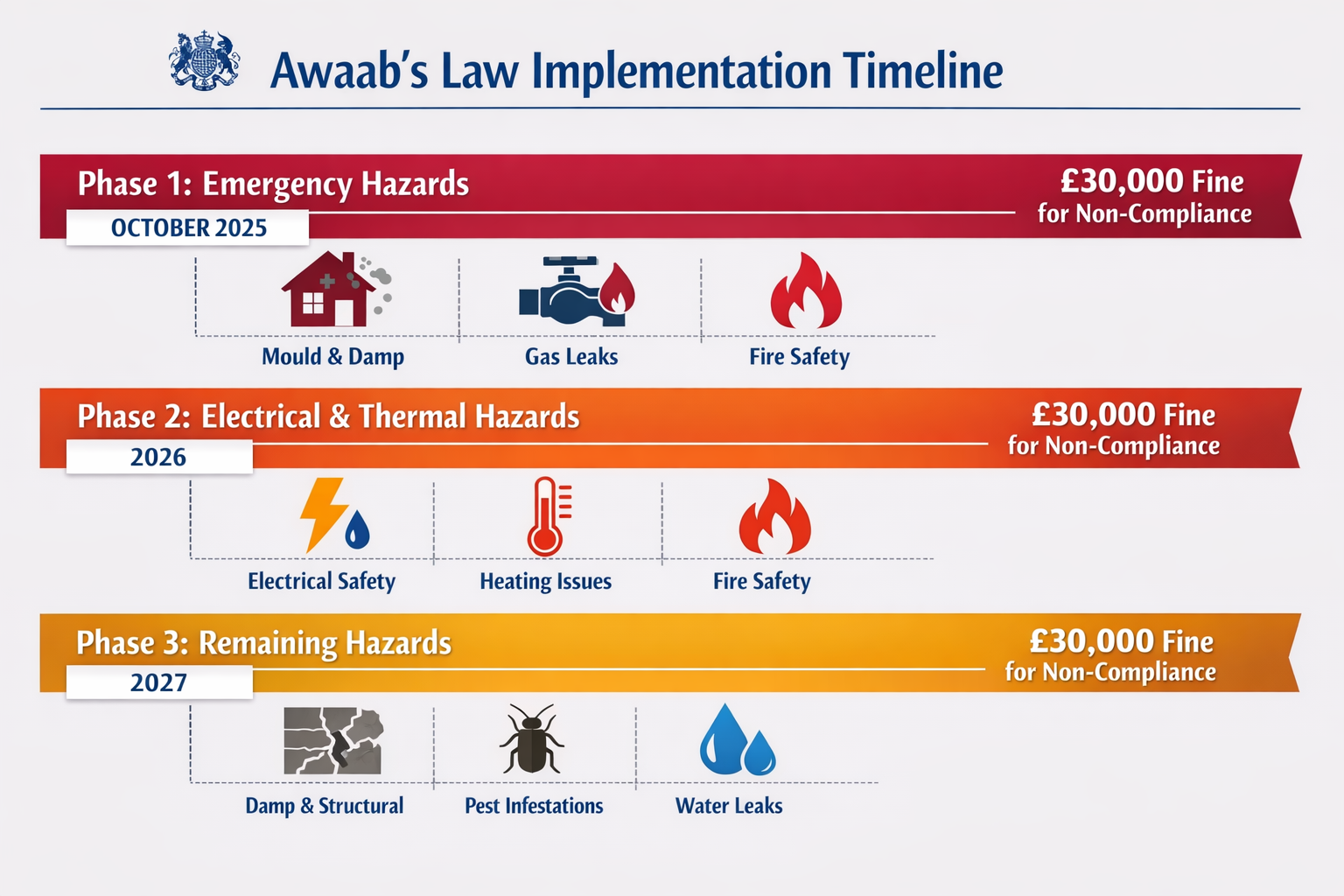
The 2026 expansion represents Phase 2 of a three-stage rollout that extends far beyond the original emergency and damp-and-mould focus. This year, the law encompasses electrical hazards, excess heat, fire risks, structural collapse dangers, and falls associated with baths and level surfaces—all requiring comprehensive assessment through detailed property surveys.[1][3]
Key Takeaways
- Phase 2 implementation in 2026 extends Awaab's Law to private rentals, covering electrical hazards, excess heat, fire risks, and structural collapse alongside existing damp/mould requirements
- Level 3 building surveys provide the comprehensive hazard assessment necessary to identify risks before they trigger enforcement action and fines up to £30,000
- Person-centered risk assessment replaces traditional HHSRS thresholds, meaning tenant vulnerabilities (age, health conditions) now determine hazard severity
- Strict investigation timelines require 24-hour response for emergency hazards and 10 working days for non-emergency issues, with photographic evidence mandatory
- Proactive surveyor engagement helps landlords avoid banning orders, improvement notices, and council-ordered emergency remediation at landlord expense
Understanding Awaab's Law Expansion 2026: From Social Housing to Private Rentals
The Legislative Journey and 2026 Milestone
Awaab's Law initially targeted social housing providers, establishing mandatory investigation and remediation timeframes for damp and mould hazards. The October 2025 Phase 1 implementation set the precedent: 24-hour investigation requirements for emergency hazards with photographic evidence, and 10 working days for other damp and mould issues.[1]
The 2026 expansion marks a critical turning point as Awaab's Law Expansion 2026: Level 3 Surveys for New Hazards Like Electrical Risks and Excess Heat in Private Rentals extends these protections to the private rented sector. This phase introduces a broader hazard spectrum that demands comprehensive property assessment beyond basic visual inspections.
New Hazards Covered Under Phase 2 (2026)
The 2026 phase specifically addresses hazards that have historically caused serious tenant harm:
Thermal Hazards:
- ⚠️ Excess cold (inadequate heating systems, poor insulation)
- 🔥 Excess heat (inadequate ventilation, structural heat retention, climate change impacts)
Structural and Safety Hazards:
- 🏚️ Structural collapse (compromised load-bearing elements, foundation issues)
- 💥 Explosions (gas safety, improper installations)
- 🔥 Fire hazards (inadequate escape routes, faulty detection systems)
- ⚡ Electrical hazards (outdated wiring, overloaded circuits, missing RCD protection)
Fall Hazards:
- 🛁 Falls on level surfaces (trip hazards, slippery flooring)
- 📉 Falls on stairs (inadequate handrails, poor lighting, structural defects)
- 🪟 Falls between levels (unsafe balconies, window safety)
Hygiene Hazards:
- 🚿 Domestic hygiene and food safety (where they present significant harm risk)[3]
This expanded scope transforms landlord obligations from reactive mould remediation to proactive whole-property hazard management.
Person-Centered Assessment: A Paradigm Shift
Unlike the traditional Housing Health and Safety Rating System (HHSRS), which required hazards to reach "Category 1" severity before triggering action, Awaab's Law employs a person-centered assessment approach. This means surveyors and enforcement officers must consider:
- 👶 Tenant age (children and elderly face elevated risks)
- 🏥 Pre-existing health conditions (respiratory issues, mobility impairments, immune deficiencies)
- ⏱️ Duration of exposure (chronic versus acute hazard exposure)
- 🏠 Household composition (vulnerable individuals present)
A hazard that might not constitute Category 1 under HHSRS could still trigger Awaab's Law obligations if it poses significant risk to a vulnerable tenant.[3] This fundamentally changes how Level 3 building surveys must be conducted and reported.
Why Level 3 Surveys Are Essential for Awaab's Law Compliance
The Limitations of Basic Inspections
Many landlords have historically relied on basic property inspections or Level 2 homebuyer surveys for periodic property assessment. However, Awaab's Law Expansion 2026: Level 3 Surveys for New Hazards Like Electrical Risks and Excess Heat in Private Rentals demands a far more comprehensive approach.
Level 2 surveys provide:
- ✅ Visual inspection of accessible areas
- ✅ Basic condition assessment
- ✅ Identification of obvious defects
Level 3 surveys additionally include:
- 🔍 Detailed inspection of hidden spaces (roof voids, under floors, behind fixtures)
- 📊 Comprehensive structural analysis (load-bearing elements, foundation assessment)
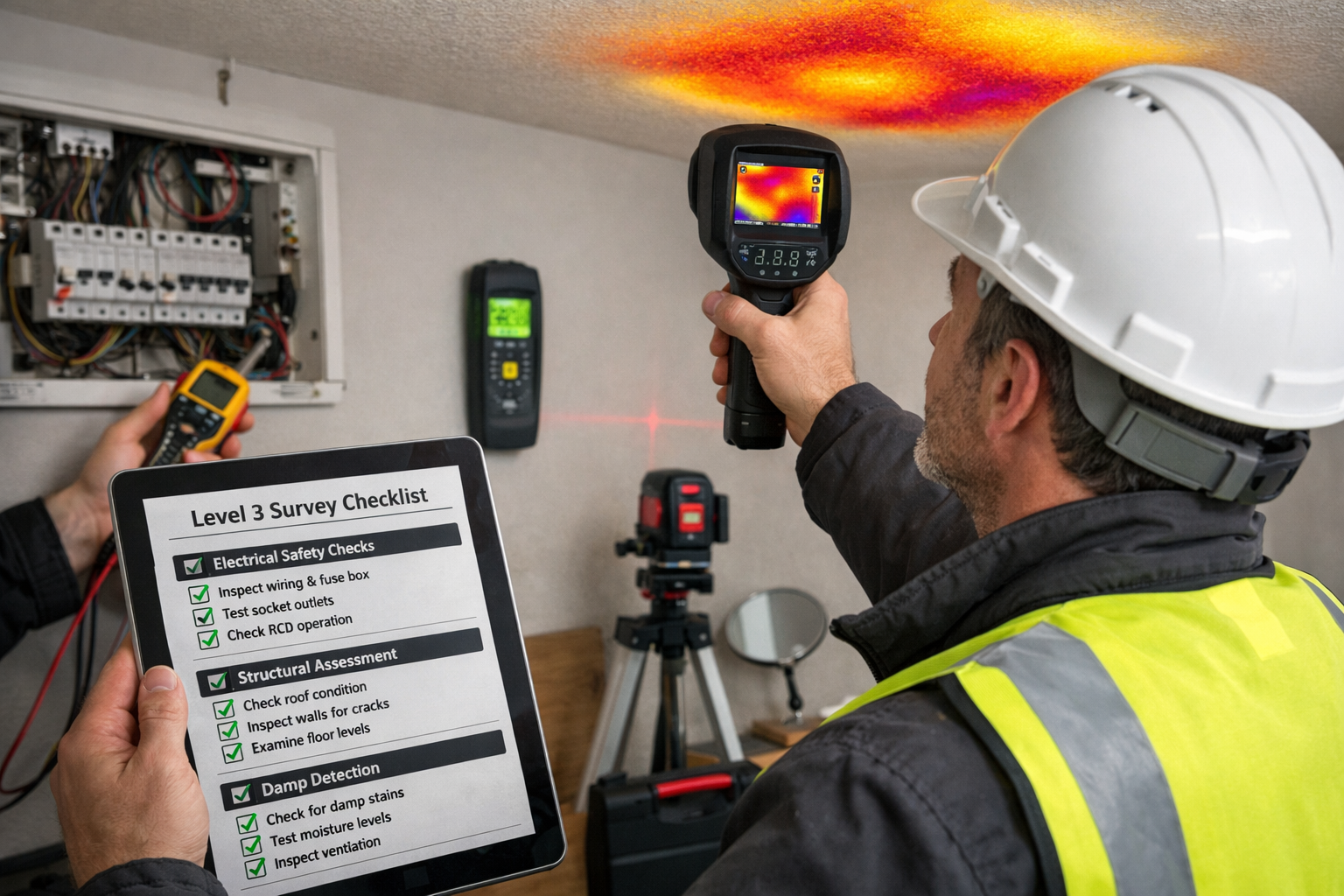
- 🔬 Specialist testing recommendations (electrical safety, thermal imaging, moisture analysis)
- 📋 Detailed hazard reporting aligned with regulatory requirements
- 💰 Repair cost estimates for identified defects
For Awaab's Law compliance, the comprehensive nature of Level 3 surveys provides the documentation and evidence base necessary to demonstrate due diligence.
Electrical Hazard Assessment Protocols
Electrical hazards represent one of the most critical new areas under the 2026 expansion. A compliant Level 3 survey must assess:
Wiring and Circuit Protection:
- Age and condition of electrical installations
- Presence of RCD (Residual Current Device) protection
- Circuit capacity versus load demands
- Evidence of DIY or non-compliant modifications
- Overloaded sockets and extension cord dependency
Safety Systems:
- Smoke detector placement and functionality
- Carbon monoxide detector presence (where required)
- Emergency lighting in communal areas
- Electrical safety certification status
Visible Defects:
- Exposed wiring or damaged cable insulation
- Scorch marks around outlets
- Flickering lights or intermittent power issues
- Outdated fuse boxes requiring replacement
Professional chartered surveyors typically recommend electrical safety inspections by qualified electricians as part of comprehensive hazard assessment, particularly for properties over 15 years old or with visible electrical concerns.
Thermal Hazard Detection: Excess Heat and Cold
Climate change has elevated excess heat from a minor concern to a significant health hazard, particularly affecting elderly tenants and those with cardiovascular conditions. The 2026 expansion specifically addresses both temperature extremes.
Excess Heat Assessment:
- 🌡️ Thermal imaging to identify heat retention patterns
- 🪟 Ventilation adequacy (natural and mechanical)
- 🌳 Solar gain through windows (orientation, glazing type)
- 🏗️ Insulation effectiveness (can trap heat in summer)
- ❄️ Cooling system presence and functionality
Excess Cold Assessment:
- 🧊 Heating system capacity and efficiency
- 🏠 Insulation levels (walls, roof, floors)
- 🪟 Window quality and draught proofing
- 💨 Air leakage points
- 🔥 Alternative heating provision
Thermal imaging surveys can reveal hidden insulation defects, thermal bridging, and areas of heat loss or retention that wouldn't be apparent during standard visual inspection.
Structural Collapse and Fall Hazard Identification
Structural integrity concerns require specialized assessment beyond surface-level observation. Level 3 surveys examine:
Load-Bearing Elements:
- Foundation condition and settlement patterns
- Structural wall integrity
- Floor joist condition and deflection
- Roof structure soundness
- Lintel adequacy above openings
Fall Hazard Zones:
- Staircase construction and handrail security
- Balcony and balustrade stability
- Window opening restrictors (especially upper floors)
- Floor surface conditions and trip hazards
- Bathroom slip resistance
Structural surveys conducted by experienced professionals identify early warning signs of structural movement, deterioration, or inadequate construction that could lead to collapse or serious injury.
Surveyor Protocols for Damp, Mould, and Multi-Hazard Assessment
Integrated Hazard Assessment Methodology
The 2026 expansion requires surveyors to adopt an integrated assessment approach that examines hazard interactions rather than isolated issues. For example:
- 💧 Damp and electrical hazards often coexist (moisture ingress near electrical installations)
- 🌡️ Excess cold and mould growth are causally linked (condensation in poorly heated spaces)
- 🏚️ Structural defects and water penetration create compound risks
Professional surveyors following Awaab's Law protocols must:
- Document all hazards comprehensively with photographs, measurements, and location mapping
- Assess hazard severity using person-centered criteria
- Identify root causes rather than just symptoms
- Recommend remediation priorities based on risk severity
- Provide timeline estimates for required works
- Estimate remediation costs to inform landlord planning
Damp and Mould Survey Protocols
Despite the expanded hazard scope, damp and mould remain central concerns under Awaab's Law, requiring specialized assessment techniques:
Moisture Detection Methods:
- 📱 Non-invasive moisture meters for surface readings
- 🔬 Deep-wall probes for concealed moisture
- 📷 Thermal imaging to identify cold spots and condensation patterns
- 🌫️ Relative humidity monitoring in affected rooms
Mould Assessment:
- 🦠 Species identification (black mould, aspergillus, etc.)
- 📏 Extent mapping (surface area affected)
- 🏠 Location documentation (bedrooms, bathrooms, kitchens)
- 🔍 Source identification (penetrating damp, rising damp, condensation)
Damp surveys must differentiate between damp types to ensure appropriate remediation. The wrong treatment approach can waste thousands of pounds while leaving the hazard unresolved.
Documentation Standards for Enforcement Protection
With fines reaching £30,000 per offense, landlords need robust documentation demonstrating compliance efforts. Surveyor reports should include:
Essential Documentation Elements:
- 📅 Survey date and property address
- 👤 Surveyor qualifications and registration
- 📋 Comprehensive hazard inventory with severity ratings
- 📸 Photographic evidence (dated and location-stamped)
- 🔬 Specialist test results (electrical, damp, thermal)
- 🛠️ Remediation recommendations with priority rankings
- ⏱️ Realistic completion timelines
- 💷 Cost estimates for required works
This documentation serves dual purposes: guiding remediation efforts and demonstrating due diligence if enforcement action occurs.
Emergency Hazard Response Protocols
The 24-hour investigation requirement for emergency hazards demands immediate surveyor availability and rapid assessment protocols.[1]
Emergency Hazard Categories:
- 🚨 Imminent structural collapse risk
- ⚡ Exposed live electrical wiring
- 🔥 Immediate fire safety concerns
- 💥 Gas leak or explosion risk
- 🏚️ Severe water ingress causing habitability loss
24-Hour Response Protocol:
- Initial assessment within 24 hours of notification
- Photographic documentation of hazard
- Immediate risk mitigation (temporary repairs, utility isolation)
- Tenant communication regarding safety measures
- Formal investigation report within required timeframe
- Remediation commencement per statutory timelines
Landlords should establish relationships with local chartered surveyors who offer emergency inspection services to ensure compliance with these tight deadlines.
Enforcement Mechanisms and Penalty Avoidance Strategies
The Enforcement Landscape Under Awaab's Law 2026
Local housing authorities possess significant enforcement powers under Awaab's Law Expansion 2026: Level 3 Surveys for New Hazards Like Electrical Risks and Excess Heat in Private Rentals. Understanding these mechanisms helps landlords prioritize compliance investments.
Enforcement Actions Available:
| Enforcement Tool | Trigger | Consequence | Financial Impact |
|---|---|---|---|
| Improvement Notice | Hazard identified, non-compliance with timelines | Mandatory remediation within specified timeframe | Legal costs + remediation |
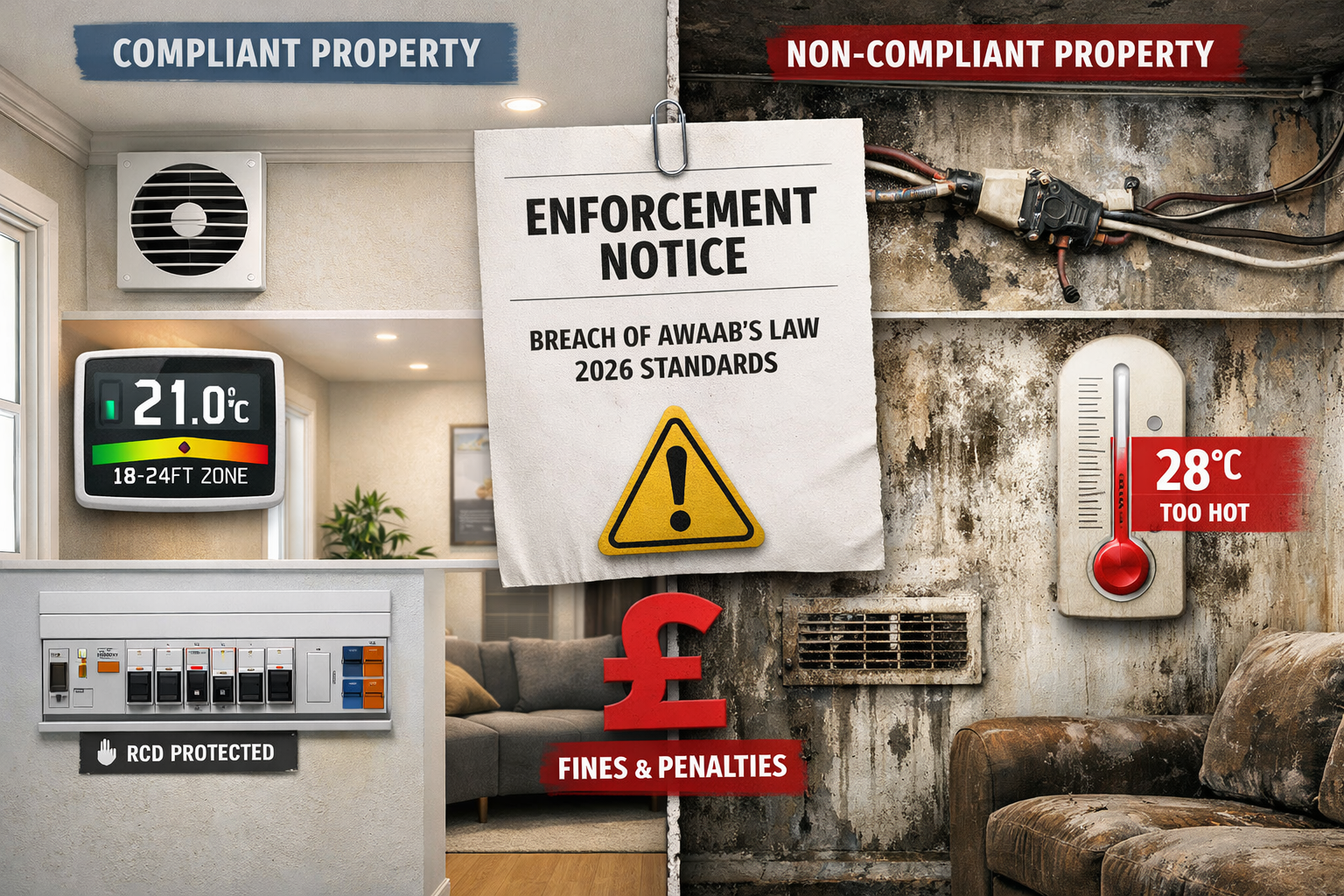
| Financial Penalty | Failure to investigate or remediate within statutory timelines | Fine up to £30,000 per offense | £30,000 per violation |
| Emergency Remedial Action | Immediate serious hazard, landlord non-responsive | Council conducts emergency repairs | Full cost recovery from landlord |
| Banning Order | Repeated serious breaches, pattern of non-compliance | Prohibition from letting properties | Loss of rental income, reputational damage |
The person-centered assessment approach means enforcement officers have discretion to act on hazards that wouldn't traditionally trigger HHSRS Category 1 classification, particularly where vulnerable tenants are affected.[3]
Proactive Compliance Strategies
Strategy 1: Annual Comprehensive Surveys
Rather than waiting for tenant complaints, proactive landlords commission annual Level 3 surveys to identify emerging hazards before they become serious. This approach:
- ✅ Identifies issues at early, less expensive stages
- ✅ Demonstrates due diligence to enforcement officers
- ✅ Protects tenant wellbeing and landlord reputation
- ✅ Enables planned maintenance budgeting
Strategy 2: Specialist Hazard Assessments
Certain hazards require specialist expertise beyond general surveying:
- ⚡ Electrical Installation Condition Reports (EICR) every 5 years minimum
- 🔥 Fire Risk Assessments for HMOs and multi-occupancy buildings
- 🌡️ Thermal performance surveys for properties with heating/cooling concerns
- 💧 Specialist damp investigations where moisture sources are unclear
Understanding structural survey pricing helps landlords budget appropriately for these essential assessments.
Strategy 3: Tenant Communication Protocols
Effective hazard management requires tenant cooperation and prompt reporting:
- 📝 Clear reporting procedures for maintenance concerns
- 📞 Emergency contact numbers for urgent hazards
- 📚 Tenant guidance on ventilation, heating use, and condensation prevention
- 🔄 Regular check-ins to identify unreported issues
Strategy 4: Preventative Maintenance Programs
Systematic maintenance prevents many hazards from developing:
- 🔧 Annual boiler servicing (heating and carbon monoxide safety)
- 🏠 Regular property inspections (quarterly or bi-annually)
- 💨 Ventilation system maintenance (extract fans, trickle vents)
- 🪟 Window and door maintenance (seals, locks, restrictors)
- ⚡ Electrical system monitoring (RCD testing, outlet condition)
Remediation Timeline Compliance
Meeting statutory investigation and remediation timelines is critical to penalty avoidance. The law specifies:
Investigation Timelines:
- ⏰ 24 hours for emergency hazards (with photographic evidence)
- ⏰ 10 working days for non-emergency damp and mould
- ⏰ 14 days for other Phase 2 hazards (electrical, thermal, structural)
Remediation Timelines:
- 🔧 Emergency hazards: Immediate temporary mitigation, permanent fix within 7 days
- 🔧 Serious hazards: Remediation commencement within 14 days, completion within 28 days
- 🔧 Standard hazards: Remediation plan within 28 days, completion within 3 months
These timelines are statutory obligations, not guidelines. Failure to meet them triggers automatic enforcement consideration.[1]
Phase 3 Preview: Preparing for 2027 Full Implementation
Remaining Hazards Coming in 2027
While the 2026 expansion significantly broadens hazard coverage, Phase 3 in 2027 will complete the rollout by incorporating all remaining HHSRS hazards except overcrowding:
Environmental Hazards:
- ☢️ Asbestos (particularly in pre-2000 properties)
- 💨 Carbon monoxide (beyond emergency situations)
- 🔋 Lead (paint, pipes, contamination)
- ☢️ Radiation (radon in affected areas)
Comfort and Security Hazards:
- 🔊 Noise (inadequate sound insulation)
- 💡 Inadequate lighting (natural and artificial)
- 🚪 Intruder security (locks, access control)
Forward-thinking landlords are already commissioning specialist surveys to identify these hazards in advance of mandatory compliance.[1][3]
Building a Compliance Roadmap
2026 Priority Actions:
- ✅ Commission comprehensive Level 3 survey covering all Phase 2 hazards
- ✅ Obtain EICR for electrical safety verification
- ✅ Conduct thermal performance assessment
- ✅ Review and upgrade fire safety measures
- ✅ Establish 24-hour emergency response capability
- ✅ Implement tenant reporting and communication protocols
2027 Preparation:
- 🔍 Identify properties with potential asbestos (pre-2000 construction)
- 🔍 Assess radon risk in affected geographic areas
- 🔍 Review sound insulation adequacy (particularly conversions and HMOs)
- 🔍 Evaluate security measures against modern standards
- 🔍 Plan budgets for Phase 3 compliance works
The Business Case for Proactive Compliance
While comprehensive surveys and remediation works represent significant investment, the alternative costs of non-compliance far exceed prevention expenses:
Non-Compliance Costs:
- 💰 Fines up to £30,000 per offense (multiple offenses possible per property)
- 💰 Emergency remediation at inflated council contractor rates
- 💰 Legal costs defending enforcement action
- 💰 Void periods during mandatory works
- 💰 Reputational damage affecting future lettings
- 💰 Potential banning orders eliminating rental income entirely
Proactive Compliance Investment:
- 💷 Level 3 survey: £800-£1,500 depending on property size
- 💷 EICR: £150-£300
- 💷 Thermal imaging survey: £200-£400
- 💷 Specialist damp survey: £300-£600
- 💷 Remediation works: Variable, but planned works cost 30-50% less than emergency repairs
The financial equation strongly favors prevention through comprehensive assessment and planned remediation.
Conclusion
Awaab's Law Expansion 2026: Level 3 Surveys for New Hazards Like Electrical Risks and Excess Heat in Private Rentals represents the most significant shift in landlord obligations in decades. The extension to electrical hazards, thermal risks, structural concerns, and fire safety transforms property management from reactive complaint-handling to proactive hazard prevention.
The person-centered assessment approach means traditional assumptions about hazard severity no longer apply. What matters now is whether a hazard poses significant risk to the actual tenants in residence—considering their age, health status, and vulnerability. This fundamentally changes how properties must be assessed and maintained.
Level 3 surveys provide the comprehensive assessment necessary to identify these diverse hazards before they trigger enforcement action. Unlike basic inspections, these detailed surveys examine hidden spaces, employ specialist testing, and provide the documentation needed to demonstrate compliance and due diligence.
With penalties reaching £30,000 per offense, improvement notices, banning orders, and council-ordered emergency remediation all available to enforcement officers, the cost of non-compliance far exceeds the investment in proactive hazard management.
Actionable Next Steps
Immediate Actions (Next 30 Days):
- 📋 Commission a comprehensive Level 3 survey for all rental properties
- ⚡ Obtain current EICR for electrical safety verification
- 📞 Establish emergency response protocols with 24-hour surveyor availability
- 📝 Review and update tenant reporting procedures
Short-Term Actions (Next 90 Days):
- 🔧 Address all identified emergency and serious hazards
- 🌡️ Conduct thermal performance assessments for properties with heating/cooling complaints
- 💧 Commission specialist damp surveys where moisture issues exist
- 📚 Implement preventative maintenance schedules
Long-Term Planning (Next 12 Months):
- 🔮 Prepare for Phase 3 (2027) hazards including asbestos and radon
- 💰 Budget for ongoing compliance surveys and remediation works
- 📊 Develop property improvement plans prioritizing highest-risk properties
- 🤝 Build relationships with qualified surveyors and specialist contractors
The 2026 expansion of Awaab's Law is not merely a regulatory burden—it represents an opportunity to elevate property standards, protect tenant wellbeing, and build sustainable, compliant rental businesses. Landlords who embrace comprehensive hazard assessment and proactive remediation will not only avoid penalties but also enhance property values, tenant satisfaction, and long-term returns.
The memory of Awaab Ishak demands nothing less than a fundamental transformation in how rental properties are managed and maintained. The tools, knowledge, and professional support necessary for compliance are readily available. The question is no longer whether to comply, but how quickly landlords will act to protect their tenants and their businesses.
References
[1] Awaabs Law – https://www.procurementhub.co.uk/news/awaabs-law/
[2] Awaabs Law – https://www.envirovent.com/social-housing/awaabs-law/
[3] Awaabs Law Guidance For Social Landlords Timeframes For Repairs In The Social Rented Sector – https://www.gov.uk/government/publications/awaabs-law-guidance-for-social-landlords/awaabs-law-guidance-for-social-landlords-timeframes-for-repairs-in-the-social-rented-sector