
AI adoption among property management professionals has surged from 20% to 58% in just 18 months[4], yet only 8% of companies have achieved full workflow automation[4]. This gap reveals a critical opportunity: as homebuying reforms mandate upfront property assessments in 2026, Technology-Driven Early Property Insights: Reducing 2026 Building Survey Delays in Reform-Heavy Transactions becomes essential for maintaining transaction velocity. Real-time data streams from air quality sensors, energy monitoring systems, and structural IoT devices now enable surveyors to deliver comprehensive condition reports before properties even reach the market, fundamentally transforming the traditional survey timeline.
Key Takeaways
- 58% of property professionals now use AI tools, but only 8% have fully automated workflows, creating opportunities for competitive advantage through technology integration[4]
- Real-time building data from IoT sensors enables upfront property assessments that satisfy 2026 reform requirements while reducing survey delays by weeks
- Morgan Stanley projects $34 billion in efficiency gains for real estate by 2030, with 37% of tasks automatable through technology adoption[4]
- Smart building systems providing air quality, energy, and structural monitoring have become baseline expectations for modern property transactions[1]
- Automated workflows and predictive analytics reduce manual errors in survey reports while accelerating delivery timelines for reform-compliant assessments
The 2026 Reform Landscape: Why Early Property Insights Matter
The property transaction landscape has fundamentally shifted in 2026. New homebuying reforms require mandatory upfront condition assessments before properties enter the market[2], creating unprecedented pressure on survey capacity and delivery timelines. Traditional survey methods—relying on scheduled site visits, manual inspections, and sequential reporting—cannot meet the compressed timelines these reforms demand.
This regulatory transformation coincides with rapid technology adoption across the real estate sector. Commercial real estate organizations now prioritize tenant relationship management, lease drafting, and portfolio management as top AI deployment areas[3], while property managers increasingly deploy AI for property descriptions and customer communications[4].
The Technology-Reform Convergence
Technology-Driven Early Property Insights: Reducing 2026 Building Survey Delays in Reform-Heavy Transactions addresses this convergence directly. Modern platforms consolidate project performance, labor costs, leasing activity, market conditions, and financial metrics into real-time dashboards[1], enabling proactive identification of property issues rather than reactive problem-solving during compressed transaction windows.
The benefits extend beyond speed:
- Reduced valuation queries through comprehensive upfront data
- Decreased transaction fall-through rates from unexpected survey findings
- Enhanced buyer confidence with transparent condition information
- Streamlined lender approval processes using standardized digital reports
However, implementation challenges persist. 27% of commercial real estate organizations report difficulties with AI implementation, including technical issues, lack of expertise, and organizational resistance[3]. Despite high adoption rates, 19% of organizations remain in early stages of their AI journey[3], suggesting substantial opportunity for technology maturation.
Real-Time Building Data: The Foundation for Early Insights
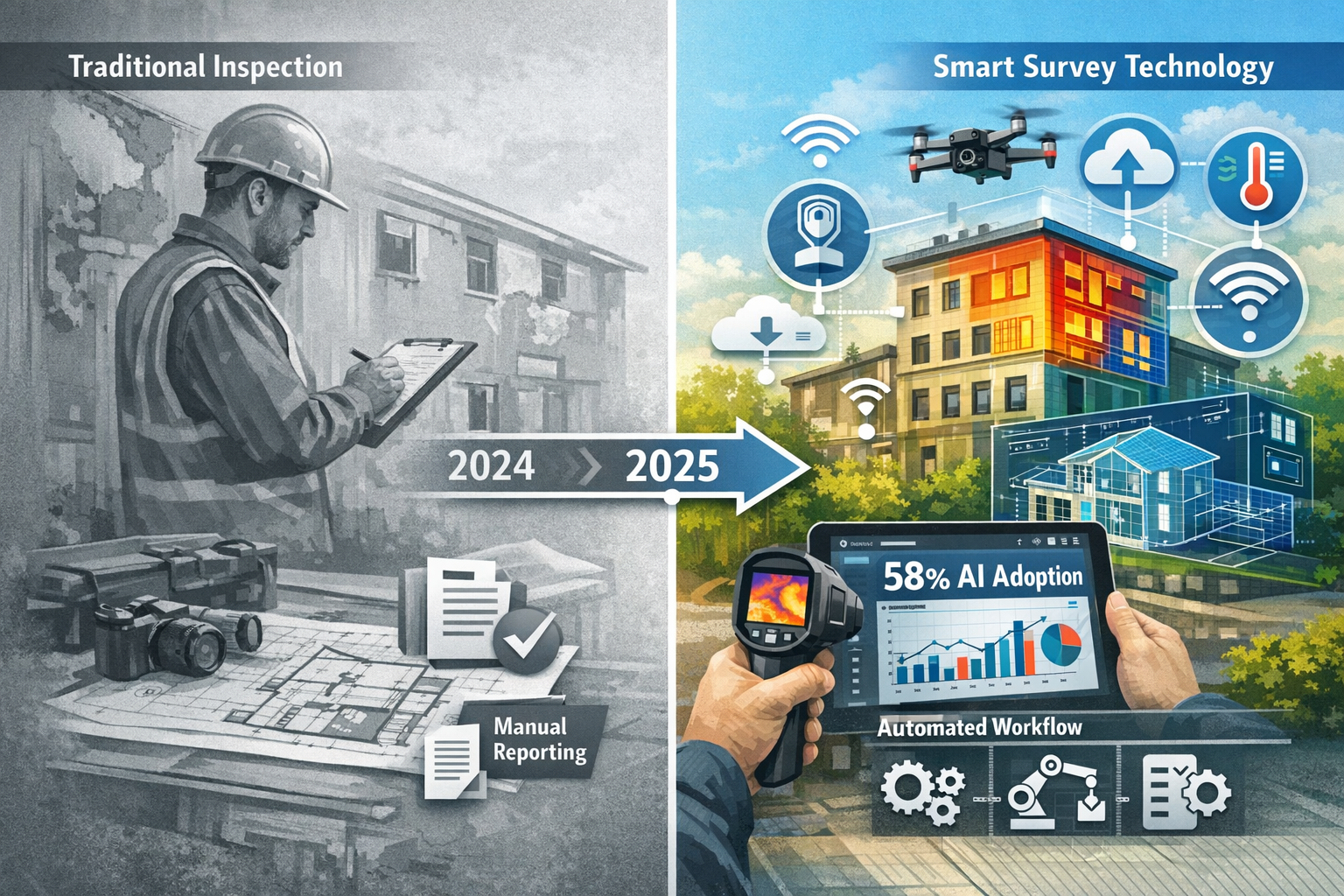
Smart building systems have evolved from luxury features to baseline expectations in 2026[1]. These integrated technologies provide continuous streams of property condition data that surveyors can access remotely, enabling preliminary assessments before physical site visits.
Core Technology Components
IoT Sensor Networks form the backbone of early property insights. Modern installations include:
- 🌡️ Temperature and humidity sensors detecting moisture accumulation patterns
- 💨 Air quality monitors measuring particulate matter, CO2, and volatile organic compounds
- ⚡ Energy consumption trackers identifying inefficient systems requiring attention
- 🏗️ Structural movement sensors detecting subsidence or settlement issues
- 💧 Water leak detectors providing early warning of plumbing failures
These systems generate continuous data streams that reveal property conditions over time rather than single-point-in-time snapshots. For choosing the right property survey, this historical data provides invaluable context about seasonal variations, system performance trends, and emerging maintenance needs.
Energy Performance and Environmental Monitoring
Energy monitoring systems deliver granular insights into building performance. Real-time tracking of heating, cooling, lighting, and appliance consumption reveals:
- System efficiency degradation indicating equipment approaching end-of-life
- Insulation performance gaps through thermal envelope analysis
- HVAC optimization opportunities reducing operating costs
- Renewable energy generation metrics for properties with solar installations
Air quality monitoring has become particularly critical following increased awareness of indoor environmental health. Continuous measurement of particulate matter (PM2.5, PM10), carbon dioxide levels, and humidity enables surveyors to assess ventilation adequacy and identify potential mold risk areas before conducting physical inspections[6].
Integration with Traditional Survey Methods
Technology-driven insights complement rather than replace traditional survey expertise. Professional surveyors use real-time data to:
- Prioritize inspection focus areas based on sensor alerts
- Validate automated findings through physical examination
- Contextualize historical patterns within broader property assessment
- Generate comprehensive reports combining digital and observational data
For properties requiring RICS building surveys, this integrated approach delivers more thorough assessments within compressed reform-mandated timelines.
Automation Workflows: Accelerating Survey Delivery
Automation workflows represent the operational bridge between raw building data and actionable survey insights. These systems streamline critical administrative tasks including job cost report generation, contract change tracking, lease renewal management, and compliance deadline monitoring[1].
Automated Data Processing
Modern survey platforms automatically process incoming sensor data through:
Anomaly Detection Algorithms that flag unusual patterns requiring investigation:
- Sudden humidity spikes indicating potential leaks
- Temperature fluctuations suggesting HVAC failures
- Energy consumption anomalies revealing equipment issues
- Structural movement exceeding normal settlement ranges
Predictive Analytics Models that forecast future maintenance needs:
- Schedule delay detection for planned remediation work
- ROI simulation tools for material cost impact assessment[1]
- Maintenance prediction timelines based on equipment age and usage patterns
Compliance Verification Systems that ensure reports meet regulatory requirements:
- Automated checklist completion for reform-mandated assessments
- Standard template population reducing manual entry errors
- Cross-reference validation against building regulations
- Digital signature workflows expediting approval processes
Technology-Driven Early Property Insights in Practice
Consider a typical 2026 transaction scenario: A property enters the market with mandatory upfront assessment requirements. Rather than scheduling a surveyor visit that might occur weeks later, the process now unfolds differently:
Week 1: IoT sensors and smart building systems provide immediate access to 12 months of historical data covering energy consumption, air quality metrics, humidity patterns, and structural stability indicators.
Week 2: Automated analysis identifies three areas requiring detailed inspection—elevated humidity in the basement, declining HVAC efficiency, and minor structural movement patterns. Surveyor schedules targeted site visit focusing on these specific issues.
Week 3: Physical inspection validates automated findings, surveyor captures additional observations, and integrated platform generates comprehensive report combining sensor data with professional assessment.
Week 4: Reform-compliant upfront assessment delivered to market, complete with historical trends, current condition analysis, and maintenance recommendations.
This compressed timeline—previously requiring 6-8 weeks—demonstrates how Technology-Driven Early Property Insights: Reducing 2026 Building Survey Delays in Reform-Heavy Transactions operates in practice.
Workflow Integration Challenges
Despite clear benefits, full automation remains elusive. Only 8% of property management companies have achieved complete workflow automation[4], with common obstacles including:
- Legacy system integration requiring custom API development
- Data standardization issues across different sensor manufacturers
- Training requirements for staff adapting to new platforms
- Initial capital investment in sensor infrastructure and software platforms
For organizations considering implementation, understanding how long a homebuyers survey takes under traditional methods provides baseline comparison for measuring efficiency gains.
Reducing Valuation Delays Through Comprehensive Upfront Data

Valuation delays represent a significant bottleneck in property transactions, particularly when unexpected survey findings trigger additional investigations or price renegotiations. Technology-driven early insights minimize these delays through comprehensive upfront disclosure.
The Valuation-Survey Connection
Mortgage lenders require confidence in property condition before approving financing. Traditional sequential processes—where surveys occur after initial valuations—frequently result in:
- Valuation revisions following negative survey findings
- Additional specialist inspections for issues like subsidence or drainage problems
- Renegotiation cycles consuming weeks of transaction time
- Transaction failures when issues prove more severe than initially apparent
Early property insights reverse this sequence. Comprehensive condition data informs initial valuations, reducing subsequent surprises and revision requirements.
Data-Driven Valuation Adjustments
Real-time building data enables precise valuation adjustments based on:
Energy Performance Metrics
- Actual consumption data versus theoretical EPC ratings
- System efficiency measurements informing replacement cost estimates
- Renewable energy generation capacity affecting operating cost projections
Structural Health Indicators
- Historical movement patterns distinguishing normal settlement from active subsidence
- Foundation moisture levels indicating potential damp issues
- Load-bearing element condition assessments
Environmental Quality Factors
- Air quality measurements affecting habitability assessments
- Noise level monitoring for properties near transport corridors
- Natural light availability through automated lux measurements
For properties requiring structural survey pricing considerations, comprehensive upfront data enables more accurate cost estimates from the outset.
Virtual and Augmented Reality Integration
Virtual and augmented reality technologies accelerate design decisions and leasing cycles[1], with applications extending to survey processes:
- Virtual property tours enabling remote preliminary assessments
- AR overlay visualization showing hidden systems and structural elements
- 3D modeling from drone imagery and photogrammetry
- Digital twin creation combining sensor data with spatial models
These technologies prove particularly valuable for commercial building surveys where property complexity and scale make traditional inspection methods time-consuming and expensive.
Implementation Strategies for Survey Practices
Adopting technology-driven early property insights requires strategic planning and phased implementation. Survey practices must balance innovation with professional standards and regulatory compliance.
Technology Stack Selection
Successful implementation begins with appropriate technology selection:
Essential Components:
- IoT sensor platform with multi-parameter monitoring capabilities
- Cloud-based data management system with secure access controls
- Analytics engine providing automated anomaly detection
- Reporting platform generating reform-compliant assessment documents
- Integration middleware connecting with existing practice management systems
Evaluation Criteria:
- Compatibility with RICS reporting standards
- Data security and GDPR compliance
- Scalability for growing property portfolios
- Vendor support and training resources
- Total cost of ownership including hardware, software, and maintenance
Phased Adoption Approach
Rather than attempting full-scale transformation, successful practices adopt technology incrementally:
Phase 1: Pilot Program (Months 1-3)
- Deploy sensors in 10-20 properties across different types
- Train core team on data interpretation and platform usage
- Develop internal protocols for integrating digital and traditional methods
- Measure baseline efficiency metrics for comparison
Phase 2: Process Refinement (Months 4-6)
- Expand sensor deployment based on pilot learnings
- Automate routine report sections while maintaining professional oversight
- Establish quality assurance procedures for technology-assisted surveys
- Document efficiency gains and client satisfaction improvements
Phase 3: Scale and Optimization (Months 7-12)
- Roll out technology across full service portfolio
- Implement advanced analytics and predictive capabilities
- Develop specialized offerings leveraging technology advantages
- Train all staff on integrated workflows
Understanding the difference between Level 2 and Level 3 surveys helps practices determine appropriate technology deployment for different service tiers.
Staff Training and Change Management
Technology adoption succeeds or fails based on human factors. Effective change management addresses:
Technical Skills Development
- Platform operation and data interpretation training
- Sensor installation and maintenance procedures
- Report generation using automated templates
- Troubleshooting common technical issues
Professional Judgment Enhancement
- Validating automated findings through physical inspection
- Contextualizing sensor data within broader property assessment
- Communicating technology-assisted findings to clients
- Maintaining professional standards in accelerated workflows
Client Communication Strategies
- Explaining technology benefits without diminishing professional expertise
- Managing expectations around report delivery timelines
- Demonstrating value of comprehensive upfront data
- Addressing privacy and data security concerns
Measuring Success: KPIs for Technology-Driven Surveys
Effective implementation requires clear metrics demonstrating value delivery. Key performance indicators should track both operational efficiency and client outcomes.
Operational Efficiency Metrics
Survey Delivery Timeline
- Average days from instruction to report delivery
- Percentage of surveys meeting reform-mandated deadlines
- Reduction in follow-up inspection requirements
- Time saved through automated data analysis
Resource Utilization
- Surveyor productivity (properties assessed per week)
- Administrative time reduction through automation
- Cost per survey including technology overhead
- Return on technology investment timeline
Quality Indicators
- Report accuracy and completeness scores
- Client satisfaction ratings
- Professional indemnity claims frequency
- Peer review assessment results
Client Outcome Metrics
Transaction Velocity
- Average time from listing to exchange
- Percentage reduction in valuation delays
- Fall-through rate improvements
- Renegotiation frequency changes
Information Quality
- Comprehensiveness of upfront property data
- Accuracy of condition predictions versus actual findings
- Client confidence scores in purchasing decisions
- Lender satisfaction with assessment quality
For practices offering specific defect reports or monitoring surveys, technology enables more precise tracking of condition changes over time.
Future Developments: The Evolution Continues
Technology-driven property insights continue evolving rapidly. Understanding emerging trends helps practices prepare for future capabilities and client expectations.
Advanced AI Applications
Beyond current automation, emerging AI capabilities include:
Natural Language Generation producing narrative report sections from structured data, maintaining professional tone while accelerating documentation.
Computer Vision Analysis processing property photographs to identify defects, material types, and construction quality indicators automatically.
Predictive Maintenance Modeling forecasting component failures and optimal intervention timing based on usage patterns and environmental conditions.
Comparative Market Analysis automatically benchmarking property condition against comparable sales to inform valuation adjustments.
Blockchain and Distributed Ledgers
Blockchain technology promises to revolutionize property records through:
- Immutable condition history following properties across ownership changes
- Automated compliance verification against building regulations
- Smart contract integration triggering actions based on condition thresholds
- Transparent maintenance records accessible to all transaction parties
Regulatory Evolution
As technology adoption accelerates, regulatory frameworks continue adapting:
- Standardized data formats for cross-platform compatibility
- Professional competency requirements for technology-assisted surveys
- Data privacy protections balancing transparency with owner rights
- Liability frameworks clarifying responsibility for automated findings
Practices serving diverse geographic areas, from chartered surveyors in Central London to chartered surveyors in Essex, must monitor regional regulatory variations affecting technology deployment.
Conclusion
Technology-Driven Early Property Insights: Reducing 2026 Building Survey Delays in Reform-Heavy Transactions represents more than incremental improvement—it fundamentally transforms how property condition assessment integrates with transaction processes. The convergence of mandatory upfront assessments, smart building systems, and AI-powered analytics creates unprecedented opportunities for survey practices willing to embrace change.
The evidence compels action: AI adoption has surged to 58% among property professionals[4], Morgan Stanley projects $34 billion in efficiency gains by 2030[4], and real-time building data now enables comprehensive condition assessment before traditional survey timelines even begin. Yet only 8% of companies have achieved full workflow automation[4], revealing substantial competitive advantage available to early adopters.
Actionable Next Steps
For survey practices ready to implement technology-driven insights:
- Assess current capabilities against 2026 reform requirements and identify gaps
- Select pilot properties representing diverse building types for initial sensor deployment
- Invest in staff training ensuring teams can interpret and validate automated findings
- Establish quality protocols maintaining professional standards in accelerated workflows
- Measure and communicate results demonstrating value to clients and stakeholders
- Plan phased expansion scaling successful approaches across full service portfolio
For property buyers and sellers navigating 2026's reform-heavy landscape, understanding how technology enables faster, more comprehensive assessments helps set realistic transaction expectations. Engaging local chartered surveyors with advanced technology capabilities ensures access to upfront insights that reduce delays and support confident decision-making.
The transformation has begun. Practices that successfully integrate technology-driven early property insights with professional expertise will lead the industry through this pivotal transition, delivering superior client outcomes while maintaining the rigorous standards that define the surveying profession.
References
[1] Real Estate Technology In 2026 Tools To Drive Growth And Efficiency – https://www.bradymartz.com/real-estate-technology-in-2026-tools-to-drive-growth-and-efficiency/
[2] Homebuying Reform Impacts On Building Surveys Preparing For Mandatory Upfront Condition Assessments In 2026 – https://nottinghillsurveyors.com/blog/homebuying-reform-impacts-on-building-surveys-preparing-for-mandatory-upfront-condition-assessments-in-2026
[3] Commercial Real Estate Outlook – https://www.deloitte.com/us/en/insights/industry/financial-services/commercial-real-estate-outlook.html
[4] Tech Shifts Property Managers Cant Ignore – https://www.buildium.com/blog/tech-shifts-property-managers-cant-ignore/
[5] Technology For Early Property Insight In 2026 Building Surveys Reducing Delays In Complex Valuations – https://nottinghillsurveyors.com/blog/technology-for-early-property-insight-in-2026-building-surveys-reducing-delays-in-complex-valuations
[6] Uli Emerging Trends Global Report 2026 – https://www.pwc.com/gx/en/industries/financial-services/assets/uli-emerging-trends-global-report-2026.pdf