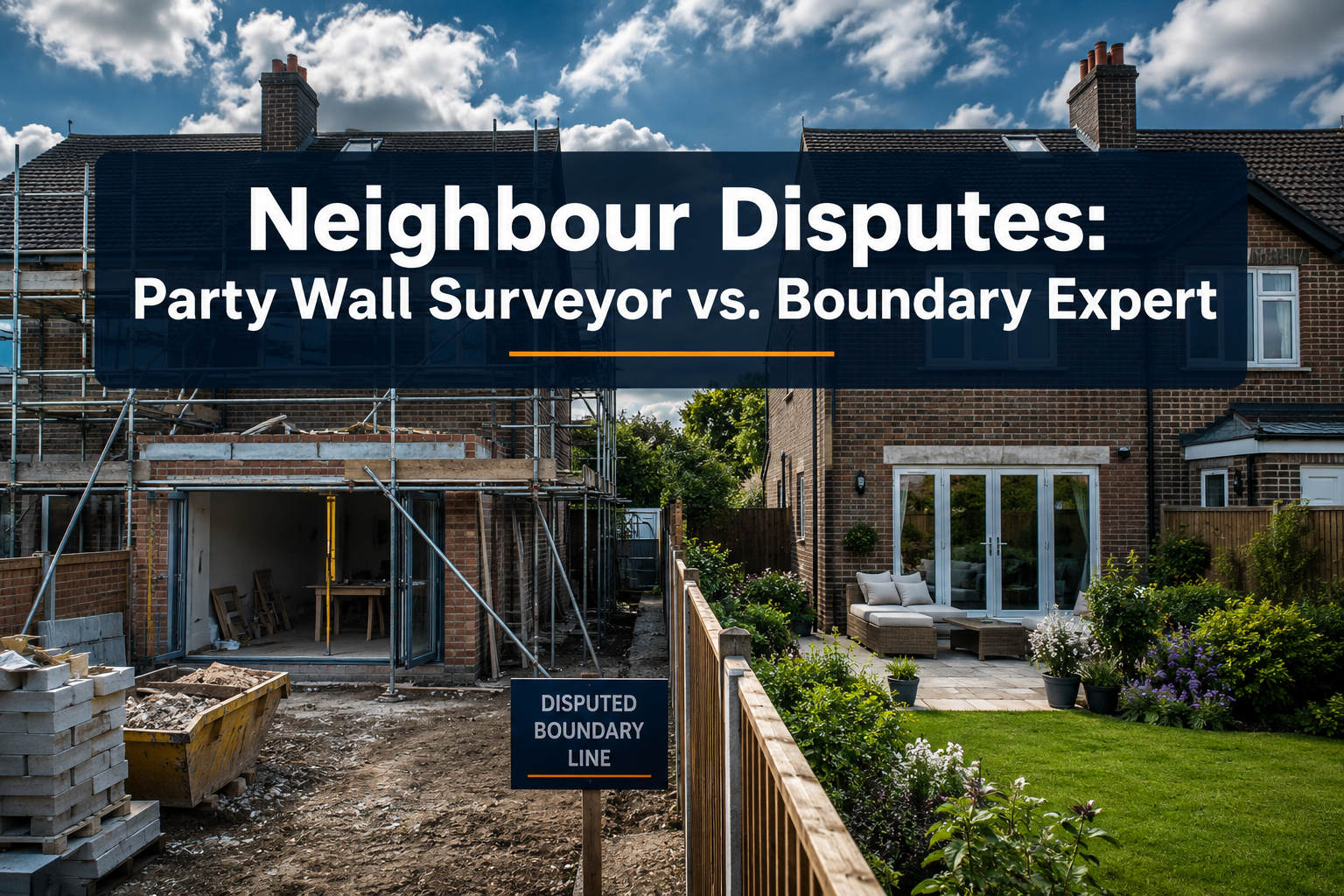

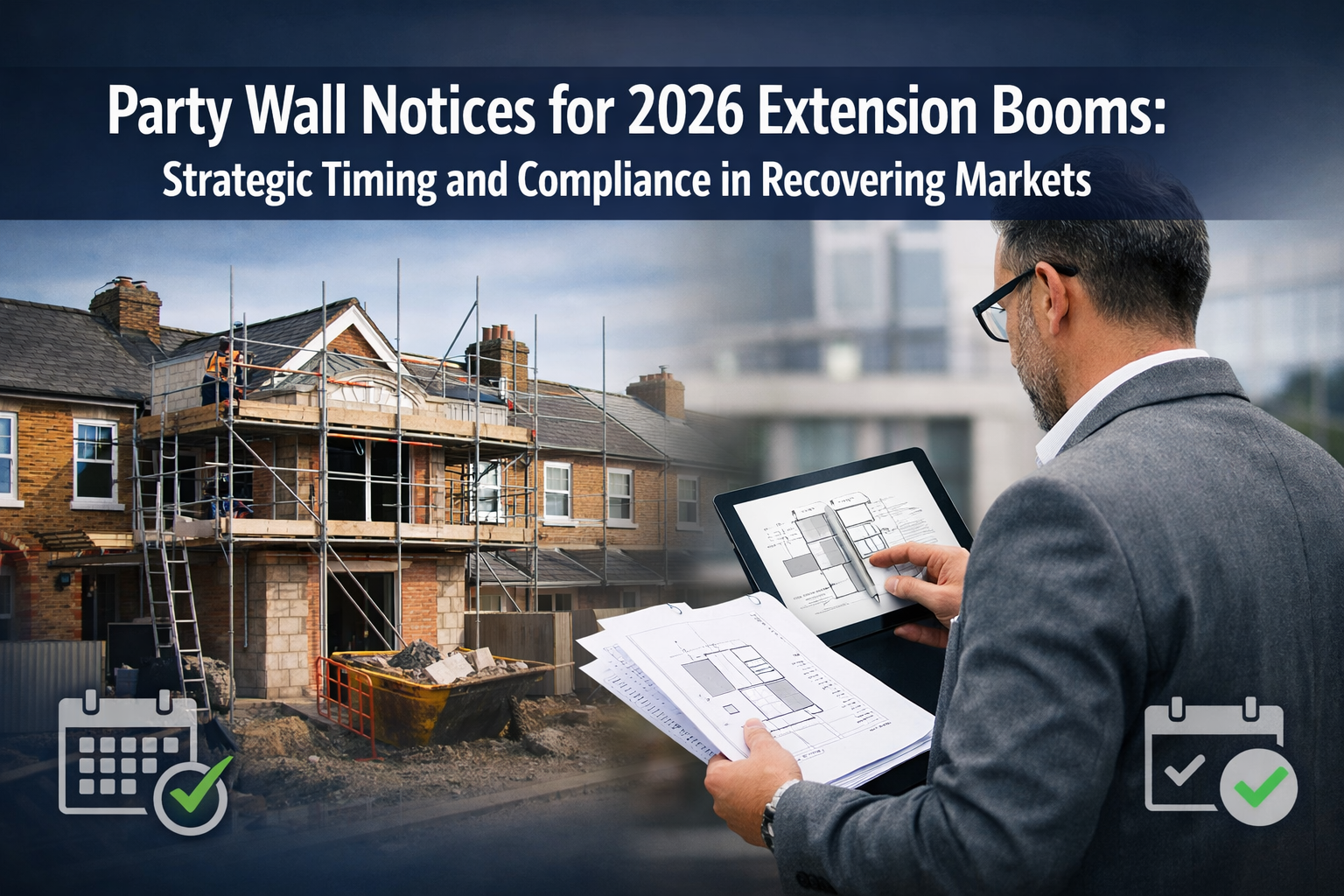
As property markets regain momentum in 2026, homeowners across the UK are dusting off extension plans that were shelved during economic uncertainty. This resurgence is creating unprecedented demand for party wall surveyors, who must now balance efficiency with rigorous compliance standards. For professionals navigating this surge, understanding strategic timing and regional compliance variations isn't just beneficial—it's essential for maintaining service quality while meeting heightened demand.
The recovery in housing markets has triggered a wave of home improvement projects, particularly extensions and loft conversions that require party wall notices. With construction activity rebounding and homeowners investing in their properties rather than moving, party wall surveyors face a critical challenge: how to streamline processes without compromising the legal protections that party wall procedures provide to both building owners and adjoining owners.
Key Takeaways
- Notice timing is critical: Serving party wall notices at least two months before planned work begins allows adequate time for surveyor appointments, awards, and dispute resolution during high-demand periods
- Regional variations matter: Extension booms are concentrated in specific areas, requiring surveyors to understand local market dynamics and adjust capacity accordingly
- Compliance cannot be rushed: Despite increased demand, maintaining thorough schedules of condition and proper documentation protects all parties and reduces future disputes
- Strategic planning reduces delays: Early engagement with surveyors and proactive neighbor communication can prevent bottlenecks during peak construction seasons
- Digital tools enhance efficiency: Modern compliance software and digital condition surveys help surveyors handle higher volumes without sacrificing quality
Understanding Party Wall Notices for 2026 Extension Booms: Strategic Timing and Compliance in Recovering Markets
The Legal Framework and Notice Requirements
The Party Wall etc. Act 1996 establishes clear requirements for property owners undertaking work that affects shared walls, boundaries, or involves excavation near neighboring properties. [1] Understanding these fundamentals becomes even more crucial during market booms when both homeowners and surveyors face time pressures.
Three main types of party wall work require notices:
- Work directly on an existing party wall (Section 2) – modifications, repairs, or structural changes
- Building on the boundary line (Section 1) – new walls or structures at the property boundary
- Excavation within specified distances (Section 6) – digging within three or six meters of neighboring structures
The notice periods are non-negotiable:
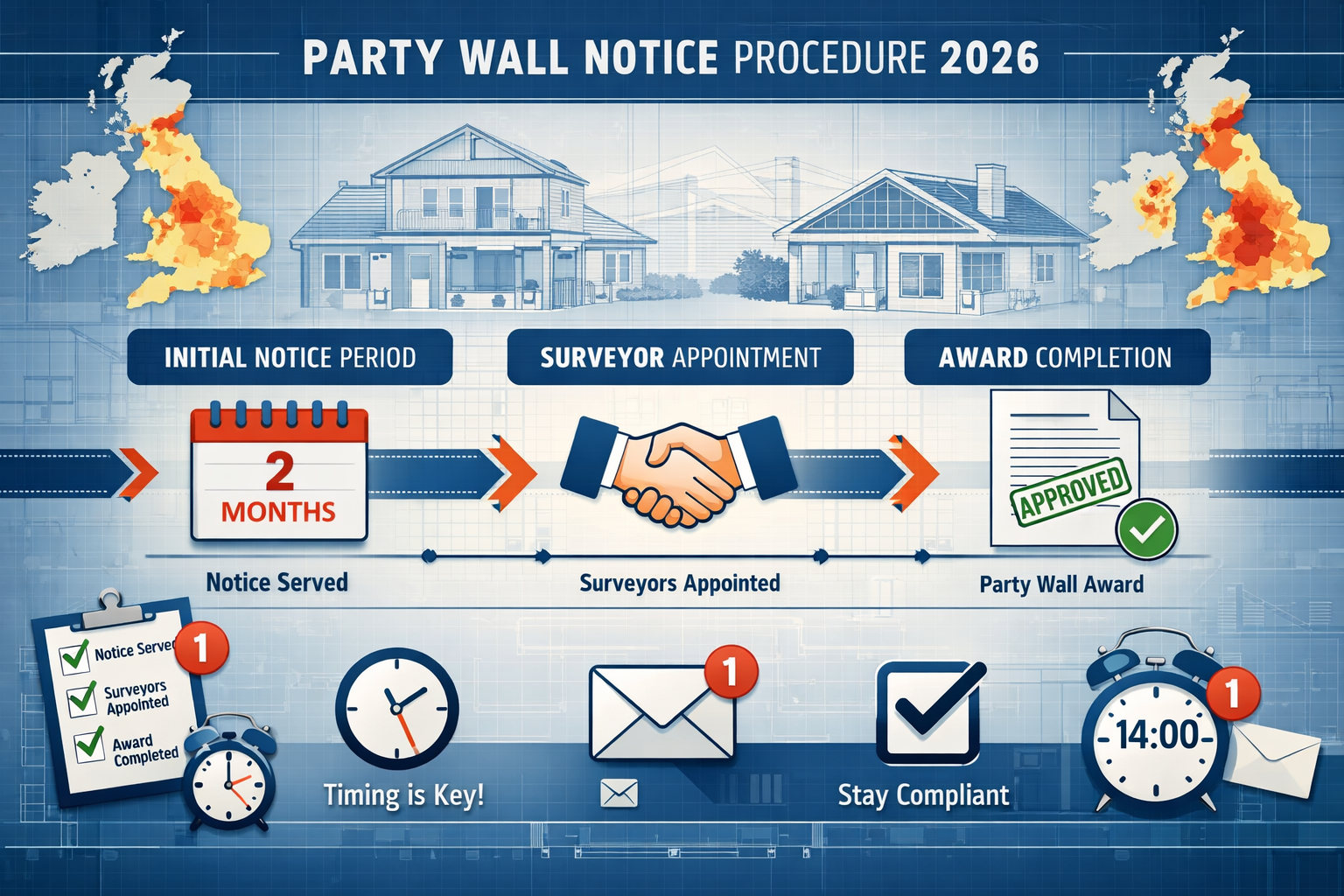
- Two months for Section 2 work (work on existing party walls)
- One month for Section 1 work (new boundary walls)
- One month for Section 6 work (excavation)
During the 2026 extension boom, these timelines create planning challenges. Many homeowners, eager to capitalize on favorable market conditions or contractor availability, underestimate how notice periods can delay project commencement. This is where strategic timing becomes paramount.
Why 2026 Is Seeing Extension Surges
Multiple factors converge to create the current extension boom:
Economic Recovery Indicators 🏗️
- Stabilizing interest rates making home improvements more financially viable
- Increased property values encouraging investment in existing homes
- Construction material costs normalizing after previous volatility
Behavioral Shifts
- Remote and hybrid work patterns creating demand for home offices and additional space
- "Improve, don't move" mindset reducing relocation activity
- Pent-up demand from projects delayed during economic uncertainty
Specific Project Types Driving Demand
- Rear extensions for kitchen and living space expansion
- Loft conversions creating additional bedrooms or home offices
- Side extensions on semi-detached and terraced properties
- Basement excavations in urban areas with limited horizontal expansion options
The surge in loft conversions particularly impacts party wall procedures, as these projects frequently affect shared walls in terraced and semi-detached properties. [2] This type of work requires careful coordination between multiple parties and thorough documentation.
Strategic Timing for Party Wall Notices in High-Demand Periods
Optimal Notice Timing: The Two-Plus-Two Approach
Experienced surveyors recommend what's known as the "two-plus-two" approach during boom periods:
Phase 1: Pre-Notice Preparation (2 weeks)
- Finalize architectural plans and specifications
- Identify all affected neighbors
- Engage a party wall surveyor for preliminary advice
- Prepare comprehensive notice documentation
Phase 2: Formal Notice Period (2 months minimum)
- Serve notices to all adjoining owners
- Allow 14-day response period for neighbors
- Appoint surveyors (or confirm agreed surveyor)
- Begin preliminary condition surveys
Phase 3: Award Preparation (2-4 weeks)
- Complete detailed schedules of condition
- Draft party wall award with specifications and safeguards
- Review and finalize award documentation
- Serve awards to all parties
Phase 4: Buffer Period (2 weeks)
- Allow time for any queries or clarifications
- Coordinate with contractors on access and methodology
- Confirm insurance and liability arrangements
This four-month total timeline from initial planning to construction start may seem lengthy, but it significantly reduces the risk of delays, disputes, and party wall disagreements that can halt projects entirely.
Common Timing Mistakes During Market Booms
⚠️ Critical Errors to Avoid:
1. Serving Notices Too Late
Many homeowners secure contractors and set start dates before serving party wall notices. When neighbors dissent or surveyors identify issues, the entire project timeline collapses, potentially losing contractor availability and incurring additional costs.
2. Underestimating Surveyor Availability
During boom periods, experienced party wall surveyors become heavily booked. Waiting until after notice service to seek surveyor appointments can add weeks to the process.
3. Ignoring Seasonal Construction Patterns
Spring and summer see peak construction activity. Serving notices in late winter for spring commencement creates competition for surveyor time and contractor schedules.
4. Inadequate Neighbor Communication
Formal notices without prior informal discussion often trigger defensive responses. A brief conversation explaining plans before formal notice service can prevent unnecessary disputes.
5. Rushing Schedule of Condition Surveys
Thorough condition surveys protect both parties. Rushing this critical step to meet construction deadlines creates liability risks and potential future disputes over pre-existing versus construction-related damage.
Coordinating Multiple Properties
Terraced houses and blocks of flats present unique challenges when extensions affect multiple adjoining owners:
Synchronized Notice Service
Serve notices to all affected parties simultaneously to avoid information disparities and ensure consistent timelines.
Consolidated Award Approach
Where possible, prepare consolidated awards covering all affected parties, reducing administrative burden and ensuring consistent terms.
Staggered Survey Appointments
Schedule condition surveys efficiently to minimize disruption while ensuring thorough documentation. Professional surveyors can often complete multiple adjacent property surveys in a single day.
Clear Communication Channels
Establish a single point of contact for all parties to prevent confusion and ensure consistent information flow.
Compliance Essentials: Maintaining Standards During High-Volume Periods
Non-Negotiable Compliance Requirements
Even during peak demand, certain compliance standards cannot be compromised:
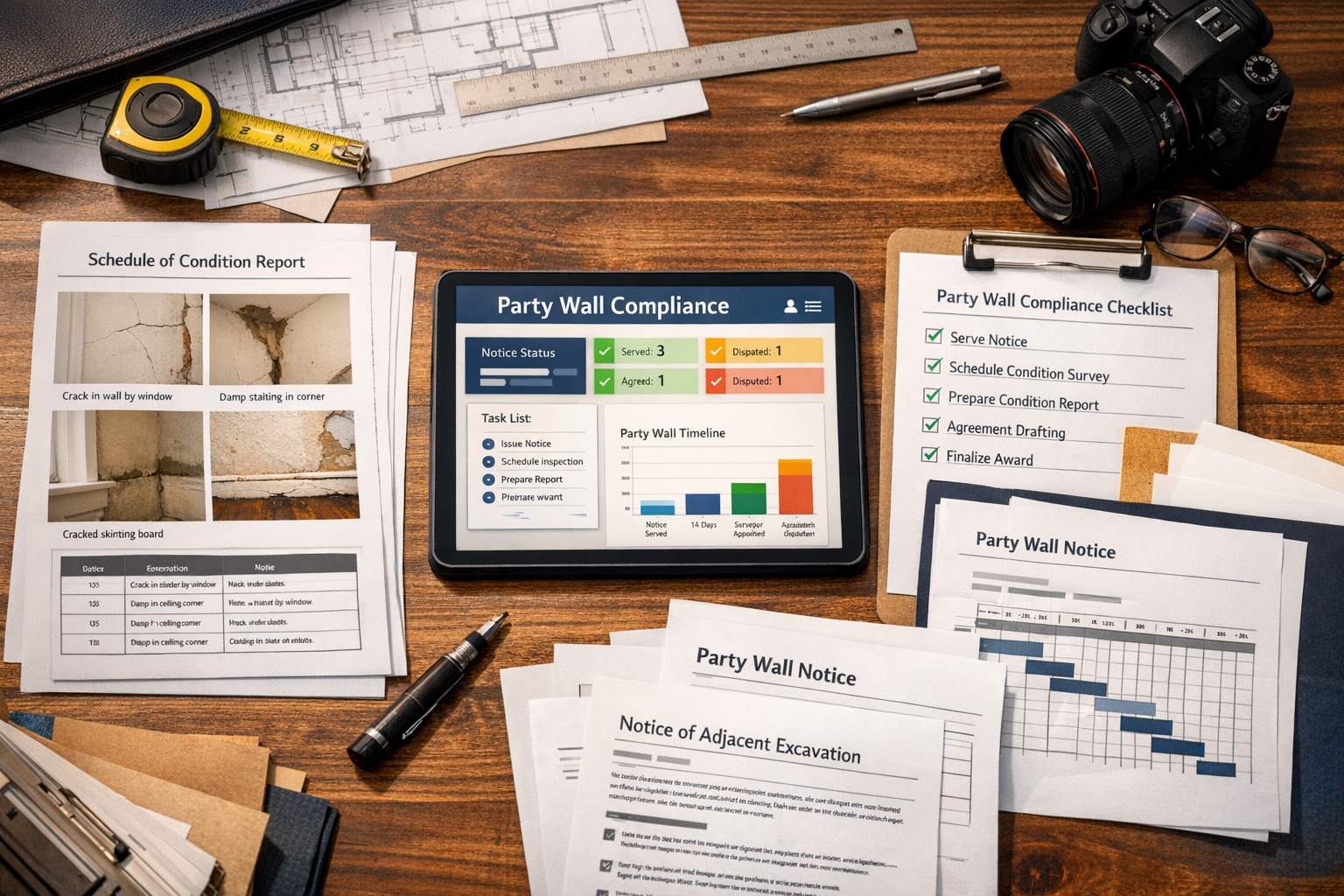
1. Comprehensive Schedules of Condition
A proper schedule of condition documents the pre-construction state of adjoining properties through:
- Detailed written descriptions of all relevant structural elements
- Comprehensive photographic evidence (typically 50-100+ photographs)
- Measurements and crack width recordings
- Documentation of existing defects, settlements, or damage
- Clear identification of all rooms, walls, ceilings, and external features
Why This Matters: Without thorough pre-construction documentation, determining whether damage resulted from construction work becomes nearly impossible. This protects both the building owner (from false claims) and adjoining owner (from genuine construction-related damage).
2. Proper Notice Content and Service
Notices must include:
- Accurate description of proposed works
- Clear drawings and specifications
- Correct property addresses and owner details
- Appropriate notice period before intended start date
- Proper service method (hand delivery, recorded delivery, or as prescribed)
Understanding excavation notice requirements becomes particularly important for basement conversions and deep foundation work, which follow specific distance-based rules.
3. Impartial Surveyor Conduct
Party wall surveyors must maintain strict impartiality, even when appointed by one party. This includes:
- Providing fair and balanced advice to appointing owners
- Conducting thorough inspections without bias
- Preparing awards that protect both parties' interests
- Maintaining professional indemnity insurance
- Following RICS guidance and best practices
Streamlining Without Cutting Corners
Efficiency gains during busy periods should come from process optimization, not reduced thoroughness:
✅ Acceptable Efficiency Measures:
Digital Documentation Systems
- Tablet-based survey apps for on-site condition recording
- Cloud storage for instant document sharing
- Template libraries for common award clauses (customized appropriately)
- Digital signature platforms for faster award execution
Batched Scheduling
- Grouping geographically adjacent surveys
- Coordinating multiple party appointments in single visits
- Pre-scheduling follow-up inspections during initial surveys
Proactive Communication
- Standard information packs for building owners explaining the process
- Template letters for common scenarios (customized for specific circumstances)
- Clear timelines and expectations set from initial engagement
Collaborative Approaches
- Agreed surveyor arrangements where appropriate (one surveyor acting for both parties with consent)
- Joint inspections with adjoining owner's surveyor to reduce scheduling complexity
- Coordinated awards when multiple properties are affected
❌ Unacceptable Shortcuts:
- Abbreviated schedules of condition with insufficient photographs
- Skipping internal inspections of adjoining properties
- Generic awards without project-specific specifications
- Inadequate consideration of proposed work methodology
- Rushed surveyor appointments without proper verification of qualifications
Managing Disputes Efficiently
Even with perfect planning, disputes arise. During high-demand periods, dispute resolution requires particular attention:
Early Intervention Strategies:
- Mediation Before Escalation – Informal discussions between surveyors can resolve many disagreements before formal dispute procedures
- Clear Award Terms – Comprehensive awards with specific working hours, access arrangements, and protective measures prevent many disputes
- Third Surveyor Readiness – Have potential third surveyors identified in advance for faster appointment if needed
- Documentation Trail – Maintain meticulous records of all communications and decisions
Common Dispute Triggers in Boom Periods:
- Contractor pressure to start work before awards are finalized
- Neighbor concerns about noise, dust, and disruption timing
- Disagreements over working hours and access arrangements
- Cost disputes regarding party wall expenses
- Interpretation of damage and causation after work begins
The consequences of proceeding without proper party wall agreements can be severe, including injunctions, project delays, and significant legal costs—all amplified during tight construction schedules.
Regional Variations in Party Wall Notices for 2026 Extension Booms
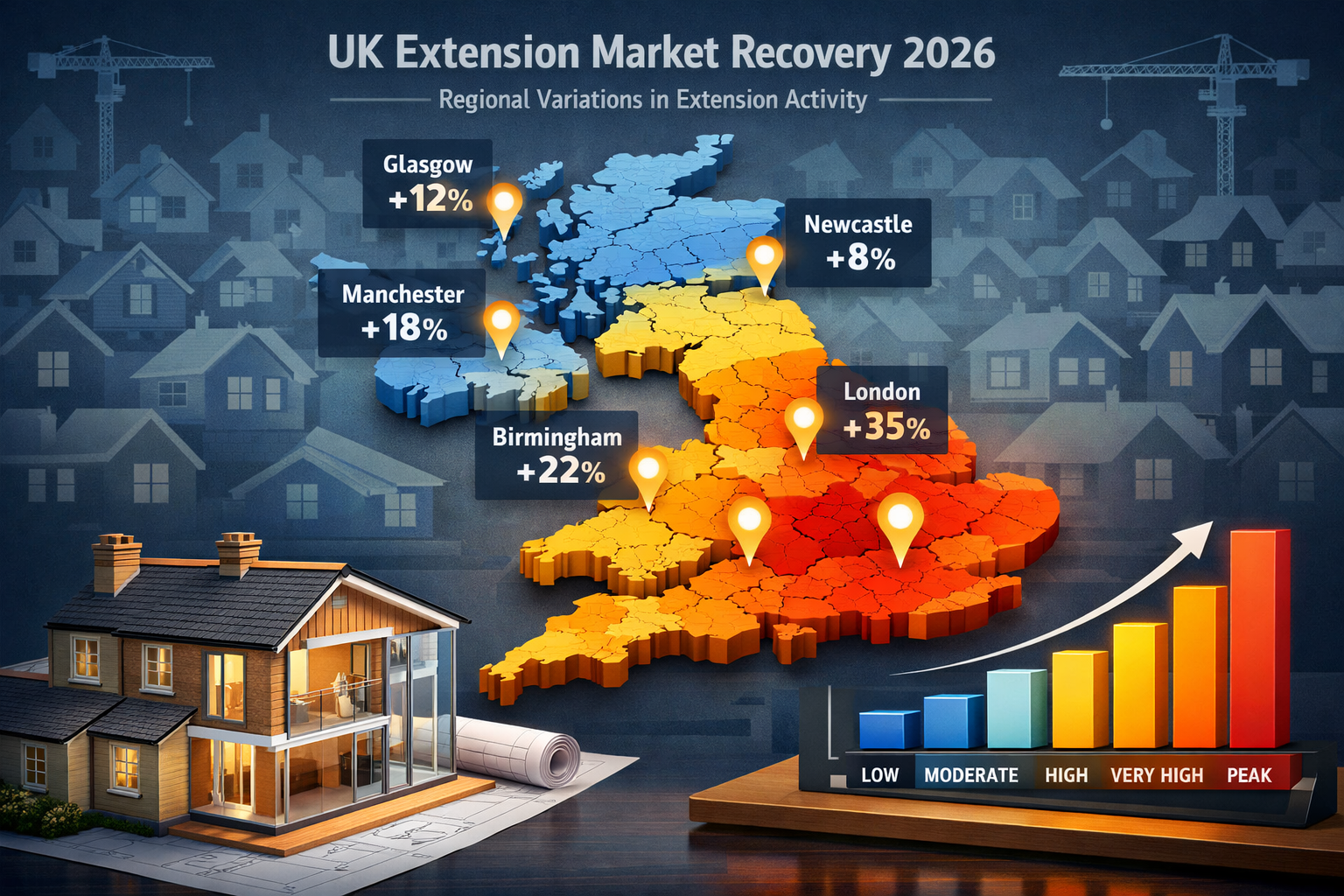
Geographic Hotspots and Demand Patterns
The 2026 extension boom isn't uniform across the UK. Understanding regional variations helps surveyors allocate resources and homeowners set realistic expectations:
High-Demand Urban Centers 🏙️
London and Southeast England
- Highest concentration of terraced and semi-detached properties requiring party wall procedures
- Premium property values justifying significant extension investments
- Limited land availability driving vertical and rear extensions
- Mature market with established party wall awareness among homeowners
- Surveyor demand consistently high with 4-6 week booking lead times in peak areas
Regional Cities (Manchester, Birmingham, Bristol, Leeds)
- Growing extension activity as property values increase
- Mix of Victorian terraced housing and modern developments
- Increasing party wall awareness but occasional knowledge gaps
- Moderate surveyor availability with 2-4 week typical lead times
Moderate-Activity Regions
Suburban and Commuter Belt Areas
- Steady extension activity driven by space requirements
- More detached properties reducing party wall work proportion
- Growing demand for loft conversions and rear extensions
- Generally adequate surveyor capacity with 1-2 week lead times
Lower-Activity Rural Areas
- Limited extension activity due to property types and planning constraints
- Fewer party wall situations due to detached property prevalence
- Limited local surveyor availability may require travel from urban centers
- Longer lead times for surveyor visits but less overall demand
Local Authority Variations and Planning Coordination
While the Party Wall Act is national legislation, local planning requirements interact with party wall procedures:
Planning Permission Timing
- Some homeowners incorrectly assume planning permission approval means party wall compliance is unnecessary
- Strategic approach: Apply for planning permission while preparing party wall notices
- Parallel processing prevents delays but requires clear communication that planning approval doesn't negate party wall requirements
Conservation Areas and Listed Buildings
- Additional scrutiny and restrictions affect project timelines
- Party wall procedures remain necessary even with heritage constraints
- Surveyors must consider heritage protection requirements in awards
Building Control Coordination
- Building control approval is separate from party wall awards
- Coordinated timeline management prevents sequential delays
- Some building control officers request evidence of party wall compliance before final approval
Cultural and Demographic Factors
Regional attitudes toward party wall procedures vary significantly:
High-Awareness Areas:
- Established urban neighborhoods with frequent construction activity
- Neighbors familiar with their rights and obligations
- Professional approach to notices and surveyor appointments
- Lower dispute rates due to experience and understanding
Emerging-Awareness Areas:
- Regions experiencing recent property value growth and extension booms
- Neighbors may be unfamiliar with party wall procedures
- Higher initial resistance due to misunderstanding (viewing notices as requests for permission rather than legal notifications)
- Greater need for educational materials and patient explanation
Professional Service Density
Surveyor availability varies dramatically by region:
- London: High density of RICS-qualified party wall surveyors with specialized practices
- Major cities: Adequate professional coverage with general practice surveyors offering party wall services
- Rural areas: Limited specialists requiring travel from regional centers or use of general building surveyors
This variation affects timing strategies—homeowners in areas with limited surveyor availability should engage professionals even earlier in the planning process.
Best Practices for Building Owners and Surveyors
For Building Owners Planning Extensions
Six Months Before Construction:
- ✅ Finalize architectural plans with qualified professionals
- ✅ Identify all potentially affected neighbors (including those across the street for deep excavations)
- ✅ Research and shortlist qualified party wall surveyors
- ✅ Understand budget implications including party wall costs
Three Months Before Construction:
- ✅ Engage party wall surveyor for preliminary advice
- ✅ Have informal conversations with neighbors about planned work
- ✅ Prepare comprehensive notice packages with clear drawings
- ✅ Confirm contractor availability and coordinate timelines
Two Months Before Construction:
- ✅ Serve formal party wall notices to all affected parties
- ✅ Provide neighbors with surveyor contact information
- ✅ Begin preliminary discussions about access and working arrangements
- ✅ Ensure all insurance requirements are understood
During Notice Period:
- ✅ Respond promptly to neighbor questions and surveyor requests
- ✅ Facilitate surveyor access for condition surveys
- ✅ Review draft awards carefully before finalization
- ✅ Maintain open communication with all parties
Before Construction Starts:
- ✅ Ensure all awards are finalized and served
- ✅ Brief contractors on award requirements and restrictions
- ✅ Confirm working hours, access arrangements, and protective measures
- ✅ Establish clear communication channels for any issues
For Party Wall Surveyors Managing High Demand
Capacity Management:
- Set realistic appointment lead times and communicate clearly
- Develop referral networks with trusted colleagues for overflow work
- Consider temporary capacity expansion during peak periods
- Prioritize cases based on construction start urgency
Process Efficiency:
- Implement digital survey tools for faster documentation
- Create comprehensive template libraries (while ensuring customization)
- Batch geographic appointments to minimize travel time
- Use video calls for preliminary consultations when appropriate
Quality Maintenance:
- Never compromise on schedule of condition thoroughness
- Maintain detailed file notes for all communications
- Regular professional development to stay current with case law
- Robust quality assurance reviews before award finalization
Client Communication:
- Set clear expectations about timelines and process
- Provide written guides explaining party wall procedures
- Regular status updates to all parties
- Proactive identification and resolution of potential issues
Professional Standards:
- Maintain RICS membership and comply with guidance notes
- Adequate professional indemnity insurance coverage
- Clear conflicts of interest policies and disclosure
- Continuing professional development in party wall matters
Technology and Innovation in Party Wall Compliance
Modern technology offers significant efficiency gains without compromising compliance:
Digital Survey Tools
Mobile Survey Applications:
- Tablet-based apps for on-site condition recording
- Integrated photography with automatic geotagging and timestamping
- Voice-to-text for rapid note-taking during inspections
- Offline functionality for properties with poor connectivity
Benefits:
- 30-40% reduction in survey time
- Improved documentation consistency
- Instant cloud backup preventing data loss
- Easier report generation and formatting
Document Management Systems
Cloud-Based Platforms:
- Centralized storage for all case documents
- Version control for awards and schedules
- Secure client portals for document sharing
- Automated backup and disaster recovery
Workflow Automation:
- Template libraries with smart customization
- Automated deadline tracking and reminders
- Electronic signature collection
- Integrated communication logs
Communication Technologies
Video Conferencing:
- Initial consultations without travel time
- Remote preliminary discussions with adjoining owners
- Virtual site tours for preliminary assessments (supplementing, not replacing, physical inspections)
Project Management Platforms:
- Shared timelines visible to all parties
- Task assignment and progress tracking
- Document sharing and collaboration
- Transparent communication threads
Limitations and Cautions
While technology enhances efficiency, certain elements remain irreplaceable:
❌ Cannot Be Automated:
- Professional judgment on structural implications
- Nuanced interpretation of proposed work impacts
- In-person relationship building with parties
- Physical inspection of property conditions
- Complex dispute resolution and negotiation
Technology should augment, not replace, professional expertise and thorough site inspections.
Future-Proofing Party Wall Practices for Sustained Market Activity
Preparing for Long-Term Demand
If the 2026 extension boom represents a sustained shift rather than a temporary spike, industry adaptation becomes essential:
Professional Development:
- Increased training capacity for new party wall surveyors
- Specialized qualifications and accreditation programs
- Mentorship schemes pairing experienced and emerging professionals
- Regular updates on case law and evolving best practices
Industry Collaboration:
- Regional surveyor networks for capacity sharing
- Standardized approaches to common scenarios
- Shared resources and educational materials
- Collective advocacy for reasonable timelines and standards
Public Education:
- Accessible information for homeowners about party wall requirements
- Clear guidance on timing and planning integration
- Myth-busting common misconceptions
- Realistic expectation-setting about costs and timelines
Anticipating Regulatory Evolution
The Party Wall Act 1996 has remained largely unchanged, but sustained market activity may prompt review:
Potential Areas of Evolution:
- Electronic service of notices and awards
- Standardized forms and templates
- Clearer guidance on specific scenarios (solar panels, green technologies)
- Enhanced dispute resolution mechanisms
- Updated distance rules for modern construction techniques
Staying informed about potential legislative changes helps professionals adapt proactively rather than reactively.
Conclusion
The 2026 extension boom presents both opportunities and challenges for homeowners and party wall surveyors navigating Party Wall Notices for 2026 Extension Booms: Strategic Timing and Compliance in Recovering Markets. Success hinges on understanding that strategic timing and rigorous compliance are not opposing forces—they're complementary elements of effective party wall management.
Key success factors include:
- Early engagement – Beginning party wall procedures 4-6 months before intended construction starts prevents delays and reduces stress
- Thorough documentation – Comprehensive schedules of condition protect all parties and prevent future disputes
- Professional expertise – Qualified surveyors with appropriate experience ensure compliance while managing timelines effectively
- Clear communication – Transparent dialogue between building owners, neighbors, and surveyors prevents misunderstandings
- Regional awareness – Understanding local market dynamics and surveyor availability enables realistic planning
For building owners, the message is clear: integrate party wall planning into your project timeline from the outset. Don't treat it as an afterthought or administrative formality. The modest investment in proper party wall procedures prevents potentially catastrophic project delays and disputes.
For surveyors, the challenge is maintaining professional standards while meeting increased demand. This requires process optimization through technology and efficiency measures, but never at the expense of thorough inspections, impartial advice, and comprehensive documentation.
Next Steps
If you're planning an extension in 2026:
- Review your project plans and identify all party wall implications
- Research qualified party wall surveyors in your area and check availability
- Serve notices at least two months before your intended construction start date
- Budget appropriately for party wall costs and surveyor fees
- Maintain open communication with neighbors throughout the process
If you're a party wall surveyor managing increased demand:
- Assess your capacity realistically and set appropriate lead times
- Invest in digital tools and process improvements for efficiency gains
- Build referral networks with trusted colleagues for overflow work
- Maintain unwavering commitment to thorough documentation and impartial advice
- Stay current with professional development and evolving best practices
The extension boom of 2026 represents a significant opportunity for property improvement and professional practice growth. By prioritizing both strategic timing and rigorous compliance, all parties can navigate this busy period successfully, ensuring projects proceed smoothly while protecting the rights and interests of building owners and neighbors alike.
For comprehensive guidance on party wall procedures and expert surveyor services, explore our complete party wall resources and frequently asked questions.
References
[1] Party Wall Agreement – https://hoa.org.uk/advice/guides-for-homeowners/i-am-improving/party-wall-agreement/
[2] Party Wall Surveying Surge In 2026 Loft Conversions Navigating High Demand Compliance During Housing Uptick – https://nottinghillsurveyors.com/blog/party-wall-surveying-surge-in-2026-loft-conversions-navigating-high-demand-compliance-during-housing-uptick