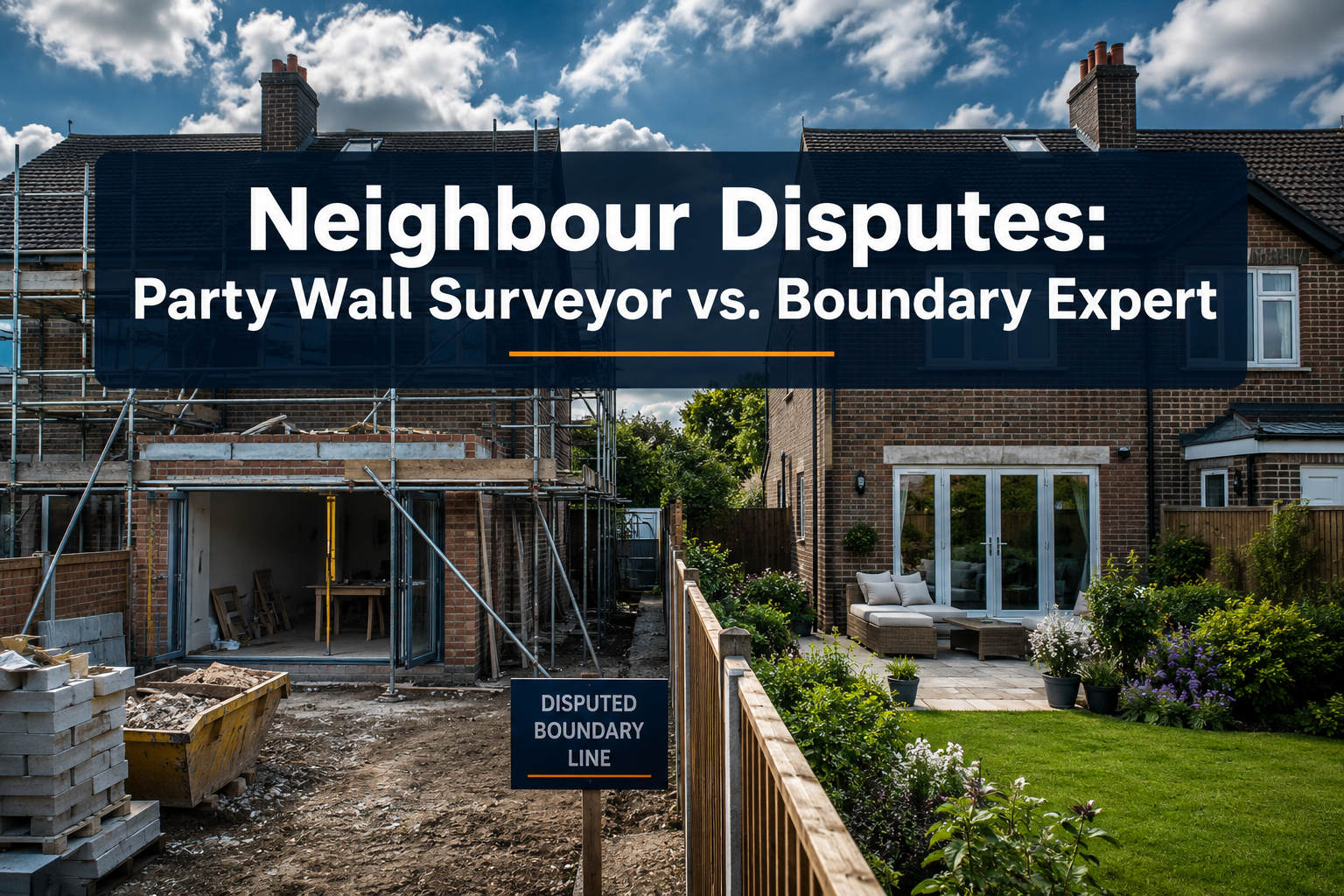

As property markets show signs of recovery in 2026, basement conversions have emerged as one of the most sought-after home improvement projects for maximizing property value. However, navigating Party Wall Awards Under New 2026 RICS Matrics: Essentials for Basement Conversions in Recovering Markets requires careful attention to updated professional standards and legal requirements. With the Royal Institution of Chartered Surveyors (RICS) introducing refined metrics and guidance for party wall procedures this year, property owners and developers must understand these changes to avoid costly disputes and project delays.
The intersection of basement excavation work and party wall legislation creates unique challenges that demand professional expertise. This comprehensive guide explores how the new 2026 RICS metrics affect party wall awards, particularly for basement conversion projects in the current recovering market environment.

Key Takeaways
- 🏗️ New 2026 RICS metrics provide updated guidance on party wall awards specifically addressing basement excavation and underpinning work
- 📋 Proper notice procedures are critical—basement conversions typically require both Section 1 and Section 6 notices under the Party Wall Act
- 💰 Cost transparency has improved under 2026 standards, with clearer frameworks for fee structures and award documentation
- ⚖️ Dispute prevention through comprehensive schedules of condition protects both building and adjoining owners
- 📈 Market recovery has increased basement conversion demand, making professional party wall compliance more important than ever
Understanding Party Wall Awards in the 2026 Context
What Are Party Wall Awards?
A party wall award is a legally binding document prepared by appointed party wall surveyors that sets out the rights and responsibilities of both the building owner (who wishes to carry out work) and the adjoining owner (whose property shares the party wall or may be affected by excavation). The award determines how work will proceed, what protective measures must be implemented, and how costs will be allocated.
Under the Party Wall etc. Act 1996, which remains the governing legislation in England and Wales, awards become necessary when:
- Building owners and adjoining owners cannot reach agreement
- Adjoining owners do not respond to party wall notices within 14 days
- Complex technical matters require professional determination
2026 RICS Metrics: What's Changed?
The RICS has introduced updated guidance in 2026 that specifically addresses the surge in basement conversion projects. These new metrics focus on:
Enhanced Documentation Standards 📄
- More detailed requirements for schedules of condition
- Photographic and videographic evidence protocols
- Digital record-keeping recommendations
Clearer Fee Structures 💷
- Transparent guidance on reasonable surveyor fees
- Benchmarking for different project complexities
- Standardized billing practices
Technical Assessment Criteria 🔍
- Updated foundation depth measurement protocols
- Refined criteria for assessing excavation risks
- Modern structural monitoring requirements
Dispute Resolution Frameworks ⚖️
- Streamlined processes for appointing third surveyors
- Mediation recommendations before formal awards
- Timeline expectations for award completion
These updates reflect the evolving nature of basement conversion work and the need for professional standards that protect all parties while facilitating legitimate development in recovering property markets.
Why Basement Conversions Trigger Party Wall Procedures
Basement conversions are among the most technically complex home improvements and almost always engage party wall legislation. Understanding why these projects require formal procedures helps property owners appreciate the importance of compliance.
The Three-Meter Rule and Excavation Notices
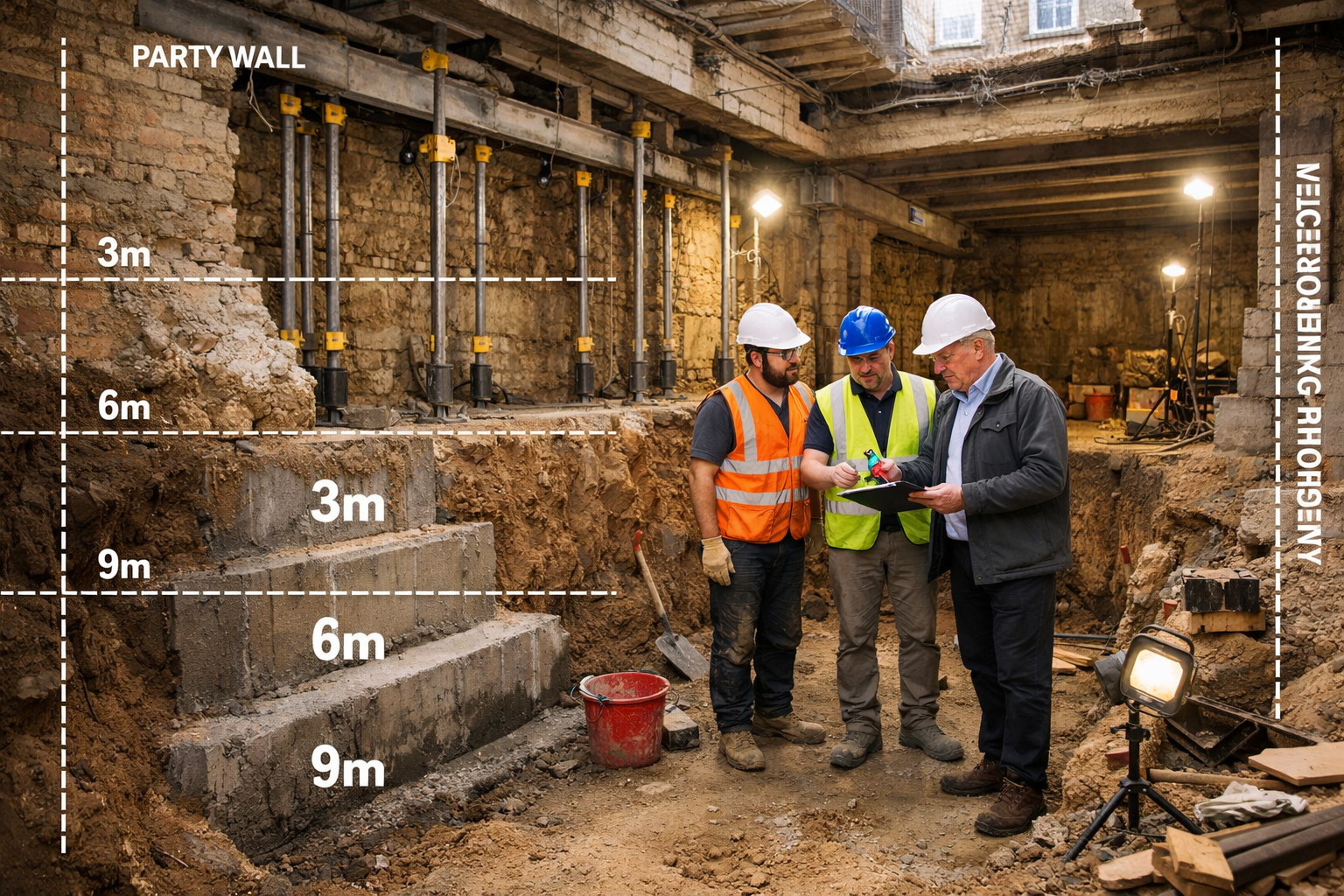
When excavating for a basement conversion, the three-meter rule becomes critically important. Under Section 6 of the Party Wall Act, building owners must serve notice if they plan to excavate:
- Within three meters of a neighboring structure, where the excavation will go deeper than the neighbor's foundations
- Within six meters of a neighboring structure, where the excavation will go deeper than a line drawn downward at 45 degrees from the bottom of the neighbor's foundations
Most basement conversions in terraced or semi-detached properties trigger these requirements, necessitating a notice for excavation near a neighbour.
Underpinning and Foundation Work
Basement excavations frequently require underpinning of existing party walls—a process that directly affects the shared structure. This work falls under Section 1 of the Party Wall Act, which covers:
- Cutting into party walls
- Building on or against party walls
- Underpinning party walls
- Repairing or thickening party walls
The combination of excavation (Section 6) and structural work to the party wall itself (Section 1) means basement conversions typically require multiple notices and comprehensive party wall awards.
Structural Risks and Neighbor Protection
The 2026 RICS metrics emphasize risk assessment because basement excavations pose genuine structural concerns:
| Risk Factor | Potential Impact | Mitigation Required |
|---|---|---|
| Foundation exposure | Undermining neighbor's foundations | Temporary support, underpinning |
| Ground movement | Settlement or subsidence | Monitoring, phased excavation |
| Water table changes | Drainage issues, damp | Waterproofing, drainage systems |
| Vibration damage | Cracking, structural stress | Controlled excavation methods |
| Party wall instability | Structural failure | Shoring, reinforcement |
Professional party wall awards under the new metrics require detailed specifications for addressing each relevant risk factor.
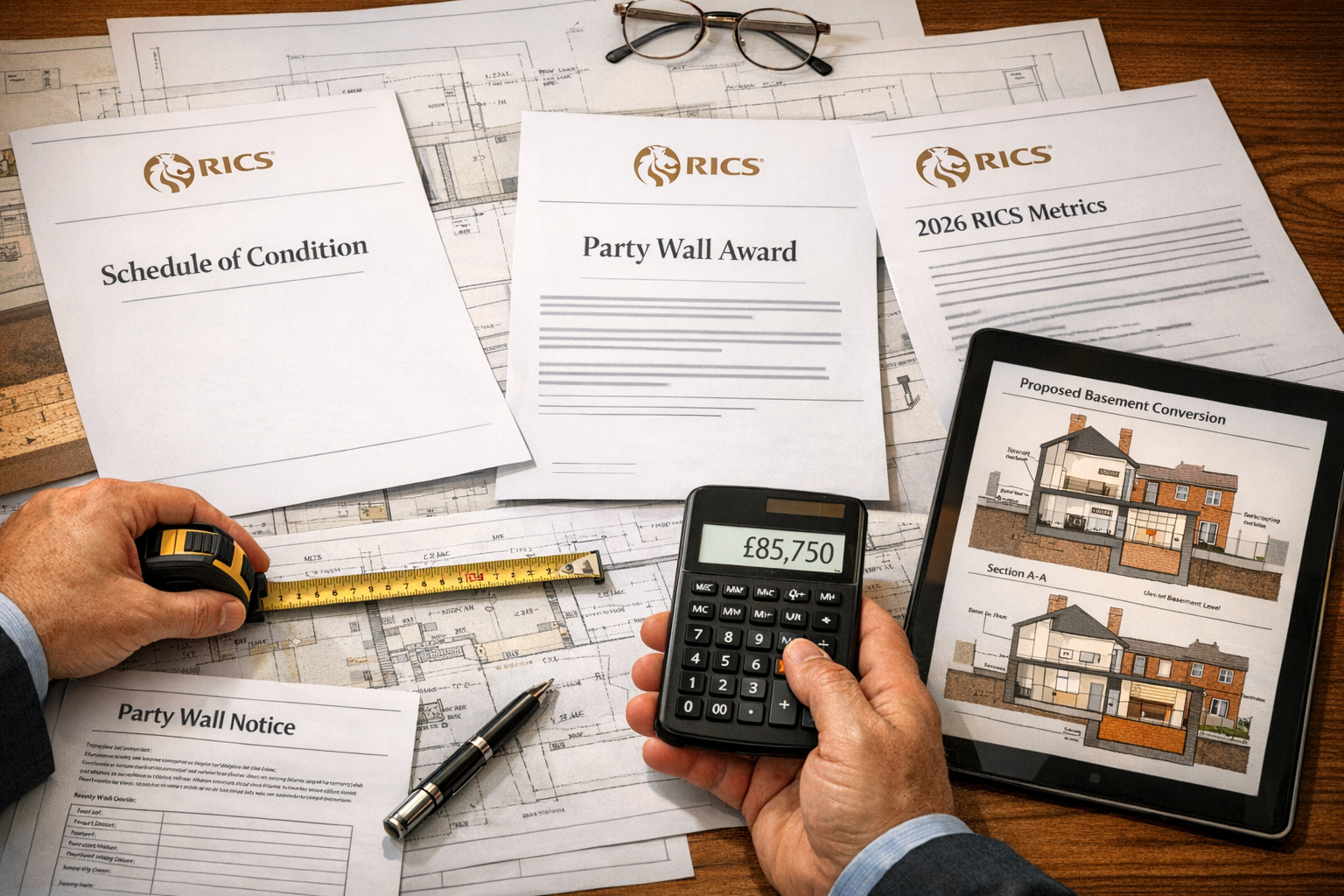
Party Wall Awards Under New 2026 RICS Matrics: Step-by-Step Process for Basement Conversions
Navigating Party Wall Awards Under New 2026 RICS Matrics: Essentials for Basement Conversions in Recovering Markets requires following a structured process. Here's the comprehensive pathway from initial planning to project completion.
Step 1: Early Planning and Professional Consultation
Timeline: 3-4 months before construction
Before serving any notices, engage with qualified professionals:
- Structural engineer to design the basement conversion
- Party wall surveyor to advise on notice requirements
- Architect to prepare detailed plans
The 2026 RICS guidance recommends early consultation to identify potential issues before formal procedures begin. Many disputes arise from inadequate planning rather than the party wall process itself.
Step 2: Prepare and Serve Formal Notices
Timeline: Minimum 2 months before construction
For typical basement conversions, you'll need to serve:
Section 6 Notice (Excavation)
- Description of proposed excavation depth and location
- Plans showing relationship to neighbor's foundations
- Proposed start date (at least one month from notice)
Section 1 Notice (Party Wall Work)
- Details of underpinning or other party wall work
- Structural specifications
- Proposed start date (at least two months from notice)
The notices must be served on all affected adjoining owners. Under 2026 standards, digital service via email is acceptable if the adjoining owner agrees, though registered post remains the safest method.
Step 3: Neighbor Response Period
Timeline: 14 days from notice service
Adjoining owners have three options:
- Consent in writing – Work can proceed by agreement (no award needed)
- Dissent or raise concerns – Party wall surveyor appointment required
- No response – Treated as dissent after 14 days
In practice, most basement conversions proceed to formal awards even when neighbors are supportive, as the technical complexity warrants professional oversight.
Step 4: Surveyor Appointment
Timeline: Immediately upon dissent or non-response
Under the 2026 RICS metrics, surveyor appointment follows clear protocols:
Option A: Agreed Surveyor 👥
- Both parties appoint the same surveyor
- More cost-effective
- Suitable when relationships are cooperative
Option B: Separate Surveyors 👤👤
- Each party appoints their own surveyor
- The two surveyors work together to produce the award
- Appropriate for complex projects or strained relationships
Option C: Third Surveyor ⚖️
- Appointed by the two surveyors to resolve disagreements
- Acts as final arbiter if surveyors cannot agree
For those unfamiliar with the process, reviewing party wall FAQs can clarify common questions about surveyor roles and responsibilities.
Step 5: Schedule of Condition Preparation
Timeline: Before excavation begins
The schedule of condition party wall documentation is crucial under 2026 standards. This comprehensive record includes:
- Detailed photographic survey of the adjoining property
- Video walkthroughs (new recommendation in 2026 metrics)
- Written descriptions of existing defects, cracks, and conditions
- Measurement records of any existing movement or settlement
This baseline documentation protects both parties. If damage to property in party wall work occurs, the schedule provides clear evidence of pre-existing versus new damage.
Step 6: Award Preparation and Service
Timeline: 4-8 weeks for complex basement projects
The party wall surveyors prepare a comprehensive award document that typically includes:
Technical Specifications 🔧
- Detailed methodology for excavation
- Underpinning procedures and materials
- Temporary support requirements
- Monitoring protocols during construction
Protective Measures 🛡️
- Vibration limits
- Working hours restrictions
- Access arrangements for inspections
- Emergency contact procedures
Financial Provisions 💰
- Allocation of surveyor fees (usually building owner pays)
- Security for expenses if required
- Compensation provisions if damage occurs
Timeline and Conditions ⏱️
- Permitted working hours
- Project duration expectations
- Notice requirements for completion
The 2026 RICS metrics emphasize clarity in awards, with standardized language and formatting that makes documents more accessible to non-professionals.
Step 7: Construction Monitoring
Timeline: Throughout the project
Modern party wall awards include monitoring requirements:
- Pre-commencement inspection confirming baseline conditions
- Periodic inspections during excavation and structural work
- Vibration monitoring if specified in the award
- Photographic documentation of work progression
Surveyors may conduct unannounced inspections to ensure compliance with award conditions. The 2026 guidance recommends digital reporting systems that provide real-time updates to all parties.
Step 8: Completion and Final Documentation
Timeline: Within 2 weeks of project completion
Once basement conversion work concludes:
- Final inspection comparing current condition to schedule of condition
- Formal sign-off from party wall surveyors
- Documentation of any remedial work required
- Release of any security deposits held
If no damage has occurred and all award conditions were met, the process concludes smoothly. Any disputes about damage or non-compliance can be referred back to the appointed surveyors or, ultimately, to the third surveyor for determination.
Cost Considerations: Party Wall Awards Under New 2026 RICS Matrics
Understanding the financial implications of Party Wall Awards Under New 2026 RICS Matrics: Essentials for Basement Conversions in Recovering Markets helps property owners budget appropriately for their projects.
Surveyor Fee Structures
The 2026 RICS metrics provide clearer guidance on reasonable fees:
Agreed Surveyor Approach
- Typical range: £1,200 – £2,500 for straightforward basement conversions
- Single fee split proportionally or paid entirely by building owner
- More economical than separate surveyors
Separate Surveyors Approach
- Building owner's surveyor: £1,500 – £3,500
- Adjoining owner's surveyor: £1,200 – £2,800 (paid by building owner)
- Combined cost: £2,700 – £6,300
Factors Affecting Fees 📊
- Project complexity and excavation depth
- Number of adjoining properties affected
- Geographic location (London and Southeast typically higher)
- Surveyor experience and RICS membership status
- Number of inspections required
Additional Costs to Consider
Beyond surveyor fees, budget for:
- Schedule of condition preparation: £500 – £1,200
- Monitoring equipment: £300 – £800 if vibration sensors required
- Third surveyor fees: £1,500 – £4,000 if disputes arise
- Legal costs: Variable if party wall disputes escalate
Who Pays What?
Under standard party wall procedures:
✅ Building Owner Pays:
- Their own surveyor's fees
- Adjoining owner's surveyor's fees
- Third surveyor's fees if appointed
- Schedule of condition costs
- Any compensation for damage
- Costs of protective measures specified in award
❌ Adjoining Owner Typically Doesn't Pay:
- Surveyor fees (unless they request unnecessary additional work)
- Reasonable costs of compliance
This fee structure protects adjoining owners from financial burden while ensuring building owners account for all costs when planning basement conversions.
Common Challenges and How to Avoid Them
Despite clear procedures, basement conversion party wall matters can encounter obstacles. The 2026 RICS metrics address common pitfalls:
Challenge 1: Inadequate Notice Service
Problem: Notices not properly served or missing critical information
Solution:
- Use professional surveyors to prepare notices
- Serve via multiple methods (hand delivery + registered post)
- Include all required technical details and plans
- Document service with photographic evidence
Failure to serve proper notice can invalidate the entire process. Review guidance on party wall notice not served scenarios to understand the consequences.
Challenge 2: Neighbor Non-Engagement
Problem: Adjoining owners ignore notices or refuse to cooperate
Solution:
- Treat non-response as dissent after 14 days
- Appoint surveyor on neighbor's behalf if they refuse
- Proceed with formal award process
- Maintain professional, non-confrontational approach
Understanding consent for party wall work procedures helps navigate uncooperative situations legally.
Challenge 3: Discovering Unexpected Conditions
Problem: Excavation reveals unforeseen structural issues or obstructions in party walls
Solution:
- Include contingency clauses in awards
- Maintain open communication with surveyors
- Halt work immediately if unexpected conditions arise
- Seek surveyor guidance before proceeding
- Be prepared to amend awards if necessary
Challenge 4: Damage During Construction
Problem: Cracks or structural damage appear in neighbor's property
Solution:
- Comprehensive schedule of condition provides baseline
- Immediate notification to party wall surveyors
- Professional assessment of causation
- Remedial work specified by surveyors
- Compensation determined through award process
The 2026 metrics emphasize preventive measures over reactive repairs, encouraging robust protective specifications in initial awards.
Challenge 5: Cost Disputes
Problem: Disagreements over surveyor fees or award costs
Solution:
- Request fee estimates before appointing surveyors
- Ensure surveyors provide itemized billing
- Question excessive or unexplained charges
- Refer disputes to third surveyor if necessary
- Consider RICS complaint procedures for professional misconduct
The Recovering Market Context: Why 2026 Is Different
The recovering markets aspect of Party Wall Awards Under New 2026 RICS Matrics: Essentials for Basement Conversions in Recovering Markets reflects significant changes in the property landscape:
Increased Basement Conversion Demand 📈
As property markets stabilize following recent economic challenges:
- Property values rising in key urban areas
- Extension and conversion more cost-effective than moving
- Basement space offers significant value addition (£200-400 per square foot in London)
- Planning permissions for basements becoming more standardized
This increased activity means more party wall matters and greater need for professional compliance.
Professional Standards Evolution
The 2026 RICS metrics respond to:
- Technology integration: Digital documentation, virtual inspections
- Sustainability considerations: Environmental impact of excavation
- Risk management: Enhanced insurance and liability frameworks
- Consumer protection: Greater transparency and accessibility
Regional Variations
Recovery rates vary by location, affecting party wall work:
London and Southeast 🏙️
- Highest basement conversion activity
- Most expensive surveyor fees
- Strictest local authority requirements
- Greatest property value gains
Regional Cities 🏘️
- Growing basement conversion interest
- More moderate costs
- Emerging professional capacity
- Good value-to-cost ratios
Rural and Suburban Areas 🌳
- Lower basement conversion rates
- Fewer specialist party wall surveyors
- May require surveyors from urban centers
- Different foundation and soil conditions
Understanding your local market context helps set realistic expectations for timelines and costs.
Best Practices for Successful Basement Conversions
Following these recommendations ensures smooth party wall procedures:
For Building Owners
- Start early – Begin party wall process 3-4 months before construction
- Choose qualified professionals – RICS-registered surveyors with basement experience
- Communicate proactively – Inform neighbors before formal notices
- Budget comprehensively – Include all party wall costs in project planning
- Document everything – Keep records of all communications and agreements
- Respect award conditions – Comply strictly with working hours and methods
- Maintain good relations – Neighborly cooperation prevents escalation
For Adjoining Owners
- Respond promptly – Don't ignore notices (14-day deadline)
- Appoint qualified surveyors – Protect your interests with professional advice
- Request thorough schedules – Ensure comprehensive condition documentation
- Understand your rights – You can't prevent legitimate work, but can ensure protection
- Maintain perspective – Most basement conversions complete without damage
- Keep communication open – Work cooperatively with building owner when possible
For Surveyors
The 2026 RICS metrics establish expectations for professional practice:
- Impartiality – Act fairly to both parties
- Technical competence – Understand structural engineering principles
- Clear communication – Explain procedures in accessible language
- Proportionality – Recommendations should match actual risks
- Timeliness – Complete awards within reasonable timeframes
- Transparency – Provide clear fee structures and billing
Integration with Other Property Procedures
Basement conversions don't exist in isolation. Party wall awards often intersect with:
Building Control and Planning
- Party wall awards ≠ planning permission or building regulations approval
- All three processes required for legal basement conversions
- Coordinate timelines to avoid delays
- Ensure structural designs satisfy all regulatory frameworks
Property Surveys
If purchasing a property with basement conversion potential:
- Commission a RICS home survey before proceeding
- Identify structural constraints early
- Assess foundation types and soil conditions
- Budget for party wall costs in purchase planning
Similar considerations apply to party wall loft conversions, which share procedural similarities with basement work.
Insurance Considerations
- Notify home insurers of basement conversion plans
- Ensure adequate cover during construction
- Party wall awards may specify insurance requirements
- Consider professional indemnity for surveyors
Future Outlook: Party Wall Practice Beyond 2026
The evolution of party wall procedures continues:
Technological Advances
Expect further integration of:
- 3D scanning for condition surveys
- Drone inspections for external assessments
- AI-powered risk assessment tools
- Blockchain documentation for immutable records
- Virtual reality for neighbor communication
Regulatory Developments
Potential changes on the horizon:
- Standardized fee scales to increase transparency
- Mandatory mediation before formal awards
- Enhanced neighbor protections in dense urban areas
- Environmental impact assessments for excavation
- Digital-first notice and award procedures
Market Trends
Basement conversions will likely:
- Remain popular in high-value urban areas
- Expand to regional cities as markets recover
- Face increasing sustainability scrutiny
- Incorporate innovative construction methods
- Drive continued professionalization of party wall practice
Conclusion
Party Wall Awards Under New 2026 RICS Matrics: Essentials for Basement Conversions in Recovering Markets represents a critical framework for property owners navigating complex development projects. The updated RICS guidance provides clearer standards, enhanced protection for all parties, and streamlined procedures that reflect modern construction practices and technology.
Successful basement conversions require careful attention to party wall procedures from the earliest planning stages. By understanding the legal requirements, engaging qualified professionals, maintaining good neighbor relations, and following the structured process outlined in this guide, building owners can minimize disputes, control costs, and complete projects that add significant value to their properties.
Your Next Steps 🎯
- Assess your project – Determine if your basement conversion triggers party wall requirements
- Engage professionals early – Consult RICS-registered party wall surveyors before serving notices
- Budget comprehensively – Include all party wall costs in your project planning
- Communicate proactively – Inform neighbors of your plans before formal procedures begin
- Follow procedures precisely – Proper notice service and award compliance prevent costly delays
- Document thoroughly – Maintain detailed records throughout the process
The recovering property market of 2026 offers excellent opportunities for value-adding basement conversions. With proper party wall compliance under the new RICS metrics, your project can proceed smoothly, protect all parties' interests, and deliver the additional living space that makes such a significant difference to modern homes.
For professional guidance tailored to your specific circumstances, consult with qualified party wall specialists who understand both the legal framework and the practical realities of basement conversion projects in today's market.