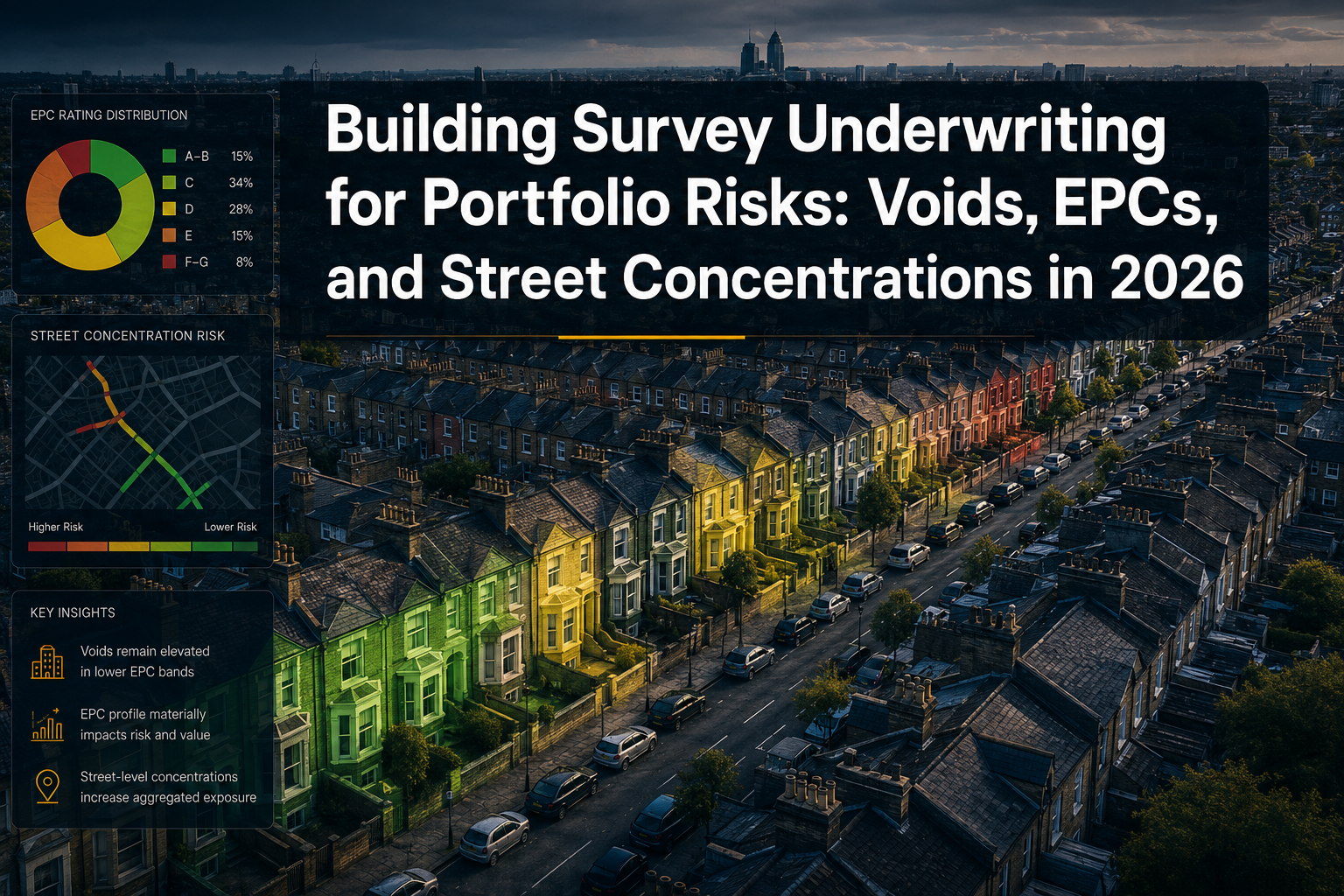

The UK rental market in 2026 presents unprecedented opportunities for institutional landlords and professional investors. With rental demand at 15-year highs and buy-to-let mortgage activity surging by 13% in 2025, sophisticated investors are deploying comprehensive building surveys and rigorous due diligence protocols to expand their portfolios strategically[1][2]. Building Surveys for Buy-to-Let Portfolio Expansion: Due Diligence Checklists as Institutional Landlords Drive 2026 Market Growth has become the cornerstone of successful property acquisition in today's competitive market.
Professional landlords understand that thorough property assessments protect capital, maximize returns, and minimize unexpected maintenance costs. As institutional investors increasingly dominate the rental sector, their systematic approach to property evaluation sets the standard for all serious buy-to-let investors.
Key Takeaways
✅ Institutional-grade building surveys reduce acquisition risk and identify properties with strong long-term yield potential in high-demand rental markets
📊 Comprehensive due diligence checklists covering structural integrity, regulatory compliance, and yield calculations are essential for portfolio expansion in 2026
🏘️ Regional market analysis shows Hull (9-11% yields), Liverpool (8-10%), and Manchester (8.6% annual growth) leading buy-to-let opportunities[1][5]
💰 Strategic survey investment prevents costly surprises, with average two-year mortgage rates at 4.84% making thorough pre-purchase assessments financially critical[2]
🔍 RICS Level 3 surveys provide institutional-standard property assessments that inform acquisition decisions and portfolio risk management strategies
Understanding Building Surveys for Buy-to-Let Portfolio Expansion in 2026

The rental market landscape in 2026 demands a sophisticated approach to property acquisition. Institutional landlords recognize that Building Surveys for Buy-to-Let Portfolio Expansion: Due Diligence Checklists as Institutional Landlords Drive 2026 Market Growth represents more than just property inspection—it's a comprehensive risk assessment and investment validation process.
The Current Buy-to-Let Market Context
The UK rental sector is experiencing remarkable growth dynamics. Demand has reached 15-year highs while supply constraints continue to tighten the market[1]. This imbalance creates exceptional opportunities for investors who can identify quality properties through rigorous assessment protocols.
Buy-to-let mortgage activity increased by 13% in 2025, signaling strong investor confidence[2]. However, with average two-year mortgage rates at 4.84%, investors must ensure every acquisition delivers sustainable returns[2]. House price forecasts project 2-4% growth for 2026, making timing and property selection crucial[4].
Manchester leads regional growth with 8.6% annual increases, while Hull and Liverpool offer exceptional rental yields between 8-11%[1][5]. These markets attract institutional capital, intensifying competition for quality stock.
Why Comprehensive Building Surveys Matter for Portfolio Growth
Professional investors deploy building surveys as their primary risk mitigation tool. Unlike basic valuations, comprehensive surveys reveal:
- Structural defects that impact long-term property viability
- Hidden maintenance liabilities affecting yield calculations
- Regulatory compliance issues that could trigger enforcement action
- Energy efficiency ratings influencing tenant demand and rental premiums
- Renovation opportunities that enhance capital appreciation
A thorough survey conducted by local chartered surveyors provides institutional-grade intelligence that transforms acquisition decisions from speculation into data-driven investment.
Types of Surveys for Different Portfolio Strategies
Different portfolio expansion strategies require tailored survey approaches:
| Survey Type | Best For | Key Benefits |
|---|---|---|
| RICS Level 3 Survey | Older properties, Victorian conversions, portfolio cornerstones | Comprehensive structural analysis, detailed defect reporting |
| Commercial Building Survey | HMO conversions, mixed-use properties | Regulatory compliance assessment, commercial viability analysis |
| Homebuyer Survey | Modern properties under 15 years old | Cost-effective condition assessment for low-risk acquisitions |
| Specialist Surveys | Properties with known issues | Targeted investigation of subsidence, damp, or structural concerns |
Institutional investors typically commission RICS Level 3 building surveys for properties that will anchor their portfolios, ensuring comprehensive understanding of structural condition and future maintenance requirements.
Essential Due Diligence Checklists for Institutional Landlords
Building Surveys for Buy-to-Let Portfolio Expansion: Due Diligence Checklists as Institutional Landlords Drive 2026 Market Growth requires systematic evaluation frameworks that go beyond standard property inspections. Professional investors use multi-layered checklists that integrate structural, financial, regulatory, and market considerations.
Pre-Acquisition Structural Assessment Checklist
Before committing capital, institutional landlords conduct comprehensive structural evaluations:
🏗️ Foundation and Structural Integrity
- Foundation type and condition assessment
- Evidence of subsidence, settlement, or structural movement
- Load-bearing wall integrity and modifications
- Floor level variations and structural deflection
- Crack pattern analysis and severity classification
Professional subsidence surveys identify ground movement issues that could escalate into six-figure remediation costs. Early detection allows investors to negotiate price adjustments or avoid problematic properties entirely.
🏠 Building Envelope and Weather Protection
- Roof covering condition and remaining lifespan
- Chimney stack stability and flashing integrity
- External wall condition and render/brickwork quality
- Window and door condition, thermal performance
- Damp penetration evidence and moisture ingress points
⚡ Building Services and Systems
- Electrical installation age and safety compliance
- Heating system efficiency and replacement timeline
- Plumbing condition and water pressure adequacy
- Drainage system functionality and maintenance needs
- Ventilation adequacy and condensation risk factors
Investors should commission structural surveys for properties showing any structural concerns, ensuring expert engineering assessment before purchase.
Financial Viability and Yield Calculation Checklist
Institutional investors integrate survey findings with rigorous financial modeling:
💷 Acquisition Cost Analysis
- Purchase price relative to local comparables
- Survey-identified repair costs and timing
- Immediate compliance upgrade requirements
- Energy efficiency improvement investments
- Total acquisition cost including fees and taxes
📈 Yield Optimization Assessment
- Current market rent for property type and location
- Rental premium potential from identified improvements
- Void period projections based on local demand
- Maintenance reserve requirements from survey findings
- Net yield calculation after all ownership costs
🔢 Long-Term Financial Modeling
- Capital appreciation projections (2-4% baseline for 2026)[4]
- Major maintenance scheduling from survey recommendations
- Refinancing opportunities and mortgage rate sensitivity
- Exit strategy viability and resale considerations
- Portfolio diversification impact and risk balance
With mortgage rates at 4.84%, investors must ensure gross yields significantly exceed financing costs[2]. Properties in Hull offering 9-11% yields provide comfortable margins, while lower-yielding markets require exceptional capital growth prospects[1].
Regulatory Compliance and Risk Management Checklist
Professional landlords prioritize compliance to avoid enforcement action and reputational damage:
📋 Mandatory Compliance Requirements
- Energy Performance Certificate (EPC) rating and upgrade pathway
- Gas Safety Certificate validity and installation condition
- Electrical Installation Condition Report (EICR) compliance
- Fire safety requirements for property type
- HMO licensing requirements if applicable
- Selective licensing scheme obligations
⚠️ Risk Identification and Mitigation
- Asbestos presence in pre-2000 properties
- Lead paint in older properties
- Japanese knotweed or other invasive species
- Flood risk assessment and insurance implications
- Planning compliance for previous alterations
- Building regulation approval for extensions/conversions
Investors should reference choosing the right property survey guidance to ensure their inspection scope addresses all regulatory considerations relevant to their target property type.
Location and Market Analysis Checklist
Survey findings must be contextualized within broader market dynamics:
📍 Micro-Location Assessment
- Proximity to employment centers and transport links
- Local amenity quality and tenant demographic fit
- School catchment areas and family tenant appeal
- Crime statistics and neighborhood stability
- Future development plans affecting desirability
📊 Market Demand Indicators
- Rental void rates for comparable properties
- Time-to-let averages in the immediate area
- Tenant quality and turnover patterns
- Competing landlord supply and institutional activity
- Rental growth trajectory over past 3-5 years
Manchester's 8.6% annual growth demonstrates how strong market fundamentals amplify investment returns[5]. Conversely, even structurally sound properties in declining markets may underperform.
Implementing Institutional-Standard Survey Protocols for Portfolio Success
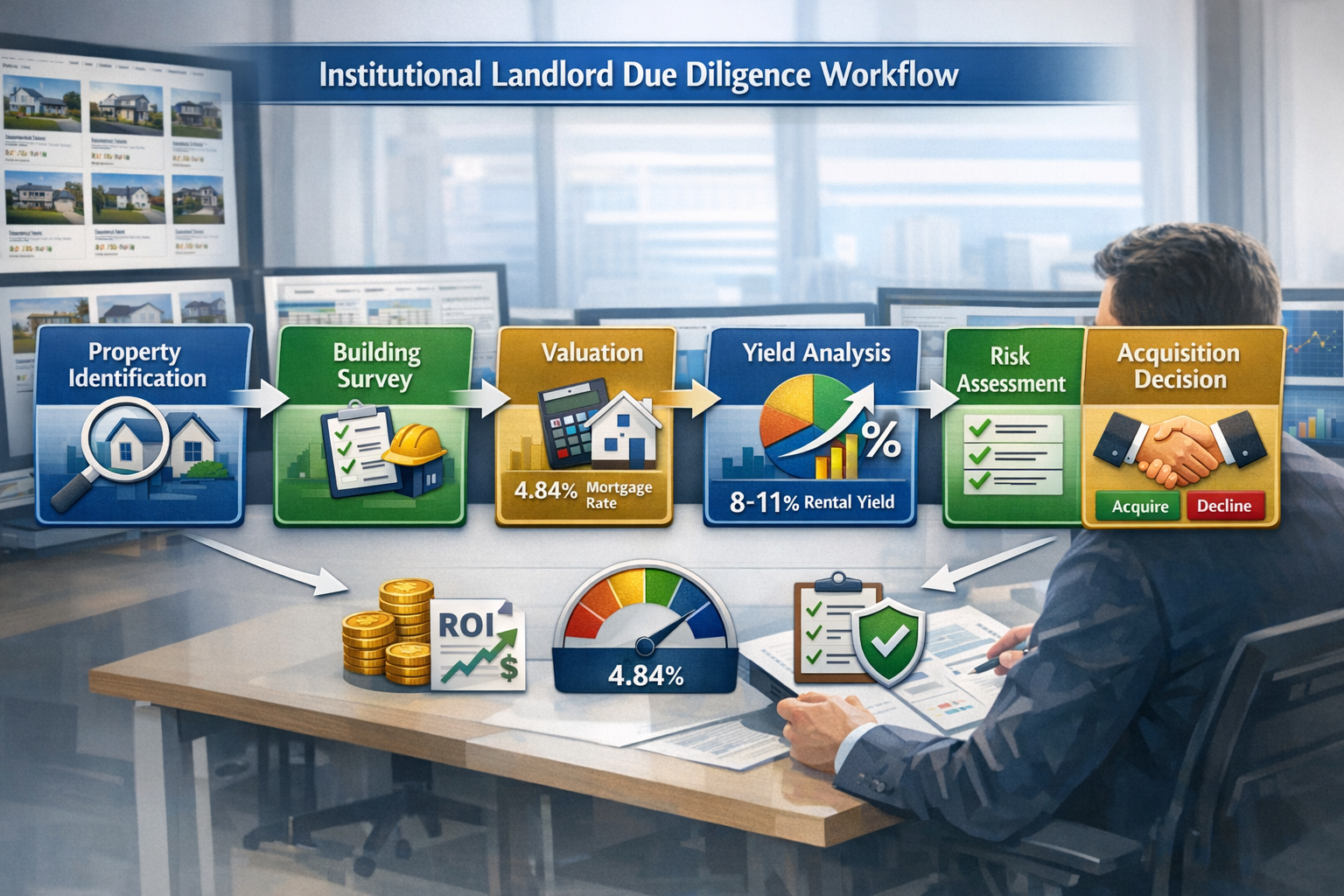
Sophisticated investors don't just commission surveys—they integrate survey intelligence into comprehensive acquisition and portfolio management systems. Building Surveys for Buy-to-Let Portfolio Expansion: Due Diligence Checklists as Institutional Landlords Drive 2026 Market Growth succeeds when survey protocols become systematic and repeatable.
Selecting the Right Survey Provider
Professional landlords establish relationships with qualified surveyors who understand investment priorities:
🎓 Surveyor Qualifications and Expertise
- RICS (Royal Institution of Chartered Surveyors) membership
- Specialist experience in buy-to-let property assessment
- Local market knowledge and comparable property familiarity
- Track record with institutional clients
- Professional indemnity insurance coverage
⏱️ Survey Turnaround and Reporting Quality
- Typical completion timeframes for different survey types
- Report clarity and actionable recommendations
- Photographic documentation standards
- Cost estimation accuracy for identified repairs
- Post-survey consultation availability
Working with experienced RICS home survey providers ensures consistent quality across portfolio acquisitions.
Integrating Survey Findings into Acquisition Decisions
Institutional investors use structured frameworks to convert survey data into go/no-go decisions:
✅ Green Light Criteria
- No structural defects requiring immediate attention
- Identified repairs total less than 10% of purchase price
- Property meets minimum EPC requirements (typically C rating)
- No regulatory compliance issues requiring costly remediation
- Projected net yield exceeds portfolio minimum threshold
⚠️ Amber Light Criteria (Negotiate or Investigate)
- Minor structural issues with clear remediation pathways
- Repair costs 10-20% of purchase price
- EPC improvements needed but achievable cost-effectively
- Compliance issues addressable within 6-month timeframe
- Yield meets threshold after factoring improvement costs
🛑 Red Light Criteria (Avoid or Walk Away)
- Major structural defects (subsidence, serious damp, roof failure)
- Repair costs exceeding 20% of purchase price
- Regulatory compliance impossible or prohibitively expensive
- Yield falls below portfolio minimum even after optimistic assumptions
- Survey reveals undisclosed issues suggesting seller dishonesty
This systematic approach prevents emotional decision-making and maintains portfolio quality standards.
Creating Portfolio-Wide Survey Archives and Maintenance Planning
Professional landlords treat survey reports as living documents that inform ongoing property management:
📁 Survey Documentation Systems
- Centralized digital archive of all property surveys
- Tagging and categorization by property, defect type, urgency
- Integration with property management software
- Accessibility for maintenance teams and contractors
- Regular review cycles for identified monitoring items
🔧 Preventative Maintenance Scheduling
- Five-year maintenance forecasts based on survey recommendations
- Budget allocation for anticipated major works
- Contractor procurement for upcoming projects
- Tenant communication protocols for planned works
- Re-inspection schedules for monitoring items
📈 Portfolio Performance Tracking
- Correlation analysis between survey quality and property performance
- Identification of recurring issues across portfolio
- Refinement of acquisition criteria based on outcomes
- Surveyor performance evaluation and panel management
- Continuous improvement of due diligence protocols
This systematic approach transforms surveys from one-time assessments into strategic portfolio management tools.
Leveraging Survey Intelligence for Competitive Advantage
Sophisticated investors use survey insights to identify opportunities competitors miss:
💡 Value-Add Opportunity Identification
- Properties with cosmetic issues deterring retail buyers
- Simple remediation projects unlocking rental premiums
- Energy efficiency upgrades generating tenant demand
- Layout modifications increasing bedroom count
- Conversion opportunities (single dwelling to HMO)
🎯 Negotiation Strategy Development
- Quantified repair cost estimates supporting price reductions
- Timeline leverage from urgent defect remediation needs
- Seller motivation assessment from property condition
- Comparable property analysis incorporating condition adjustments
- Walk-away thresholds preventing overpayment
⚡ Speed-to-Market Advantages
- Pre-approved contractor networks for rapid remediation
- Streamlined compliance upgrade processes
- Established relationships with planning departments
- Efficient project management reducing void periods
- Fast-track tenant placement through professional presentation
In competitive markets like Manchester where institutional activity intensifies, these advantages separate successful portfolio builders from struggling investors[5].
Cost-Benefit Analysis of Survey Investment
Professional investors view survey costs as insurance premiums protecting far larger capital commitments:
Survey Type Costs (2026 Estimates)
- Basic valuation: £300-500
- RICS Level 2 (Homebuyer): £400-800
- RICS Level 3 (Building Survey): £600-1,500
- Specialist surveys (damp, structural, drainage): £200-800 each
For a £200,000 property acquisition, a comprehensive £1,200 survey represents just 0.6% of purchase price. Yet it can identify defects costing £20,000-50,000 or more—delivering 20-40x return on survey investment through avoided disasters or negotiated price reductions.
Institutional landlords recognize that survey costs are trivial compared to the capital protection and yield optimization they enable.
Conclusion
Building Surveys for Buy-to-Let Portfolio Expansion: Due Diligence Checklists as Institutional Landlords Drive 2026 Market Growth represents the professional standard for property investment in today's dynamic rental market. With demand at 15-year highs, buy-to-let activity surging 13%, and regional markets like Hull offering 9-11% yields, opportunities abound for disciplined investors[1][2].
However, success requires more than identifying high-yield markets. Institutional landlords distinguish themselves through rigorous survey protocols, comprehensive due diligence checklists, and systematic integration of property intelligence into acquisition decisions. Commercial building surveys and RICS Level 3 assessments provide the foundation for confident portfolio expansion.
Actionable Next Steps for Portfolio Growth
For investors planning 2026 acquisitions:
-
Establish survey standards for your portfolio—define minimum survey types for different property categories and price points
-
Build your surveyor panel—identify RICS-qualified professionals with buy-to-let expertise in your target markets
-
Create acquisition checklists—develop systematic evaluation frameworks integrating structural, financial, regulatory, and market criteria
-
Implement documentation systems—establish centralized archives and maintenance planning processes for survey findings
-
Analyze target markets—focus on high-yield regions (Hull, Liverpool) and high-growth areas (Manchester) where survey investment delivers maximum value[1][5]
-
Budget appropriately—allocate 0.5-1% of acquisition budgets to comprehensive surveys and specialist investigations
-
Develop contractor networks—establish relationships with remediation specialists to capitalize on value-add opportunities
The UK rental market's structural supply-demand imbalance creates a multi-year opportunity for professional landlords[2]. Those who combine market intelligence with institutional-grade survey protocols will build resilient, high-performing portfolios that deliver sustainable returns throughout 2026 and beyond.
Property investment success in 2026 belongs to those who measure twice and cut once—making comprehensive building surveys and rigorous due diligence not optional extras, but essential foundations of portfolio expansion strategy.
References

[1] Uk Highest Rental Yields 2026 – https://propertyinvestmentcontact.co.uk/uk-highest-rental-yields-2026
[2] Why The Uk Rental Market Is Poised For Growth In 2026 Rightmoves Positive Outlook For Property Investors – https://blog.magnateassets.com/why-the-uk-rental-market-is-poised-for-growth-in-2026-rightmoves-positive-outlook-for-property-investors
[4] Uk House Prices In 2026 Where The Market Is Headed What It Means For Buyers Sellers And Landlor – https://www.approvedbusinessfinance.co.uk/post/uk-house-prices-in-2026-where-the-market-is-headed-what-it-means-for-buyers-sellers-and-landlor
[5] Best Buy To Let Areas – https://www.simplybusiness.co.uk/knowledge/buying-and-selling/best-buy-to-let-areas/