The United Kingdom property market in 2026 tells a tale of two nations. While London and the South East struggle with stagnant growth and affordability crises, Scotland, Northern Ireland, and Northern England are experiencing remarkable price appreciation and investment momentum. This dramatic regional divergence demands that property valuers, surveyors, and investors develop specialist strategies tailored to these high-growth northern markets.
Understanding Valuation Surveys for the North-South Divide: Specialist Strategies for Capturing Growth in Scotland, Northern Ireland, and Northern England has never been more critical. With Northern Ireland leading the charge at 7.5% annual house price growth and Scotland posting 4.9% appreciation, the traditional focus on southern markets is rapidly becoming outdated.[1][7] Property professionals who adapt their valuation methodologies and marketing approaches to these emerging opportunities will capture significant competitive advantage.
This comprehensive guide explores the regional dynamics reshaping UK property valuations, the specialist survey techniques required for northern markets, and actionable strategies for capitalizing on this historic market shift.
Key Takeaways
- 📈 Northern Ireland leads UK house price growth at 7.5% annually, reaching £196,000 average in Q4 2025, while Scotland follows with 4.9% growth to £191,000
- 🏘️ Eight of the top ten fastest-growing areas are in northern and central England and Scotland, demonstrating sustained investor migration from southern markets
- 💷 North East England records the highest private rent inflation at 8.0%, significantly outpacing London's modest 1.1% annual growth
- 🔨 Auction market activity surged in northern regions, with Scotland raising £230.5 million (up 20.9%) and Northern Ireland lots increasing 106.8%
- 🎯 Specialist valuation strategies must account for regional variations in property types, market liquidity, rental yields, and buyer demographics
Understanding the 2026 North-South Property Divide
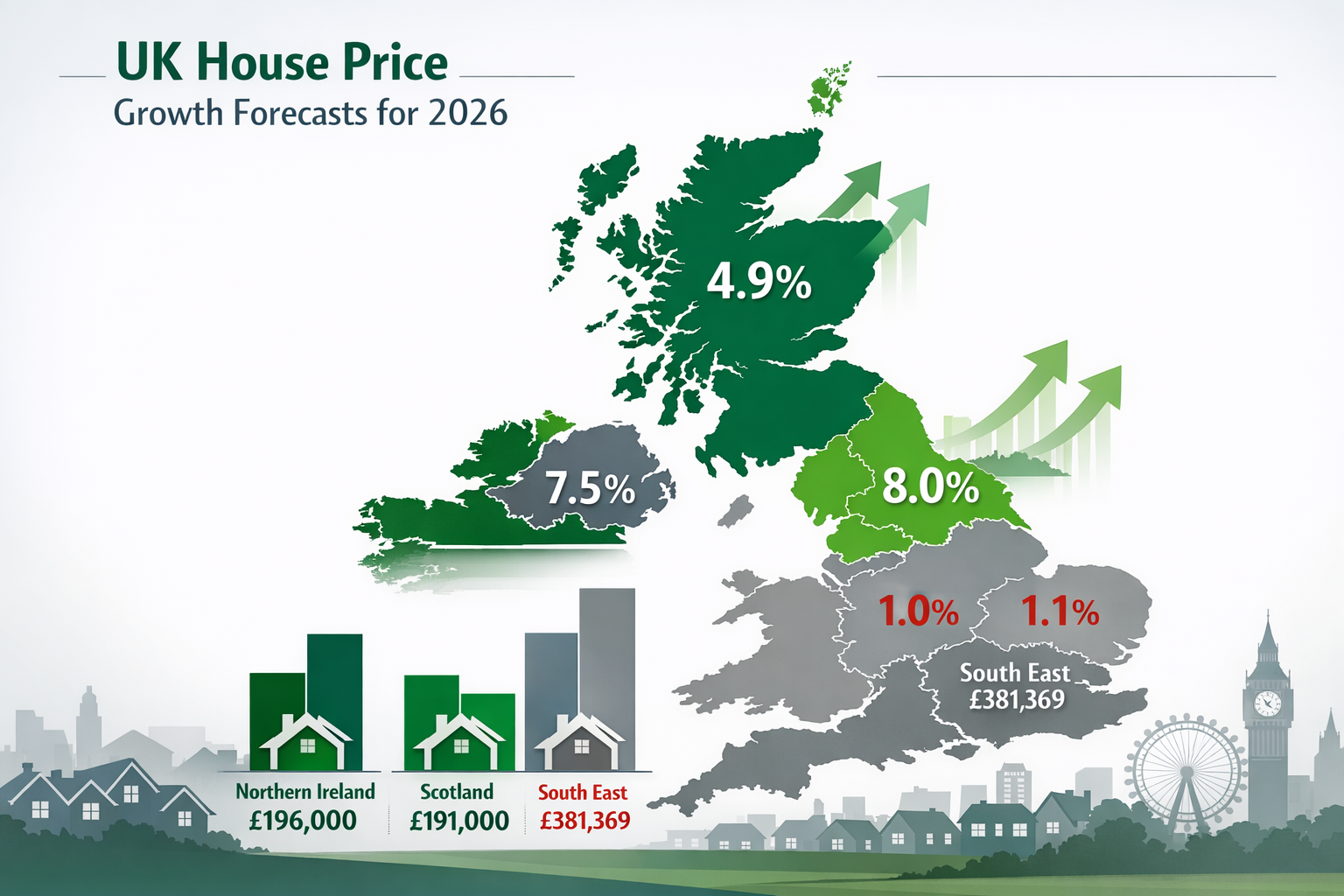
The North-South divide in UK property markets has reached unprecedented levels in 2026, fundamentally altering how valuers must approach their work. This regional divergence represents more than a temporary market fluctuation—it signals a structural shift in where growth, investment, and opportunity are concentrated.
Regional Price Performance: The Data Behind the Divide
Northern Ireland has emerged as the undisputed leader in house price appreciation, with values climbing 7.5% annually to reach an average of £196,000 in Q4 2025.[1][7] This remarkable performance reflects sustained demand, limited housing supply, and increasing recognition of Northern Ireland's value proposition among UK and international investors.
Scotland follows closely with 4.9% annual appreciation to £191,000 as of December 2025.[1][4] The Royal Institution of Chartered Surveyors (RICS) confirmed Scotland as one of the two strongest-performing regions in early 2026, with market momentum continuing to build throughout the first quarter.
In stark contrast, London exhibits the weakest rent growth at just 1.1% annually, while the South East manages only 1.0% house price growth.[1][6] These southern regions face persistent affordability pressures, with the South East averaging £381,369—nearly double the price of comparable northern properties.[2]
| Region | Average House Price | Annual Growth Rate | Average Monthly Rent | Rent Growth Rate |
|---|---|---|---|---|
| Northern Ireland | £196,000 | 7.5% | £875 | 5.6% |
| Scotland | £191,000 | 4.9% | £1,021 | 2.6% |
| North East England | Data varies | Strong | Higher rents | 8.0% |
| South East | £381,369 | 1.0% | Higher rents | Below average |
| London | Highest | Weak | £1,400+ | 1.1% |
The Migration of Investment Capital Northward
Eight of the top ten areas experiencing the biggest price growth through October 2025 were located in northern or central England and Scotland.[2] This concentration demonstrates sustained investor migration toward markets where purchasing power stretches further and rental yields remain attractive.
Buyers are increasingly drawn to Northern Ireland, Scotland, and the North-West, where property valuations remain accessible compared to southern regions. This shift creates opportunities for surveyors who understand how to properly assess value in markets characterized by rapid appreciation, emerging infrastructure development, and evolving buyer demographics.
The auction market data provides compelling evidence of this northward capital flow. Scotland's auction market raised £230.5 million between November 2025 and January 2026, representing a 20.9% year-on-year increase, with residential sales volumes jumping an impressive 116.7%.[3] Northern Ireland's auction market surged even more dramatically, with lots offered increasing 106.8% and residential lots up 36.4%.[3]
Understanding these valuation factors becomes essential for professionals working across different regional markets.
Rental Market Dynamics Across the Divide
The rental sector tells an equally compelling story of regional divergence. The North East England region records the highest private rent inflation at 8.0% annually—significantly outpacing other regions over the 12 months to January 2026.[1]
Scotland's average monthly rent stands at £1,021 as of January 2026, representing the lowest annual rise of 2.6% in over four years.[1] This cooling reflects moderating demand after the record-high 11.7% annual increase in August 2023, suggesting the Scottish rental market may be reaching a new equilibrium.
Northern Ireland's average monthly rent of £875 (November 2025) reflects a 5.6% annual increase, continuing to moderate from the record-high 9.9% reached in April 2024.[1] Wales shows accelerating rent growth at 5.8% annually to £826, while England averages £1,423 with 3.5% annual growth across diverse regional performance patterns.[1]
"The widening regional divergence requires valuers to develop region-specific expertise and marketing strategies that recognize the fundamentally different dynamics driving northern versus southern markets." – Property Market Analysis 2026
Valuation Surveys for the North-South Divide: Specialist Methodologies for Northern Markets
Conducting accurate property valuations in Scotland, Northern Ireland, and Northern England requires specialized methodologies that account for unique regional characteristics. Standard valuation approaches developed for mature southern markets often fail to capture the nuances of rapidly appreciating northern properties.
Adapting Comparable Analysis for High-Growth Regions
Traditional comparable analysis relies on recent sales data to establish market value. However, in markets experiencing 5-8% annual growth, comparables from even six months ago may significantly undervalue current properties. Valuers working in northern markets must:
Weight recent transactions more heavily than older sales data, potentially limiting comparables to the most recent three months rather than the standard six-to-twelve month period. In Northern Ireland's 7.5% growth environment, a property sold nine months ago may be worth 5-6% more today.[1][7]
Apply time adjustments to older comparables using documented regional appreciation rates. Scotland's consistent 4.9% annual growth provides a reliable benchmark for adjusting historical sales data.[1][4] These adjustments must be clearly documented in RICS building surveys and valuation reports.
Consider emerging submarkets within broader regions. Not all areas within Scotland or Northern Ireland appreciate uniformly. Urban centers like Edinburgh and Belfast may show different patterns than rural or coastal areas. Granular local knowledge becomes essential.
Account for auction market velocity when comparable sales data is limited. Scotland's 116.7% increase in residential auction sales volumes indicates strong market liquidity that supports higher valuations.[3] Properties selling quickly at or above asking price signal stronger market conditions than areas with extended marketing periods.
Incorporating Infrastructure Development and Regeneration
Northern regions are experiencing significant infrastructure investment that directly impacts property values. Valuers must systematically assess how planned and ongoing developments affect current and future valuations:
🏗️ Transport improvements: New rail connections, motorway expansions, and public transport enhancements increase accessibility and desirability. Properties within convenient commuting distance of major employment centers command premiums.
🏢 Commercial development: New business parks, technology hubs, and commercial centers create employment opportunities that drive residential demand. Edinburgh's financial services sector and Belfast's growing technology industry support sustained housing demand.
🎓 Educational institutions: Universities and colleges attract students, staff, and related services, creating stable rental demand. Scotland's world-renowned universities in Edinburgh, Glasgow, St. Andrews, and Aberdeen support robust rental markets.
🏥 Healthcare facilities: Major hospitals and medical centers employ thousands and attract associated professional services, supporting residential property values in surrounding areas.
Valuers should maintain detailed databases of planned infrastructure projects and incorporate this forward-looking information into their assessments, particularly for freehold valuation work where long-term value appreciation matters significantly.
Assessing Property Types Unique to Northern Markets
Northern regions feature distinctive property types that require specialized valuation expertise:
Scottish tenement flats: These traditional stone-built apartment buildings require understanding of common property maintenance obligations, factoring arrangements, and the unique legal framework governing Scottish property ownership. Valuers must assess the condition of common areas, roof condition, and the financial health of owners' associations.
Northern Irish terraced housing: Traditional terraced properties in Belfast and other Northern Irish cities often feature period details and solid construction that appeal to both owner-occupiers and investors. Understanding local renovation standards and conservation area requirements affects valuation accuracy.
Northern England industrial conversions: Former mills, warehouses, and industrial buildings converted to residential use are common in Manchester, Leeds, and other northern cities. These properties require careful assessment of conversion quality, ongoing maintenance obligations, and potential defects related to original construction methods.
Rural and coastal properties: Scotland and Northern Ireland offer extensive rural and coastal property markets with unique valuation challenges. Access, services, septic systems, water supply, and environmental considerations all affect value. Specialized building surveys become essential for these properties.
Rental Yield Analysis for Investment Properties
With the North East recording 8.0% annual rent inflation and strong rental demand across northern regions, investment property valuation requires sophisticated yield analysis.[1]
Valuers must calculate:
Gross rental yield: Annual rental income divided by property value. Northern properties often deliver superior yields compared to southern equivalents due to lower purchase prices relative to rental income.
Net rental yield: Gross yield minus operating expenses including maintenance, insurance, letting fees, and void periods. Northern markets may experience lower void rates due to strong tenant demand.
Capital appreciation potential: Combining rental income with expected property value growth creates total return projections. Northern Ireland's 7.5% price growth plus 5.6% rent growth delivers compelling total returns.[1]
Comparative yield analysis: Benchmarking against alternative investment options helps investors understand relative value. When London delivers 1.1% rent growth on properties costing double northern equivalents, the investment case for northern markets strengthens considerably.[1]
Professional valuers should provide detailed yield analysis in reports for investment clients, incorporating local market data, tenant demand patterns, and realistic expense projections. This analysis supports informed investment decisions and demonstrates professional expertise.
Valuation Surveys for the North-South Divide: Marketing Strategies for Capturing Northern Growth
Successfully capturing business in Scotland, Northern Ireland, and Northern England requires targeted marketing strategies that demonstrate regional expertise and connect with the specific needs of northern market participants.
Positioning as Regional Specialists
Generic surveying practices struggle to compete against firms demonstrating deep regional knowledge. Effective positioning strategies include:
Developing regional case studies showcasing successful valuations, surveys, and advisory work in specific northern markets. Detailed examples of Scottish tenement valuations, Northern Irish investment property assessments, or North East development appraisals build credibility with potential clients.
Publishing regional market commentary that analyzes local price trends, rental market dynamics, and investment opportunities. Regular blog posts, newsletters, or social media content discussing Northern Ireland's 7.5% growth or Scotland's auction market performance positions firms as thought leaders.[1][3]
Obtaining regional professional accreditations and memberships in local property organizations. Participation in Scottish property forums, Northern Irish real estate associations, and regional RICS chapters demonstrates commitment to local markets.
Building relationships with regional stakeholders including estate agents, solicitors, mortgage brokers, and property developers. These referral sources direct clients to surveyors with proven regional expertise.
Firms can learn from successful commercial property surveyors who have built strong regional practices through consistent local presence and specialized knowledge.
Targeting Investment Buyers and Portfolio Landlords
The northward migration of investment capital creates opportunities to serve sophisticated property investors seeking exposure to high-growth markets.[2]
Effective marketing to this audience includes:
📊 Producing investment-focused valuation reports that go beyond basic market value to include yield analysis, comparable rental data, tenant demand assessment, and capital appreciation projections. These comprehensive reports support investment decision-making.
💼 Offering portfolio valuation services for investors acquiring multiple properties across northern regions. Bundled services with volume pricing attract serious investors building substantial portfolios.
🎯 Creating targeted content addressing investor concerns such as property management in remote locations, understanding Scottish and Northern Irish legal frameworks, tax implications of cross-border investments, and optimal property types for rental returns.
📈 Highlighting auction opportunities given the surge in northern auction activity. Scotland's £230.5 million in auction sales and Northern Ireland's 106.8% increase in lots offered create opportunities for surveyors offering pre-auction inspections and valuations.[3]
Investors appreciate surveyors who understand their specific requirements and can provide actionable intelligence about regional markets. Positioning services around investment returns rather than just property condition differentiates practices in competitive markets.
Digital Marketing for Geographic Expansion
Firms based in southern regions seeking to capture northern opportunities must employ strategic digital marketing to overcome geographic distance:
Search engine optimization (SEO) targeting regional keywords such as "property valuation Scotland," "Northern Ireland house survey," or "North East England investment property valuation" helps potential clients find services when researching options.
Google My Business listings in target cities including Edinburgh, Glasgow, Belfast, Manchester, Leeds, and Newcastle establish local presence even for firms without physical offices in these locations.
Paid advertising campaigns using geographic targeting reach potential clients in high-growth regions. Google Ads and social media advertising can be precisely targeted to property owners, buyers, and investors in specific northern postcodes.
Virtual consultation capabilities using video conferencing, digital document sharing, and remote communication tools make geographic distance irrelevant. Marketing these capabilities reassures northern clients that they'll receive excellent service despite physical distance.
Partnership arrangements with local estate agents, solicitors, or property management companies provide on-the-ground presence and local credibility. These partnerships can be highlighted in marketing materials to demonstrate regional connectivity.
Successful digital marketing requires understanding the different types of survey clients in northern markets typically require and tailoring content accordingly.
Building Trust Through Transparency and Education
Northern markets include many first-time buyers and investors unfamiliar with professional surveying services. Educational marketing builds trust and generates leads:
Creating comprehensive guides explaining the valuation process, what to expect from surveys, how regional factors affect property values, and why professional valuations matter for purchase decisions, refinancing, or tax purposes.
Offering free initial consultations or property assessments helps potential clients understand service value before committing to full engagements. These consultations build relationships and demonstrate expertise.
Providing transparent pricing for standard services eliminates uncertainty and builds confidence. Clear fee schedules for RICS home surveys, valuations, and specialized reports help clients budget appropriately.
Sharing client testimonials from satisfied northern market clients provides social proof and reduces perceived risk. Video testimonials from Scottish or Northern Irish clients carry particular weight with similar prospects.
Explaining regional specifics such as Scottish property law differences, Northern Irish title systems, or unique construction methods common in northern England helps clients appreciate the value of specialized regional expertise.
Educational content positions surveying practices as helpful advisors rather than transactional service providers, building long-term client relationships and referral networks.
Specialist Survey Types for Northern Market Opportunities
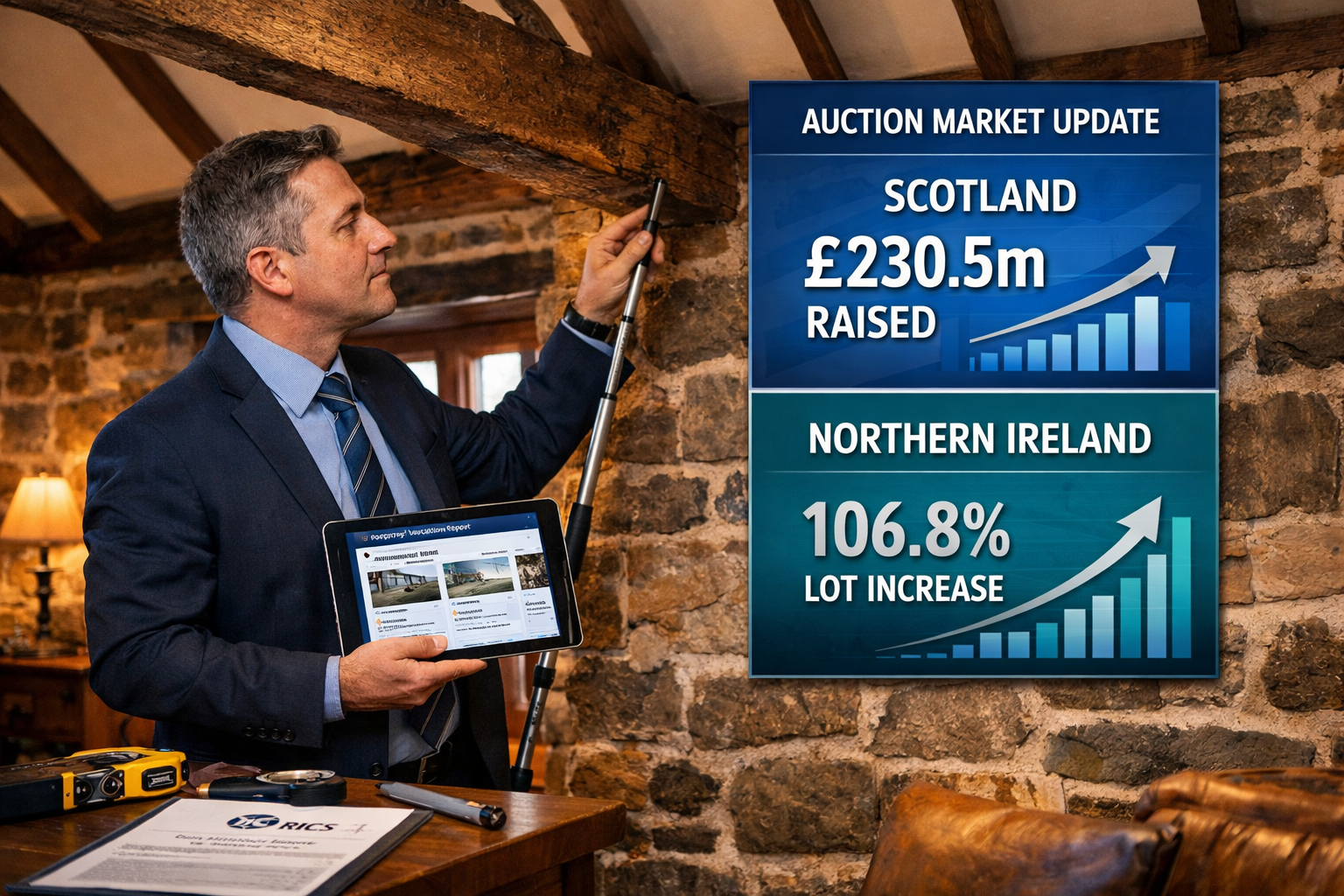
Different property types and transaction scenarios in Scotland, Northern Ireland, and Northern England create demand for specialized survey services beyond standard residential valuations.
Development Site Appraisals
Northern regions offer numerous development opportunities as population growth, employment expansion, and housing demand create need for new construction. Development site appraisals require:
Residual valuation methodology calculating development site value by estimating completed development value, subtracting construction costs, professional fees, finance costs, developer profit, and sales/marketing expenses. The residual amount represents maximum site value.
Planning feasibility assessment evaluating realistic development density, use classes, and design parameters based on local planning authority policies and recent approval patterns. Understanding regional planning frameworks is essential.
Infrastructure capacity analysis assessing whether existing roads, utilities, drainage, and services can support proposed development or whether costly upgrades are required. These costs significantly affect site value.
Market absorption rates estimating realistic sales velocity for completed units based on local demand, competing developments, and price points. Northern Ireland's 7.5% price growth suggests strong absorption, but local analysis remains essential.[1]
Environmental and ground condition assessment identifying contamination risks, flood zones, protected species, archaeological concerns, or geotechnical challenges that affect development viability and cost.
Development appraisals support land acquisitions, planning applications, development financing, and partnership negotiations. Firms offering these specialized services access higher-value engagements with developers, landowners, and institutional investors.
Commercial Property Valuations
Northern cities are experiencing commercial property growth alongside residential markets. Commercial valuations require different methodologies:
Investment method valuation capitalizing net rental income at appropriate yields based on property type, location, tenant quality, and lease terms. Northern commercial properties often deliver superior yields compared to southern equivalents.
Comparable method analyzing recent sales of similar commercial properties, adjusting for differences in size, location, condition, and lease terms. Limited transaction data in some northern markets requires broader geographic comparables.
Profits method for specialized properties like hotels, care homes, or leisure facilities where value derives from business profitability rather than just property characteristics. Understanding regional business conditions becomes essential.
Depreciated replacement cost for specialized properties with no comparable market transactions, calculating current construction cost and deducting depreciation for age and obsolescence.
Commercial valuations support acquisitions, refinancing, financial reporting, taxation, and lease negotiations. The growing northern commercial sector creates opportunities for surveyors with appropriate expertise and RICS commercial valuation credentials.
Lease Extension and Enfranchisement Valuations
Scotland and Northern Ireland have unique legal frameworks governing leasehold properties, lease extensions, and freehold acquisition. Specialist knowledge includes:
Scottish ground lease valuations accounting for Scotland's distinct feudal property history and modern long leasehold arrangements. Understanding Scottish property law and valuation conventions is essential.
Northern Irish leasehold enfranchisement following different statutory frameworks than England and Wales. Valuers must understand local legislation, tribunal precedents, and calculation methodologies.
Lease extension valuations calculating premium payments for extending lease terms, considering marriage value, diminution in landlord's interest, and appropriate deferment rates. Regional variations in property values and market conditions affect these calculations.
Understanding lease extension valuation principles and adapting them to Scottish and Northern Irish contexts positions surveyors to serve this specialized market segment.
Insurance Reinstatement Valuations
Northern properties often feature traditional construction methods and period features requiring specialized insurance valuations:
Stone construction assessment common in Scottish tenements and Northern Irish traditional properties requires understanding restoration costs for specialist masonry work, lime mortars, and traditional building techniques.
Listed building considerations accounting for conservation requirements, specialist materials, and extended project timelines that increase reinstatement costs beyond standard construction.
Remote location factors affecting material delivery costs, contractor availability, and project logistics for rural Scottish or Northern Irish properties.
Climate-specific considerations including enhanced weatherproofing, drainage systems, and structural provisions for Scottish and Northern Irish weather conditions.
Professional insurance reinstatement valuations protect property owners from underinsurance and provide essential risk management for lenders, insurers, and commercial property owners.
Specialized Defect Surveys
Older property stock in northern regions often requires detailed defect analysis beyond standard survey reports:
Structural movement investigation for properties showing cracking, settlement, or structural distress. Understanding regional ground conditions, traditional foundation methods, and appropriate remediation approaches is essential.
Dampness and water penetration analysis particularly important in high-rainfall Scottish and Northern Irish climates. Identifying sources, assessing extent, and recommending appropriate remediation requires specialist knowledge.
Traditional construction defect assessment for stone walls, lime plaster, timber floors, and other period construction methods common in northern properties. Understanding how these systems function and fail differs from modern construction.
Subsidence and ground movement analysis for properties in areas with mining history, shrinkable clay soils, or other geotechnical challenges. The North East and parts of Scotland have extensive mining heritage affecting property stability.
Offering specialist defect surveys positions practices to serve clients dealing with complex property issues, often commanding premium fees for specialized expertise.
Technology and Innovation in Regional Valuation Services
Modern surveying practices leverage technology and innovation to deliver superior service across geographic distances and capture opportunities in northern markets.
Digital Survey Tools and Remote Assessment
Technology enables efficient service delivery across the UK's geographic expanse:
High-resolution photography and videography allows detailed property documentation that can be reviewed remotely, shared with clients, and incorporated into comprehensive reports. 360-degree cameras capture entire rooms for virtual property tours.
Drone surveys provide aerial photography for large properties, development sites, and roof inspections without expensive scaffolding or access equipment. This technology is particularly valuable for rural Scottish estates or large Northern Irish properties.
Thermal imaging cameras identify insulation defects, water penetration, and heat loss issues invisible to standard inspection. These tools add value to surveys and identify problems before they become serious defects.
Moisture meters and other diagnostic equipment provide objective measurements supporting professional opinions about dampness, timber decay, and other defect conditions common in older northern properties.
Digital reporting platforms deliver professional reports with embedded photographs, annotated floor plans, and clear recommendations. Clients appreciate receiving comprehensive reports quickly via secure online portals.
Technology enhances efficiency without replacing professional judgment. The most successful practices combine cutting-edge tools with deep regional knowledge and surveying expertise.
Data Analytics for Market Intelligence
Sophisticated data analysis supports accurate valuations and market commentary:
Automated valuation models (AVMs) incorporating regional transaction data, property characteristics, and market trends provide initial value estimates and comparable property identification. However, professional judgment remains essential, particularly in rapidly appreciating markets where AVMs may lag current conditions.
Rental market databases tracking advertised rents, achieved rents, void periods, and tenant demand across northern regions support investment property valuations and yield analysis. Understanding that the North East shows 8.0% rent inflation while Scotland shows 2.6% requires granular local data.[1]
Transaction monitoring systems alerting valuers to new sales, auction results, and market activity in target regions ensure comparable databases remain current. Scotland's 116.7% increase in auction sales volumes represents significant new transaction data.[3]
Economic indicator tracking monitoring employment data, population trends, infrastructure investment, and other factors affecting property demand helps valuers anticipate market movements and provide forward-looking advice.
Geographic information systems (GIS) mapping property locations, planning applications, infrastructure projects, and market activity provide visual analysis tools supporting development appraisals and strategic advice.
Data-driven practices deliver more accurate valuations, better client advice, and stronger market positioning than firms relying solely on anecdotal market knowledge.
Client Relationship Management Systems
Serving clients across multiple regions requires systematic relationship management:
CRM platforms tracking client interactions, survey history, follow-up requirements, and referral sources ensure no opportunities fall through administrative gaps. Automated reminders prompt timely follow-up with prospects and past clients.
Email marketing systems delivering regional market updates, service announcements, and educational content keep practices top-of-mind with potential clients. Segmented lists allow targeted messaging to Scottish investors, Northern Irish developers, or North East homebuyers.
Client portals providing secure access to survey reports, valuation certificates, and related documents enhance client experience and reduce administrative burden. Clients appreciate 24/7 access to important property documentation.
Feedback collection systems gathering client satisfaction data, testimonials, and improvement suggestions support continuous service enhancement and provide marketing content.
Referral tracking identifying which marketing channels, partnerships, and activities generate the most valuable client relationships allows strategic resource allocation to highest-return activities.
Professional CRM systems transform surveying practices from reactive service providers to proactive relationship builders, supporting sustainable growth in competitive markets.
Virtual Consultation and Client Communication
Geographic distance between southern-based firms and northern clients becomes irrelevant with effective virtual communication:
Video conferencing for initial consultations, report presentations, and follow-up discussions provides personal connection without travel time and expense. Clients appreciate convenient scheduling and face-to-face interaction.
Screen sharing during consultations allows walking clients through survey reports, explaining technical issues, and answering questions with visual reference to specific property features or defect photographs.
Digital document signing using platforms like DocuSign or Adobe Sign eliminates postal delays and enables rapid engagement letter execution, report delivery, and administrative processes.
Instant messaging via WhatsApp Business or similar platforms provides convenient client communication for quick questions, appointment confirmations, and status updates without telephone tag.
Project management platforms like Trello or Asana give clients visibility into survey progress, upcoming milestones, and completion timelines, reducing anxiety and support calls.
Virtual communication capabilities must be prominently featured in marketing materials to reassure potential northern clients that geographic distance won't compromise service quality.
Regulatory Considerations and Professional Standards
Operating across Scotland, Northern Ireland, and England requires understanding different regulatory frameworks and maintaining appropriate professional standards.
RICS Standards and Regional Variations
The Royal Institution of Chartered Surveyors (RICS) sets professional standards for valuations across the UK, but regional variations exist:
RICS Valuation – Global Standards (Red Book) provides the overarching framework for professional valuations. All RICS members must comply with these standards regardless of property location.
UK National Supplement to the Red Book addresses UK-specific requirements and legal frameworks. Understanding how these apply across different UK jurisdictions is essential.
Scottish property law differences including feudal system remnants, different conveyancing processes, and unique legal terminology require specialized knowledge. Valuers working in Scotland must understand these distinctions.
Northern Irish legal framework follows different statutory provisions than England and Wales for planning, building regulations, and property transactions. Professional valuations must reflect these differences.
Professional indemnity insurance must provide adequate coverage for work across all UK regions. Some insurers require notification of work outside primary operating areas or charge additional premiums for extended geographic coverage.
Maintaining RICS professional standards while adapting to regional variations demonstrates competence and protects both practitioners and clients.
Tax Valuation Compliance
Different tax regimes across UK regions create specialized valuation requirements:
Scottish Land and Buildings Transaction Tax (LBTT) replaced Stamp Duty Land Tax in Scotland with different rate bands and thresholds. Valuations supporting tax planning or compliance must reflect Scottish tax provisions.
Capital Gains Tax valuations for properties across different regions require understanding regional market conditions, appropriate comparable evidence, and defensible valuation methodologies. Capital Gains Tax valuation work must withstand HMRC scrutiny.
Inheritance Tax valuations require professional opinions of market value at specific dates, supported by comparable evidence and clear reasoning. Regional market volatility affects valuation certainty and supporting evidence requirements.
Annual Tax on Enveloped Dwellings (ATED) applies to UK residential properties held by corporate entities, requiring professional valuations at specific dates. Understanding ATED valuation requirements is essential for high-value property work.
Tax valuations carry significant professional liability and require meticulous documentation, conservative assumptions, and defensible methodologies that withstand regulatory review.
Building Regulations and Planning Frameworks
Different building regulations and planning systems across UK regions affect property valuations:
Scottish building standards differ from English Building Regulations in technical requirements, approval processes, and compliance certification. Understanding these differences affects new build valuations and conversion project assessments.
Northern Irish planning system operates under different legislation and policy frameworks than England and Wales. Development site valuations must reflect realistic planning prospects under applicable local frameworks.
Local development plans across northern regions establish planning policies affecting property use, development density, design requirements, and infrastructure contributions. Understanding these plans is essential for development appraisals.
Conservation areas and listed buildings are common in historic Scottish and Northern Irish towns and cities. Understanding conservation requirements and their impact on property value, insurance costs, and renovation expenses is essential.
Professional surveyors must maintain current knowledge of regulatory frameworks across all regions where they practice, ensuring valuations reflect realistic development potential, compliance costs, and regulatory constraints.
Future Outlook: Sustaining Growth in Northern Markets

The long-term prospects for Scotland, Northern Ireland, and Northern England remain strong, but understanding potential challenges and opportunities helps surveyors position for sustained success.
Economic Drivers Supporting Continued Growth
Several fundamental factors support continued northern market strength:
Relative affordability remains compelling. With South East properties averaging £381,369 compared to Northern Ireland's £196,000 and Scotland's £191,000, northern markets offer significantly better value.[1][2] This affordability gap attracts both individual buyers and institutional investors.
Remote work flexibility following pandemic-driven changes allows professionals to live in more affordable northern locations while maintaining careers with southern employers. This trend supports sustained migration and housing demand.
Infrastructure investment including HS2 extensions, Northern Powerhouse initiatives, and regional transport improvements enhances northern connectivity and economic prospects. Properties benefiting from improved infrastructure command premium valuations.
University and research sectors in Edinburgh, Glasgow, Manchester, Leeds, and Belfast attract talent, drive innovation, and support knowledge economy growth. These institutions provide stable employment and housing demand.
Tourism and cultural sectors particularly in Scotland and Northern Ireland, support local economies, create employment, and drive demand for both residential and commercial property.
Understanding these drivers helps valuers provide informed advice about long-term value appreciation and investment prospects.
Potential Headwinds and Risk Factors
Balanced analysis requires acknowledging potential challenges:
Interest rate sensitivity affects affordability and mortgage availability. Northern buyers may be more sensitive to rate changes due to tighter budgets despite lower property prices.
Economic uncertainty including post-Brexit adjustments, global economic conditions, and UK fiscal policy affects confidence and transaction volumes. Northern regions may experience amplified impacts during economic downturns.
Political considerations including Scottish independence debates, Northern Irish constitutional questions, and regional devolution affect long-term confidence and investment decisions.
Climate change impacts including increased flooding, coastal erosion, and extreme weather events may disproportionately affect some northern regions, requiring enhanced property resilience and insurance coverage.
Population aging in some northern areas may reduce housing demand over time, though immigration and younger household formation currently offset this trend.
Professional valuers must incorporate both opportunities and risks into their assessments, providing balanced advice that serves client interests.
Emerging Opportunities for Specialist Surveyors
Forward-looking practices can position for emerging opportunities:
Sustainability and energy efficiency valuations as building performance standards tighten and energy costs rise. Northern properties often require significant retrofitting, creating demand for energy assessment and improvement valuation.
Build-to-rent sector growth as institutional investors develop purpose-built rental housing in northern cities. These large-scale projects require professional valuations, ongoing portfolio assessments, and specialized expertise.
Later living and retirement housing as demographics shift toward older populations. Specialist retirement developments require understanding of this unique property sector and its valuation considerations.
Mixed-use development combining residential, commercial, and community uses in regeneration projects. These complex developments require sophisticated valuation approaches and understanding of multiple property sectors.
Alternative residential models including co-living, co-housing, and community land trusts emerging in northern markets. Understanding these innovative approaches positions surveyors for future opportunities.
Practices investing in specialized knowledge and capabilities for emerging sectors will capture premium opportunities as markets evolve.
Conclusion
The Valuation Surveys for the North-South Divide: Specialist Strategies for Capturing Growth in Scotland, Northern Ireland, and Northern England represent both a challenge and an extraordinary opportunity for property professionals in 2026. With Northern Ireland leading UK house price growth at 7.5%, Scotland following at 4.9%, and the North East showing 8.0% rent inflation, these northern markets offer compelling opportunities that dwarf stagnant southern performance.[1]
Success in these high-growth regions requires more than simply extending existing southern practices northward. It demands specialist regional knowledge, adapted valuation methodologies, targeted marketing strategies, and genuine commitment to understanding local markets, property types, and regulatory frameworks.
The evidence is clear: eight of the top ten fastest-growing areas are in northern and central England and Scotland, auction markets are surging with Scotland raising £230.5 million and Northern Ireland lots increasing 106.8%, and investment capital continues flowing northward in search of superior returns.[2][3]
Actionable Next Steps
Property professionals seeking to capture northern growth opportunities should:
✅ Develop regional expertise by studying local markets, building relationships with northern property professionals, and gaining firsthand knowledge of property types and market conditions
✅ Adapt valuation methodologies to account for rapid appreciation, emerging submarkets, infrastructure development, and regional property characteristics
✅ Invest in targeted marketing highlighting regional knowledge, showcasing northern case studies, and reaching investment buyers through digital channels and strategic partnerships
✅ Leverage technology for efficient remote service delivery, data-driven market analysis, and enhanced client communication across geographic distances
✅ Maintain professional standards while understanding regional regulatory variations, tax frameworks, and legal distinctions across Scotland, Northern Ireland, and England
✅ Position for emerging opportunities in sustainability, build-to-rent, specialist housing, and innovative development models gaining traction in northern markets
The North-South divide in 2026 is not a temporary anomaly—it reflects fundamental shifts in UK property markets that will shape opportunities for years to come. Surveyors who recognize this reality and adapt their practices accordingly will thrive in this new landscape, while those clinging to outdated southern-centric approaches will find themselves increasingly marginalized.
The question is not whether to engage with northern markets, but how quickly and effectively to build the specialist capabilities required for success. The data demonstrates that the future of UK property growth is increasingly northern—and the time to act is now.
For comprehensive property assessments across all UK regions, explore our complete range of surveys and specialized valuation services designed to meet diverse client needs in evolving markets.
References
[1] February2026 – https://www.ons.gov.uk/economy/inflationandpriceindices/bulletins/privaterentandhousepricesuk/february2026
[2] The 2026 Uk Property Market Outlook – https://nedbankprivatewealth.com/insights/the-2026-uk-property-market-outlook/
[3] Going Once Going Twice January Delivers Strong Start To 2026 – https://propertyindustryeye.com/going-once-going-twice-january-delivers-strong-start-to-2026/
[4] Uk Resi Survey Jan 2026 Report Shows Early Signs Market Recovery Despite Caution – https://www.rics.org/news-insights/uk-resi-survey-jan-2026-report-shows-early-signs-market-recovery-despite-caution
[5] Valuation Surveys In The 2026 Market Recovery Regional Strategies For Scotland Northern Ireland And Northern England Growth – https://nottinghillsurveyors.com/blog/valuation-surveys-in-the-2026-market-recovery-regional-strategies-for-scotland-northern-ireland-and-northern-england-growth
[6] House Price Forecast – https://hoa.org.uk/advice/guides-for-homeowners/i-am-buying/house-price-forecast/
[7] Uk Average House Price Rises 24 Annually In December To Gbp270000 – https://www.morningstar.com/news/alliance-news/1771412725547146700/uk-average-house-price-rises-24-annually-in-december-to-gbp270000