
Dilapidations Survey: The Complete Guide for Property Owners and Tenants in 2026
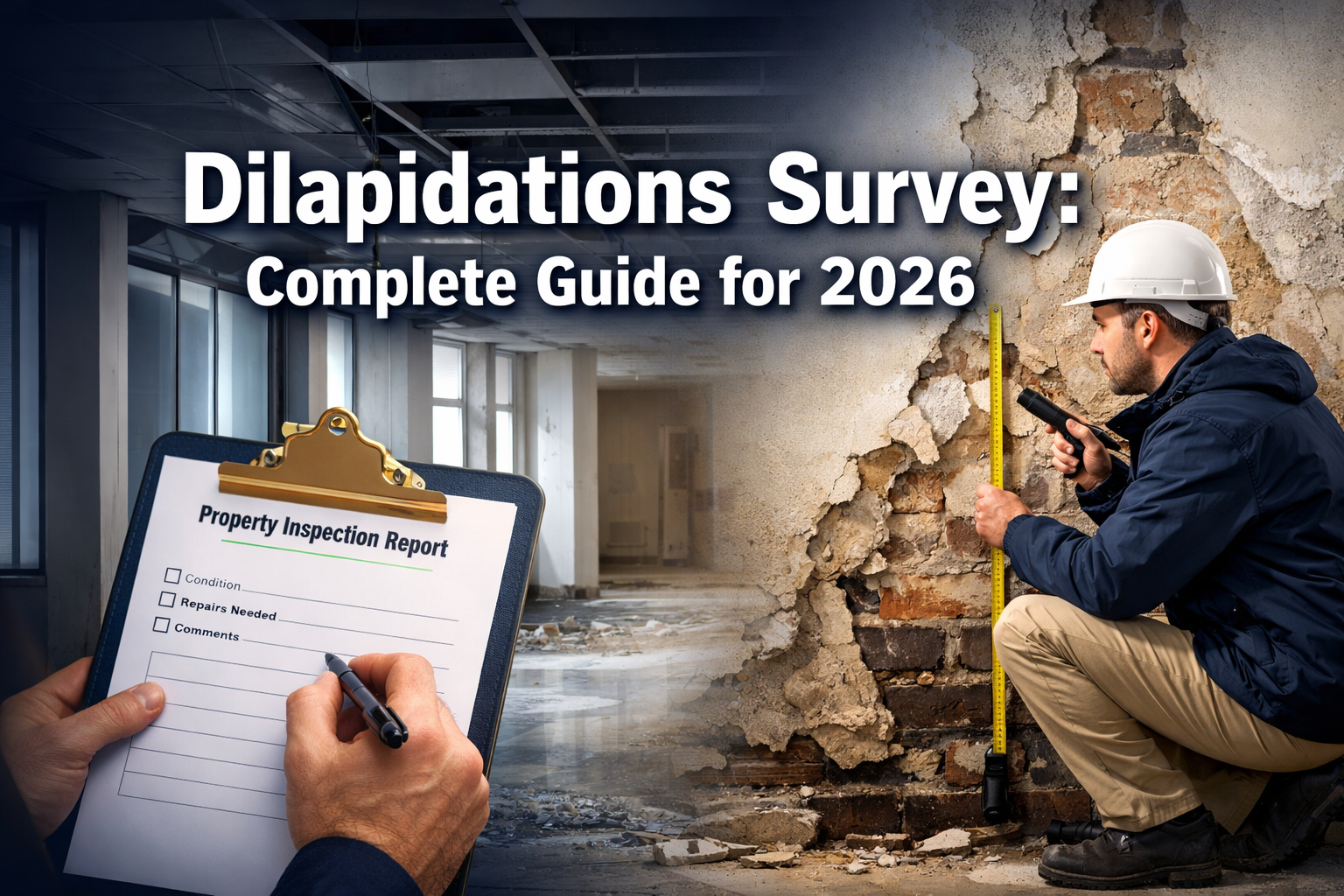
When a commercial lease ends, the final bill can come as a shock. Tenants may face unexpected repair costs running into hundreds of thousands of pounds, while landlords struggle to recover legitimate expenses for property damage. At the heart of these disputes—and their resolution—lies a critical document: the dilapidations survey.
A dilapidations survey is a professional assessment that identifies repair and maintenance obligations under a lease agreement. This specialized inspection evaluates property condition, documents defects, and quantifies the cost of bringing a building back to its required state. Whether you’re a landlord protecting your investment or a tenant managing lease obligations, understanding dilapidations surveys can save significant time, money, and legal headaches.
Key Takeaways
- 🏢 A dilapidations survey identifies repair obligations between landlords and tenants at various stages of a commercial lease, helping prevent costly disputes
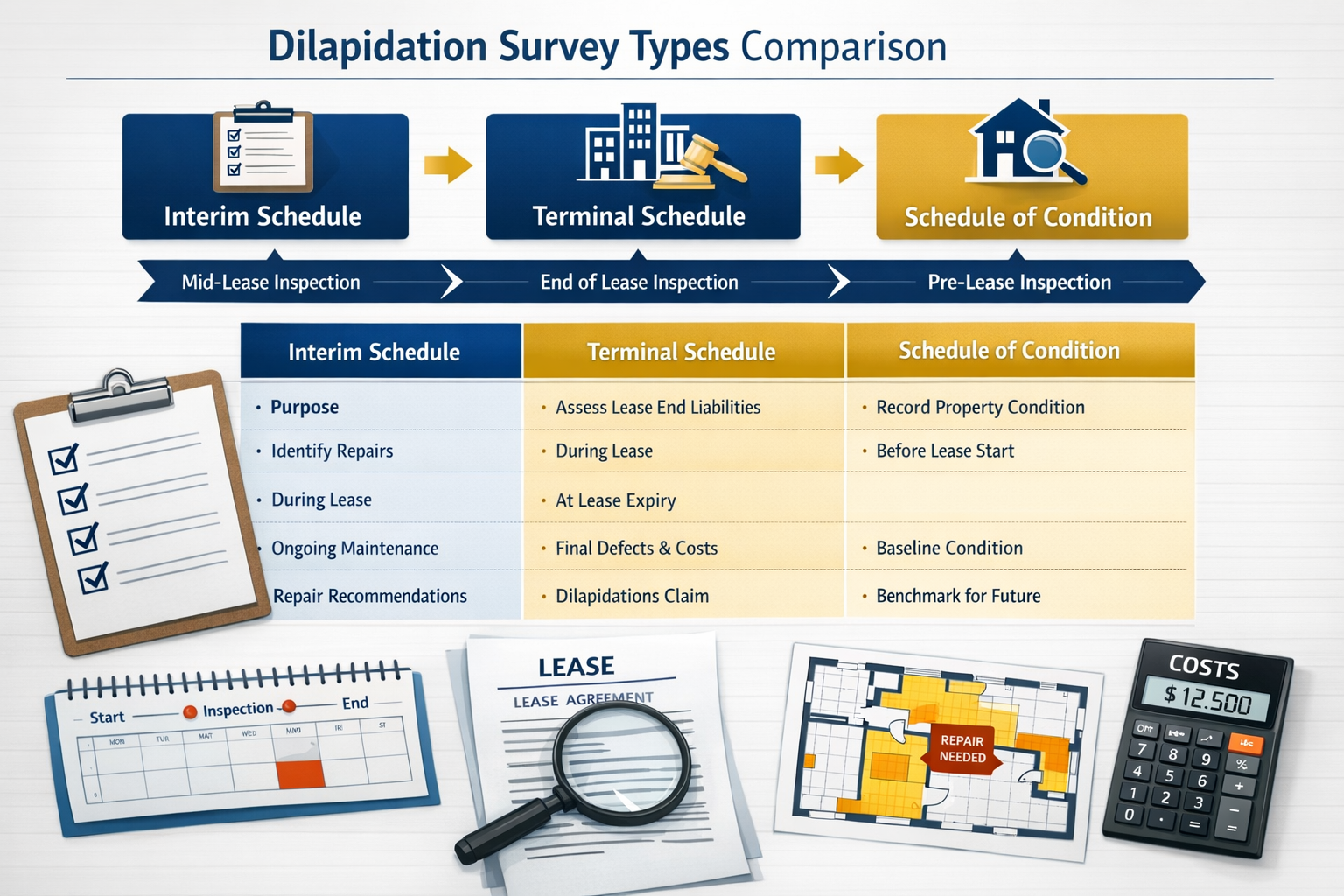
- 📋 Three main survey types exist: Interim Schedules (during lease), Terminal Schedules (at lease end), and Schedules of Condition (at lease start)
- 💰 Professional surveys enable accurate financial planning by identifying repair needs early and providing detailed cost estimates for maintenance obligations
- ⚖️ Legal compliance is critical: Dilapidations claims must follow strict protocols under the Landlord and Tenant Act 1927 and Dilapidations Protocol
- 🔄 Technology and sustainability are reshaping the industry: Over half of surveyors plan to invest in digital tools, while ESG considerations increasingly impact repair obligations[1]
What Is a Dilapidations Survey?
A dilapidations survey is a comprehensive property inspection that examines the physical condition of a building against the repair obligations outlined in a lease agreement. Unlike standard building surveys, which assess overall property condition for purchase decisions, dilapidations surveys focus specifically on lease compliance and contractual responsibilities.
The survey process involves a qualified chartered surveyor conducting a detailed inspection to identify:
- Structural defects requiring repair or replacement
- Decorative maintenance issues affecting interior and exterior finishes
- Mechanical and electrical system failures or deterioration
- Compliance breaches with lease covenants and statutory requirements
- Reinstatement obligations for tenant alterations or improvements
The Legal Framework
Dilapidations surveys operate within a specific legal framework designed to balance landlord and tenant rights. The Landlord and Tenant Act 1927 caps damages at the diminution in property value, preventing landlords from claiming excessive repair costs[5]. The Dilapidations Protocol, introduced in 2012, establishes clear procedures for serving schedules and negotiating claims[7].
This legal structure makes professional dilapidation surveys essential for both parties. Landlords need accurate documentation to support legitimate claims, while tenants require independent assessments to challenge unreasonable demands.
Types of Dilapidations Surveys and When They’re Used
Understanding the different types of dilapidations surveys helps property stakeholders choose the right assessment for their specific situation. Each survey type serves a distinct purpose within the lease lifecycle.
Schedule of Condition
A Schedule of Condition documents the property’s state at the beginning of a lease. This baseline assessment protects tenants from liability for pre-existing defects and provides landlords with clear evidence of the property’s initial condition.
Typically prepared with photographic evidence and detailed descriptions, this survey becomes a critical reference document throughout the tenancy. When disputes arise about responsibility for specific repairs, the Schedule of Condition serves as the definitive record of the property’s starting point[2].
For comprehensive guidance on this essential document, review our detailed schedule of dilapidations resource.
Interim Schedule of Dilapidations
An Interim Schedule is served during an active lease, alerting tenants to breaches of their repair obligations while time remains to address them. This proactive approach benefits both parties by preventing minor issues from escalating into major problems.
Landlords use interim schedules to:
- Enforce ongoing maintenance obligations
- Prevent property deterioration
- Establish a paper trail of documented breaches
- Encourage timely repairs before lease expiration
Tenants receiving an interim schedule should respond promptly, as ignoring these notices can strengthen landlord claims at lease end and potentially breach lease covenants.
Terminal Schedule of Dilapidations
A Terminal Schedule is served at or shortly after lease expiration, itemizing all outstanding repair obligations and quantifying associated costs. This comprehensive document forms the basis for financial negotiations between landlord and tenant.
The terminal schedule typically includes:
- Detailed descriptions of each repair item with photographic evidence
- Lease clause references linking each item to specific contractual obligations
- Cost estimates prepared by quantity surveyors for remedial works
- Professional fees for survey, legal, and project management services
Nearly 400 industry experts gathered at the 2025 RICS Dilapidations Conference to explore developments in this complex area, highlighting the professional expertise required for accurate terminal assessments[1].
Quantified Demand
Following service of a terminal schedule, landlords may issue a Quantified Demand under the Dilapidations Protocol. This formal claim specifies the exact monetary amount sought, supported by detailed cost breakdowns and diminution valuations.
The quantified demand must demonstrate that claimed amounts don’t exceed the property’s diminution in value—a critical legal requirement that often reduces initial claims significantly[5].
The Dilapidations Survey Process: Step-by-Step
Understanding how a dilapidations survey unfolds helps property owners and tenants prepare effectively and engage constructively with the process.
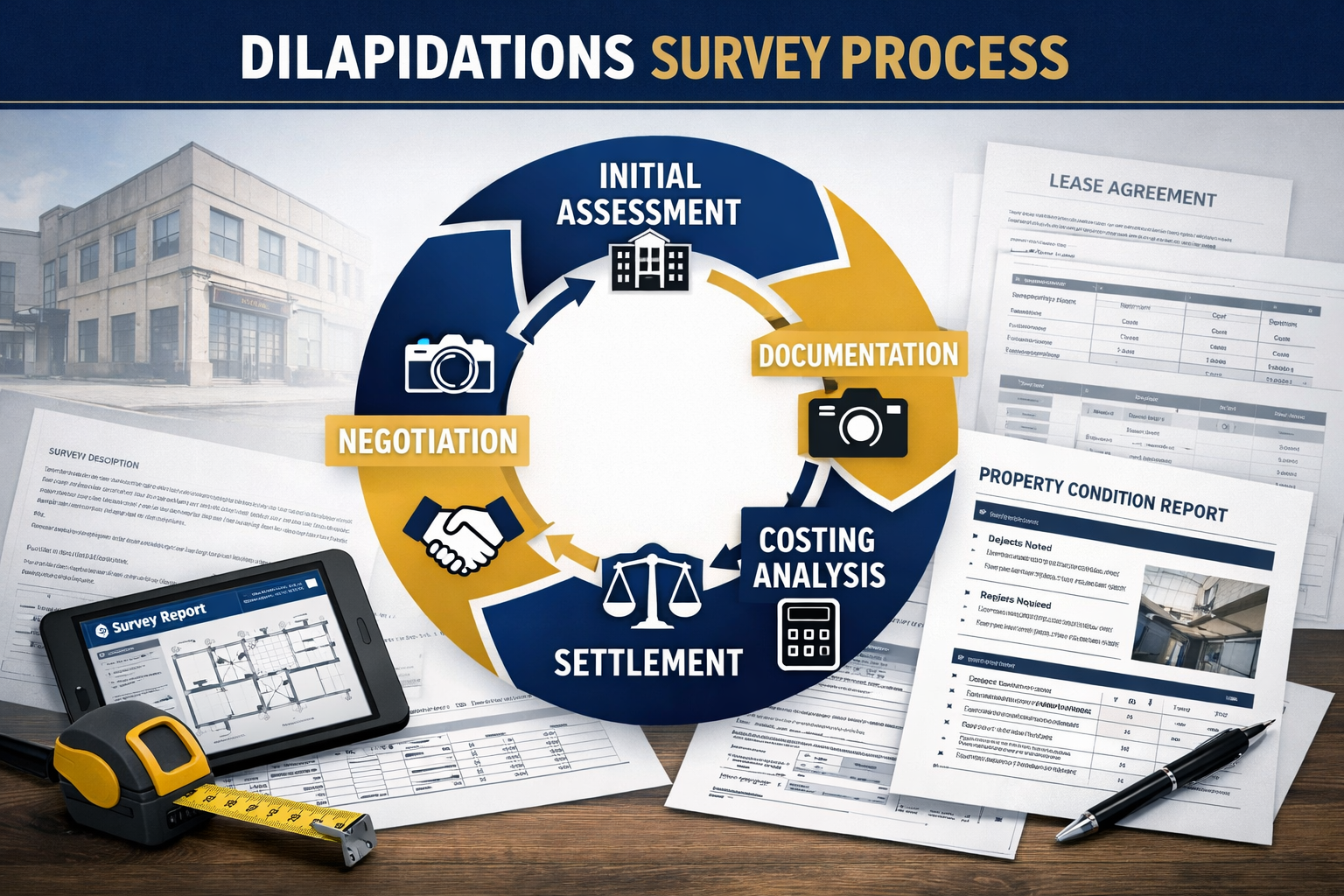
1. Initial Instruction and Lease Review
The process begins when a chartered surveyor receives instructions from either landlord or tenant. The surveyor conducts a thorough lease review, examining:
- Repairing obligations and their scope (full repairing, internal repairing, etc.)
- Decorating covenants and frequency requirements
- Alienation clauses affecting alterations and improvements
- Yielding-up provisions specifying end-of-lease conditions
This legal analysis determines the assessment framework and identifies which property elements fall within the tenant’s responsibility.
2. Property Inspection
A comprehensive site inspection follows, typically lasting several hours for commercial properties. The surveyor examines:
- External elements: roofing, walls, windows, drainage systems
- Internal areas: floors, ceilings, walls, fixtures, finishes
- Services: heating, ventilation, electrical, plumbing systems
- Common areas: lobbies, corridors, stairwells (where applicable)
Professional surveyors use specialized equipment including moisture meters, thermal imaging cameras, and detailed photographic documentation. For properties with suspected underlying issues, additional specialist surveys such as damp surveys or roof surveys may be recommended.
3. Documentation and Analysis
Following inspection, the surveyor prepares detailed documentation linking observed defects to specific lease obligations. This analysis distinguishes between:
- Tenant’s repairing obligations: defects clearly within scope
- Landlord’s responsibilities: structural elements or excluded items
- Improvements: tenant enhancements potentially subject to reinstatement
- Fair wear and tear: deterioration excluded from tenant liability
4. Cost Assessment
Quantity surveyors prepare detailed cost estimates for remedial works. This crucial step requires current market knowledge of:
- Labor and material costs in the local area
- Specialist contractor rates for specific trades
- Professional fees for project management and supervision
- VAT and other statutory charges
Cost assessments must be realistic and defensible, as inflated estimates undermine credibility during negotiations[6].
5. Report Preparation and Delivery
The final survey report presents findings in a structured format, typically including:
- Executive summary of key issues and total estimated costs
- Item-by-item schedule with descriptions, lease references, and costs
- Photographic appendix documenting each defect
- Supporting documentation (lease extracts, specifications, etc.)
For terminal schedules, the report must comply with Dilapidations Protocol requirements, including diminution valuations and supersession assessments[7].
Key Benefits of Commissioning a Dilapidations Survey
Professional dilapidations surveys deliver substantial value for both landlords and tenants throughout the lease lifecycle.
Dispute Prevention and Resolution
Dilapidations surveys help mitigate disputes by providing clear documentation of repair responsibilities and lease obligations between landlords and tenants[3]. When both parties work from objective professional assessments rather than subjective opinions, negotiations proceed more constructively.
Industry data shows that well-documented dilapidations claims settle more quickly and at higher recovery rates than poorly prepared schedules. The clarity provided by professional surveys reduces misunderstandings and establishes common ground for settlement discussions.
Financial Planning and Budgeting
Regular surveys enable accurate long-term financial planning by identifying future repair needs and allowing building owners to estimate costs for preventative maintenance in advance[3]. Tenants approaching lease expiration can budget for dilapidations liabilities rather than facing unexpected demands.
For landlords, interim surveys support capital expenditure planning and help maintain property values. Understanding the true condition of their portfolio enables strategic decisions about lease renewals, rent reviews, and property disposals.
Legal Protection and Compliance
Professional dilapidations surveys provide robust legal protection by:
- Creating defensible evidence for litigation if negotiations fail
- Ensuring compliance with Dilapidations Protocol requirements
- Supporting diminution valuations under the Landlord and Tenant Act 1927
- Documenting reasonable mitigation of losses
Surveyors qualified as expert witnesses can provide testimony in court proceedings, adding credibility to claims or defenses[7].
Property Value Preservation
For landlords, dilapidations surveys protect investment value by ensuring properties return to marketable condition. Documented repair obligations support rent reviews and lease renewals by demonstrating property maintenance standards.
Tenants benefit from Schedule of Condition surveys that limit liability to deterioration occurring during their occupancy, protecting against claims for pre-existing defects.
Informed Negotiation
Armed with professional survey evidence, both parties negotiate from positions of knowledge rather than assumption. Understanding the technical merits of claims and defenses enables realistic settlement discussions that reflect genuine liabilities.
Over half of surveying professionals now plan to invest in technology to enhance their dilapidations practice, recognizing that data-driven assessments strengthen negotiating positions[1].
Common Issues Identified in Dilapidations Surveys
Dilapidations surveys regularly uncover specific categories of defects that drive repair costs and settlement negotiations.
Structural and Building Fabric Issues
Structural defects often represent the most costly dilapidations items:
- Roof deterioration including failed membranes, damaged tiles, and inadequate drainage
- Wall defects such as cracking, spalling brickwork, and failed render
- Window and door failures affecting weather-tightness and security
- Foundation movement or settlement requiring structural intervention
These issues require specialist assessment and may necessitate additional structural surveys to determine appropriate remediation strategies.
Decorative Condition
Decorative maintenance frequently features in dilapidations schedules:
- Interior redecoration of walls, ceilings, and woodwork
- External painting of facades, windows, and doors
- Floor covering replacement or refurbishment
- Signage removal and making good
Lease covenants typically specify decoration frequencies (e.g., every three to five years), making timing crucial to liability assessments.
Mechanical and Electrical Systems
M&E installations often deteriorate during tenancies:
- Heating, ventilation, and air conditioning system failures
- Electrical installation defects and compliance issues
- Plumbing failures including leaks and drainage problems
- Fire alarm and emergency lighting deficiencies
These technical systems require specialist contractor assessments to determine repair versus replacement requirements and associated costs.
Reinstatement Obligations
Tenant alterations may require removal and reinstatement:
- Internal partitioning installed during occupancy
- Suspended ceilings and raised floors
- Specialized installations for tenant operations
- Signage, branding, and bespoke finishes
Lease terms determine whether improvements must be removed or can remain, making careful lease analysis essential.
Compliance and Statutory Requirements
Regulatory compliance issues increasingly feature in dilapidations claims:
- Asbestos management and removal obligations
- Fire safety deficiencies requiring remediation
- Disabled access improvements
- Energy efficiency requirements
Growing pressures from Environmental, Social, and Governance (ESG) factors and tenant wellbeing considerations are reshaping the dilapidations landscape[1], with sustainability obligations increasingly appearing in modern leases.
Choosing the Right Dilapidations Surveyor
Selecting an appropriately qualified professional significantly impacts survey quality and negotiation outcomes.
Essential Qualifications and Experience
Look for surveyors with:
- RICS membership (Member or Fellow status) demonstrating professional competence
- Specialist dilapidations experience rather than general building surveying
- Local market knowledge of construction costs and contractor availability
- Expert witness experience if litigation seems likely
The RICS Dilapidations Conference 2026 will explore commercial property market trends, legal developments, and advanced negotiation strategies, highlighting the continuous professional development required in this specialized field[4].
Understanding Surveyor Roles
Dilapidations involve different surveyor roles:
- Building surveyors assess physical condition and prepare schedules
- Quantity surveyors prepare detailed cost estimates
- Valuation surveyors assess diminution in property value
- Project managers oversee remedial works execution
Larger claims often require multidisciplinary teams combining these specialisms.
Questions to Ask Potential Surveyors
Before appointing a surveyor, ask:
- How many dilapidations cases have you handled in the past year?
- What percentage of your work involves properties similar to mine?
- Can you provide references from recent clients?
- What is your fee structure and what services does it include?
- How do you stay current with legal and technical developments?
For guidance on typical costs, consult our surveyor pricing guide.
Independence and Conflicts of Interest
Ensure your surveyor maintains independence from:
- The opposing party in the dilapidations matter
- Contractors who might perform remedial works
- Other professional advisors with conflicting interests
Professional independence ensures objective assessments that withstand scrutiny during negotiations or litigation.
The Cost of Dilapidations Surveys in 2026
Understanding survey costs helps parties budget appropriately and select suitable professionals.
Typical Fee Structures
Dilapidations survey fees vary based on:
- Property size and complexity: larger buildings require more inspection time
- Survey type: terminal schedules cost more than interim assessments
- Geographical location: London and Southeast rates exceed regional pricing
- Urgency: expedited reports command premium fees
Fees typically range from £1,500 to £5,000 for straightforward commercial units, with complex multi-unit properties costing £10,000 or more[6].
What’s Included in Survey Fees
Standard fees typically cover:
- Initial lease review and instruction meeting
- Site inspection and photographic documentation
- Report preparation with cost estimates
- One round of amendments or clarifications
Additional services billed separately may include:
- Negotiation support and settlement discussions
- Expert witness services for litigation
- Project management of remedial works
- Multiple site visits or re-inspections
Cost Recovery Provisions
Lease terms often allow landlords to recover survey costs from tenants as part of dilapidations claims. However, the Dilapidations Protocol requires these fees to be reasonable and proportionate to the claim value[7].
Tenants should review cost recovery clauses carefully and challenge excessive professional fees that inflate total claims beyond reasonable levels.
Budgeting for Dilapidations
Prudent tenants budget for dilapidations throughout their lease term rather than facing large bills at expiry. A useful rule of thumb allocates 5-10% of annual rent toward dilapidations reserves, adjusted based on property condition and lease obligations.
Landlords should budget for survey costs when planning lease expiry strategies, recognizing that professional documentation significantly improves recovery rates.
Technology and Innovation in Dilapidations Surveys
The dilapidations sector is experiencing significant technological transformation as professionals adapt to digital tools and changing client expectations.
Digital Documentation and Reporting
Modern dilapidations surveys increasingly utilize:
- Tablet-based inspection software for real-time data capture
- Cloud storage enabling secure document sharing
- Photogrammetry creating detailed visual records
- Drone surveys for roof and facade inspections
These technologies improve documentation quality while reducing inspection time and costs[2].
Artificial Intelligence and Data Analytics
AI applications emerging in dilapidations practice include:
- Automated defect detection from photographic surveys
- Cost estimation algorithms drawing on historical project data
- Lease clause analysis identifying relevant repair obligations
- Predictive maintenance modeling forecasting future repair needs
While surveyors are not at risk of being replaced by technology, those who don’t adapt may risk becoming irrelevant, as the profession views AI as transformative but not a replacement for professional judgment[1].
Building Information Modeling (BIM)
BIM technology offers potential benefits for dilapidations:
- Digital building models documenting as-built conditions
- Integrated maintenance records tracking repair history
- Automated Schedule of Condition generation at lease commencement
- Enhanced visualization for dispute resolution
However, BIM adoption in dilapidations remains limited, with implementation challenges including data ownership, model accuracy, and industry standardization.
Sustainability and Circular Economy Considerations
The upcoming RICS Dilapidations Conference 2026 includes new sessions addressing how sustainable fit-out design, material reuse, and energy efficiency impact repair obligations and negotiation strategies[4].
Emerging sustainability considerations include:
- Embodied carbon assessments favoring repair over replacement
- Circular economy principles encouraging material reuse
- Energy efficiency obligations requiring system upgrades
- Green lease clauses imposing enhanced environmental standards
These developments require surveyors to expand their expertise beyond traditional building pathology into environmental assessment and sustainable construction practices.
Negotiating Dilapidations Claims: Best Practices
Effective negotiation resolves most dilapidations disputes without litigation, saving time and costs for both parties.
The Dilapidations Protocol Framework
The Dilapidations Protocol establishes a structured negotiation process:
- Terminal schedule service: landlord serves detailed schedule
- Tenant response: 56 days to provide quantified response
- Quantified demand: landlord issues formal claim with diminution assessment
- Settlement negotiations: parties attempt to agree settlement
- Alternative dispute resolution: mediation or expert determination if needed
- Litigation: court proceedings as last resort
Following this framework demonstrates reasonableness and may influence cost awards if litigation becomes necessary[7].
Common Negotiation Strategies
For landlords:
- Prepare thoroughly documented claims with professional support
- Demonstrate willingness to negotiate reasonable settlements
- Consider commercial factors beyond strict legal entitlements
- Factor in time value of money and recovery certainty
For tenants:
- Respond promptly to schedules with detailed counterarguments
- Challenge inflated costs with independent assessments
- Identify items outside lease scope or covered by exclusions
- Propose practical solutions including tenant-managed repairs
Diminution and Supersession Arguments
Two critical concepts frequently reduce dilapidations claims:
Diminution caps damages at the reduction in property value caused by disrepair. If a landlord plans immediate refurbishment, repair costs may exceed actual value loss, limiting recoverable amounts[5].
Supersession applies when landlord’s planned works would address items in the dilapidations schedule. Tenants cannot be charged for repairs the landlord won’t actually perform.
Alternative Dispute Resolution
When negotiations stall, alternative dispute resolution (ADR) offers faster, cheaper resolution than litigation:
- Mediation: facilitated negotiation with neutral mediator
- Expert determination: binding decision by appointed technical expert
- Arbitration: formal hearing with arbitrator’s binding award
The commercial property market now creates uncertainty that requires surveyors to combine economic insight with strong client advice, moving beyond technical expertise alone[1], making collaborative resolution approaches increasingly valuable.
Settlement Documentation
Agreed settlements should be documented through:
- Formal settlement agreements releasing both parties from further claims
- Payment schedules specifying amounts and timing
- Confidentiality clauses protecting commercial interests
- Legal review ensuring enforceability
Professional legal advice ensures settlement terms adequately protect your interests and prevent future disputes.
Common Mistakes to Avoid in Dilapidations Matters
Both landlords and tenants frequently make errors that weaken their positions or increase costs unnecessarily.
Landlord Mistakes
Delaying schedule service: Late schedules reduce negotiating leverage and may trigger time-bar provisions limiting claims.
Inadequate documentation: Poorly prepared schedules lacking photographic evidence or detailed cost breakdowns invite challenges and reduce settlement prospects.
Ignoring diminution: Claiming full repair costs without considering property value impact leads to unrealistic demands that prolong negotiations.
Inflated costs: Excessive cost estimates damage credibility and may result in adverse cost awards if litigation follows.
Tenant Mistakes
Ignoring interim schedules: Failing to address interim notices allows defects to worsen and strengthens landlord claims at lease end.
Poor record-keeping: Inadequate documentation of repairs performed during tenancy makes proving compliance difficult.
Delayed responses: Missing protocol deadlines weakens negotiating position and may incur additional costs.
Refusing reasonable settlements: Holding out for unrealistic outcomes risks litigation costs exceeding potential savings.
Quality of Schedules of Condition
A key industry discussion point centers on improving the quality and consistency of Schedules of Condition[1]. Common problems include:
- Insufficient photographic coverage leaving gaps in baseline documentation
- Vague descriptions failing to adequately record existing defects
- Incomplete property coverage omitting critical areas
- Poor organization making reference difficult during disputes
Investing in comprehensive Schedules of Condition at lease commencement prevents far larger costs at lease expiry.
The Future of Dilapidations Surveys
The dilapidations sector continues evolving in response to market, technological, and regulatory changes.
Industry Trends and Developments
Key trends shaping dilapidations practice include:
Cross-disciplinary collaboration: Industry experts emphasize the need for collaboration across building, valuation, and legal disciplines throughout the dilapidations lifecycle[4].
Professionalization: The introduction of foundational training sessions at the 2026 RICS conference reflects efforts to maintain professional standards as new practitioners enter the field[4].
Market complexity: Economic uncertainty requires surveyors to provide broader strategic advice beyond technical assessments, helping clients navigate challenging commercial property markets[1].
Regulatory and Legal Changes
Potential regulatory developments include:
- Enhanced ESG requirements in lease obligations
- Stricter energy efficiency standards affecting repair specifications
- Updated Dilapidations Protocol reflecting technological advances
- Clarified guidance on circular economy and sustainability considerations
Professional Development Requirements
Surveyors must continuously develop expertise in:
- Emerging construction technologies and materials
- Sustainability assessment and green building standards
- Digital tools and data analytics applications
- Negotiation and commercial advisory skills
The dilapidations sector demands professionals who combine technical knowledge with commercial acumen and client relationship skills.
Conclusion: Taking Action on Dilapidations
Dilapidations surveys represent essential tools for managing commercial lease obligations effectively. Whether you’re a landlord protecting property value or a tenant managing end-of-lease liabilities, professional survey support delivers significant benefits through dispute prevention, accurate financial planning, and informed negotiation.
Key Actions for Landlords
✅ Commission Schedules of Condition at every lease commencement to establish baseline property condition
✅ Conduct interim inspections regularly to identify emerging issues before they escalate
✅ Engage qualified surveyors early in the lease expiry process to prepare robust terminal schedules
✅ Consider commercial factors alongside legal entitlements when negotiating settlements
✅ Stay informed about sustainability requirements and market developments affecting repair obligations
Key Actions for Tenants
✅ Review lease obligations carefully before signing to understand repair responsibilities
✅ Maintain detailed records of all repairs and maintenance performed during occupancy
✅ Respond promptly to interim schedules and address issues before lease expiry
✅ Commission independent surveys to challenge unreasonable landlord claims
✅ Budget proactively for dilapidations liabilities throughout the lease term
Getting Professional Support
Navigating dilapidations successfully requires expert guidance from qualified professionals. Whether you need a comprehensive dilapidations survey for a commercial property or specialized advice on lease obligations, engaging experienced chartered surveyors early in the process delivers the best outcomes.
The complexity of modern dilapidations—encompassing legal compliance, technical assessment, cost analysis, and commercial negotiation—makes professional support not just valuable but essential for protecting your interests and achieving fair resolutions.
Don’t wait until disputes arise. Take proactive steps today to understand your obligations, document property condition, and engage the right professionals to support your dilapidations strategy. The investment in quality surveys and expert advice invariably pays dividends through reduced liabilities, faster settlements, and preserved business relationships.
References
[1] Dilapidations In 2025 – https://goreport.com/dilapidations-in-2025/
[2] Surveys – https://www.dilapsolutions.com/services/surveys/
[3] 5 Reasons Why Dilapidation Surveys Are Important – https://www.giromax.co.uk/blog/5-reasons-why-dilapidation-surveys-are-important/
[4] Dilapidations Conference – https://www.rics.org/training-events/conferences/dilapidations-conference
[5] Dilapidations Explained A Strategic Guide For Landlords Tenants And Property Managers – https://hfwjsurveyors.com/advice-insights/dilapidations-explained-a-strategic-guide-for-landlords-tenants-and-property-managers/
[6] Dilapidation Assessment Reports – https://horde.group/blog/dilapidation-assessment-reports/
[7] Dilapidation Surveyors A Complete Guide To Dilapidations – https://www.simonlevy.net/dilapidation-surveyors-a-complete-guide-to-dilapidations