
Do You Need a Survey on a New Build? A Complete Guide for 2026

Imagine collecting the keys to your brand-new dream home, only to discover significant defects lurking beneath the fresh paint and pristine carpets. The assumption that new builds are flawless can be a costly mistake. While many buyers believe that purchasing a newly constructed property eliminates the need for professional inspection, the reality is far more complex. Understanding whether you need a survey on a new build can save you thousands of pounds and years of frustration.
In 2026, the question “do you need a survey on a new build” has become increasingly important as construction quality varies significantly across developers, and building regulations continue to evolve. This comprehensive guide explores everything you need to know about surveying new construction properties, from legal requirements to practical considerations.
Key Takeaways
- New build warranties don’t replace surveys: NHBC and similar warranties have limitations and exclusions that leave buyers vulnerable to certain defects
- Snagging surveys are essential: Professional inspections can identify 50-150 minor defects in typical new builds before completion
- Mortgage lenders may require surveys: Some lenders mandate professional surveys even on new construction properties
- Hidden defects exist in new builds: Structural issues, drainage problems, and building regulation violations can occur despite modern construction standards
- Different survey types serve different purposes: Understanding the distinction between snagging surveys, building surveys, and specialist inspections helps protect your investment
Understanding New Build Properties in 2026
New build properties represent a significant portion of the UK housing market in 2026. These homes come directly from developers and construction companies, often sold before completion or immediately after construction finishes. The appeal is obvious: modern design, energy efficiency, contemporary fixtures, and the allure of being the first occupant.
However, new builds operate under different assumptions than older properties. Most buyers believe that:
✅ Everything is brand new and therefore perfect
✅ Building regulations guarantee quality
✅ Developer warranties provide complete protection
✅ Professional oversight during construction eliminates defects
The reality challenges these assumptions. Construction defects, workmanship issues, and building regulation violations occur more frequently than many buyers realize. The pressure to complete projects quickly, subcontractor management challenges, and cost-cutting measures can all compromise quality.
The New Build Warranty Landscape
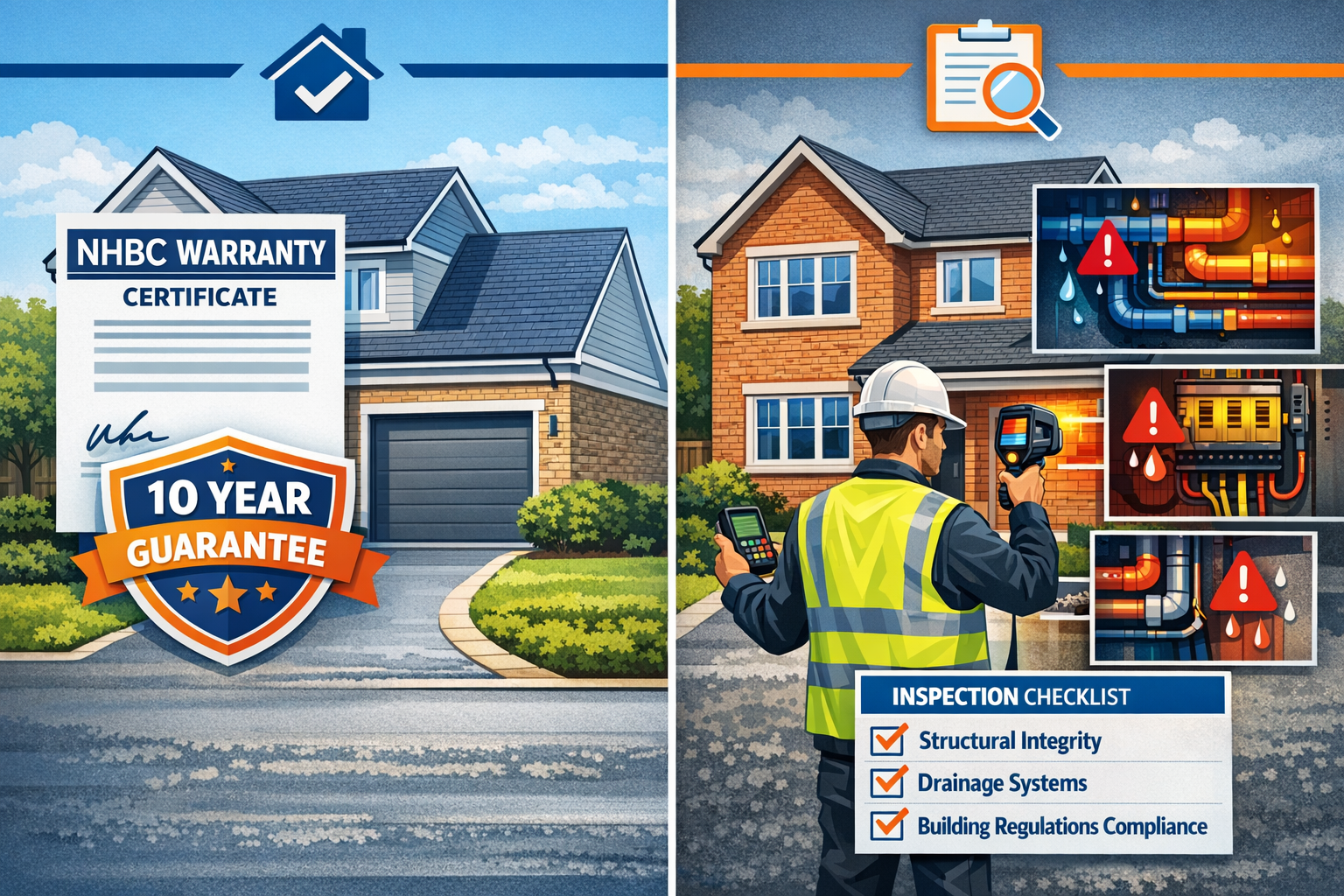
Most new builds come with a 10-year warranty from organizations like the National House Building Council (NHBC), LABC Warranty, or Premier Guarantee. These warranties typically provide:
- Years 1-2: Coverage for defects in materials and workmanship
- Years 3-10: Protection for major structural defects only
Critical limitation: These warranties don’t cover everything. Cosmetic issues, minor defects discovered after the initial period, and certain types of damage often fall outside coverage parameters.
Do You Need a Survey on a New Build? Legal Requirements
The straightforward answer is no legal requirement mandates surveys on new build properties in the UK. Unlike some jurisdictions where building inspections are compulsory, British law doesn’t require buyers to commission independent surveys on new construction.
However, this legal flexibility doesn’t mean surveys are unnecessary. Several factors influence whether obtaining a survey becomes practically essential:
Mortgage Lender Requirements
Many mortgage lenders conduct their own basic valuations, but these serve the lender’s interests—not yours. A mortgage valuation simply confirms the property provides adequate security for the loan. It doesn’t assess quality, identify defects, or protect your investment.
Some lenders, particularly for high-value properties or specific development types, may require more comprehensive surveys. Always check your lender’s specific requirements early in the purchase process.
Building Regulation Compliance
While new builds must comply with current building regulations, compliance doesn’t guarantee perfection. Building control inspections occur at specific stages but don’t examine every aspect of construction. Inspectors might miss issues, or problems might develop after their final sign-off.
The building regulations landscape continues evolving, with enhanced energy efficiency standards and safety requirements introduced regularly. Properties built to 2026 standards should meet rigorous specifications, but verification through independent survey provides additional assurance.
Developer Obligations
Developers must provide certain documentation and warranties, but their obligations end once they’ve fulfilled contractual requirements. After completion, addressing defects becomes your responsibility—even if those defects existed before you moved in.
Understanding what developers must provide versus what they actually deliver highlights the value of independent verification through professional surveys.
Types of Surveys Available for New Builds
When considering whether you need a survey on a new build, understanding the different survey types helps match the inspection level to your specific situation. Each survey type serves distinct purposes and provides varying levels of detail.
Snagging Surveys
Snagging surveys represent the most common inspection type for new builds. These surveys identify minor defects, finishing issues, and cosmetic problems before or immediately after completion. A professional snagging inspector examines:
🔍 Paint and decorating quality
🔍 Flooring installation and finish
🔍 Door and window operation
🔍 Kitchen and bathroom fitting
🔍 Tiling and grouting
🔍 External finishes and landscaping
Typical snagging surveys identify 50-150 defects in new properties. While individually minor, collectively these issues can cost thousands to rectify. Having a professional snagging list prepared before completion gives you leverage to ensure developers address problems before you complete the purchase.
Cost: £300-£600 depending on property size
Duration: 2-4 hours on-site
Best for: All new build purchases
RICS Building Surveys (Level 3)
For buyers seeking comprehensive assessment, a RICS Level 3 building survey provides the most detailed inspection available. These surveys examine:
- Structural integrity and foundation quality
- Roof construction and weatherproofing
- Drainage and water management systems
- Electrical and plumbing installations
- Damp and moisture issues
- Building materials and construction methods
Level 3 surveys are particularly valuable for:
- High-value new builds (£500,000+)
- Properties with complex designs
- Developments with known quality concerns
- Buyers requiring detailed condition assessment
While more expensive than snagging surveys, comprehensive building surveys can identify serious defects that warranties might not cover.
Cost: £800-£1,500+ depending on property size and complexity
Duration: 4-8 hours on-site plus report preparation
Best for: High-value properties or complex builds
Level 2 Homebuyer Surveys
The Level 2 Homebuyer Survey sits between snagging inspections and full building surveys. These RICS-standardized surveys provide:
- Traffic light rating system for property elements
- Identification of significant defects
- General condition assessment
- Advice on urgent repairs
For new builds, Level 2 surveys offer more depth than snagging inspections without the comprehensive detail (and cost) of Level 3 surveys. They’re suitable for standard new builds where buyers want professional reassurance beyond basic snagging.
Cost: £400-£900 depending on property value
Duration: 3-5 hours on-site
Best for: Standard new builds with moderate value
Specialist Defect Surveys
When specific concerns exist, specialist defect surveys focus on particular issues:
- Structural surveys: Examine foundations, load-bearing walls, and structural integrity
- Drainage surveys: Use CCTV to inspect underground drainage systems
- Damp surveys: Identify moisture problems and their causes
- Electrical surveys: Verify wiring safety and compliance
These targeted inspections complement broader surveys when specific red flags emerge or when properties have unusual features requiring expert assessment.
Common Defects Found in New Build Properties
Understanding typical new build defects reinforces why the question “do you need a survey on a new build” deserves serious consideration. Even properties from reputable developers can harbor significant issues.
Structural and Construction Defects
🏗️ Foundation problems: Inadequate ground preparation, settlement issues, or poor concrete curing
🏗️ Wall construction: Cavity wall tie issues, inadequate insulation, or thermal bridging
🏗️ Roof defects: Poor flashing, inadequate ventilation, or tile/slate installation problems
🏗️ Window and door installation: Gaps allowing water penetration, poor sealing, or incorrect installation
These structural issues might not become apparent immediately but can cause serious problems years later—potentially after warranty periods expire.
Plumbing and Drainage Issues
Water-related problems represent some of the most common new build defects:
- Incorrectly installed pipework leading to leaks
- Inadequate drainage causing water pooling
- Poor bathroom sealing resulting in water damage
- Heating system installation errors
- Insufficient water pressure
Case example: A 2025 study found that 23% of new builds experienced plumbing defects within the first two years, with repair costs averaging £1,200-£3,500.
Electrical Installation Problems
Despite modern safety standards, electrical issues occur in new builds:
⚡ Insufficient socket provision
⚡ Incorrectly wired circuits
⚡ Poor quality fixtures and fittings
⚡ Inadequate earthing or bonding
⚡ Missing or incorrect circuit protection
Professional electrical inspection as part of a comprehensive survey can identify these potentially dangerous issues before they cause harm.
Finishing and Cosmetic Defects
While less serious than structural problems, finishing defects affect property enjoyment and value:
| Defect Type | Frequency | Typical Repair Cost |
|---|---|---|
| Paint defects | Very Common | £500-£2,000 |
| Flooring issues | Common | £800-£3,000 |
| Tiling problems | Common | £400-£1,500 |
| Kitchen fitting | Moderate | £300-£2,000 |
| Door/window adjustment | Very Common | £200-£800 |
Addressing these issues through snagging before completion saves money and frustration compared to fixing them after moving in.
When Do You Need a Survey on a New Build?
Several scenarios make surveys particularly important, even when purchasing new construction:
High-Value Properties
For properties exceeding £500,000, the investment justifies comprehensive survey costs. The potential financial exposure from undiscovered defects far outweighs survey expenses. A detailed RICS home survey provides peace of mind proportionate to your investment.
Properties from Smaller Developers
While large national developers typically maintain consistent quality standards (though not always), smaller regional builders may have more variable construction quality. Independent verification becomes crucial when purchasing from developers without extensive track records.
Complex or Non-Standard Designs
Properties featuring:
- Unusual architectural designs
- Basement conversions
- Complex roof structures
- Extensive glazing
- Non-traditional construction methods
These characteristics increase the likelihood of construction challenges and potential defects. Comprehensive surveys help identify issues specific to complex designs.
Properties Built During Challenging Conditions
Construction during adverse weather, labor shortages, or material supply issues can compromise quality. Properties completed during 2020-2023 faced particular challenges due to pandemic-related disruptions. Understanding your property’s construction timeline helps assess risk.
Mortgage Lender Requirements
Some lenders, particularly for:
- Buy-to-let mortgages
- High loan-to-value ratios
- Specific development types
- Properties with known issues
May require surveys beyond basic valuations. Clarify lender requirements early to avoid delays or unexpected costs.
The Survey Process for New Builds
Understanding how surveys work helps buyers make informed decisions about whether they need a survey on a new build and what to expect from the process.
Timing Your Survey
Optimal timing depends on survey type:
- Snagging surveys: Schedule before legal completion, ideally when the property is finished but before you take possession
- Building surveys: Can occur at any stage, though pre-completion provides maximum leverage for addressing issues
- Specialist surveys: Conduct when specific concerns emerge or as follow-up to initial inspections
Many developers resist pre-completion surveys, but buyers have the right to inspect properties they’re purchasing. Negotiate survey access as part of your purchase agreement.
Choosing the Right Surveyor
Selecting qualified professionals ensures valuable survey results:
✓ RICS-qualified surveyors: Look for chartered surveyors with relevant accreditation
✓ New build experience: Ensure surveyors regularly inspect new construction
✓ Local knowledge: Surveyors familiar with local developers and construction practices provide valuable context
✓ Clear reporting: Request sample reports to assess clarity and detail
✓ Professional indemnity insurance: Verify adequate coverage protecting you if surveys miss significant defects
Canterbury Surveyors offers comprehensive survey services with experienced RICS-qualified professionals specializing in new build inspections.
What Surveyors Examine
Professional surveys systematically assess:
- External inspection: Foundations, walls, roof, windows, doors, drainage
- Internal inspection: Room-by-room assessment of walls, ceilings, floors, fixtures
- Services: Plumbing, electrical, heating systems (visual inspection)
- Specialist equipment: Moisture meters, thermal imaging, spirit levels, binoculars for roof inspection
- Documentation review: Building regulation certificates, warranties, specifications
Survey limitations: Surveyors can’t inspect areas they can’t access without causing damage. They don’t move furniture, lift carpets (unless agreed), or conduct destructive testing. Understanding these limitations helps set realistic expectations.
Understanding Survey Reports
Survey reports typically include:
- Executive summary: Key findings and urgent issues
- Detailed observations: Room-by-room or element-by-element analysis
- Risk ratings: Traffic light systems or numerical ratings indicating severity
- Recommendations: Suggested actions, further investigations, or repairs
- Photographs: Visual documentation of defects
- Cost estimates: Approximate repair costs for identified issues
Review reports carefully and seek clarification on anything unclear. Good surveyors welcome questions and provide additional context when needed.
Making the Decision: Weighing Costs vs. Benefits
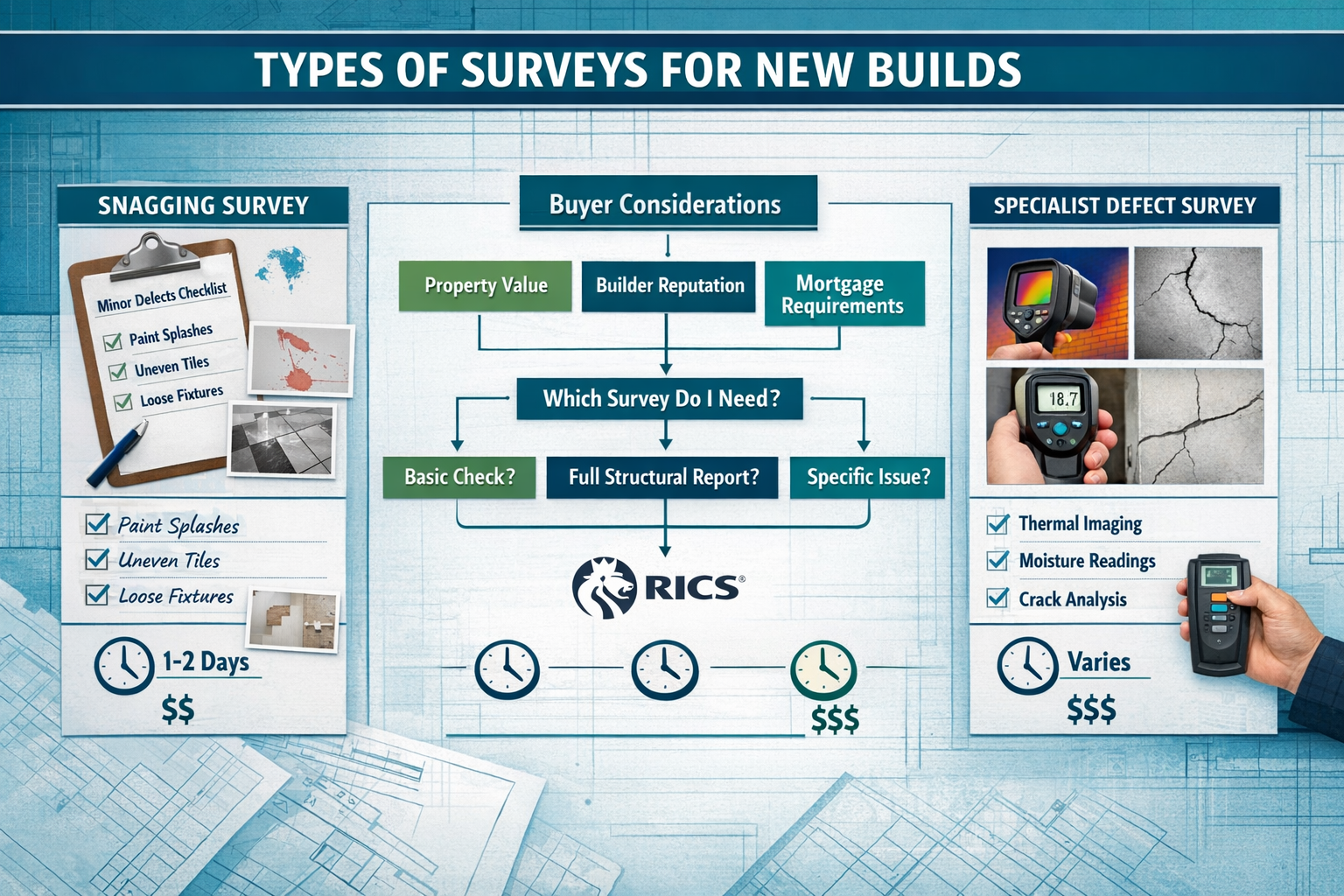
The central question—do you need a survey on a new build—ultimately requires balancing costs against potential benefits for your specific situation.
Financial Considerations
Survey costs (2026 typical ranges):
- Snagging survey: £300-£600
- Level 2 Homebuyer: £400-£900
- Level 3 Building Survey: £800-£1,500+
- Specialist surveys: £250-£800 each
Potential savings from surveys:
- Identifying defects developers must fix: £2,000-£15,000+
- Preventing future repair costs: £5,000-£50,000+
- Negotiating price reductions: £3,000-£20,000+
- Avoiding properties with serious defects: Invaluable
“A £500 snagging survey that identifies £8,000 worth of defects the developer must fix represents a 1,600% return on investment—not including the stress and inconvenience avoided.”
Risk Assessment Framework
Consider these factors when deciding on surveys:
| Factor | Low Risk (Minimal Survey) | High Risk (Comprehensive Survey) |
|---|---|---|
| Property value | Under £300,000 | Over £500,000 |
| Developer reputation | Established national builder | Small/unknown developer |
| Construction complexity | Standard design | Complex/unusual design |
| Your expertise | Construction professional | No building knowledge |
| Warranty coverage | Comprehensive 10-year | Limited or unclear warranty |
| Financial buffer | Significant savings for repairs | Stretched budget |
Honest self-assessment of your risk tolerance, financial situation, and property characteristics guides appropriate survey decisions.
Peace of Mind Value
Beyond financial calculations, surveys provide intangible benefits:
- Confidence in your purchase: Professional verification reduces anxiety
- Knowledge of your property: Understanding construction details helps with future maintenance
- Negotiating leverage: Survey findings strengthen discussions with developers
- Documentation: Professional reports create records useful for insurance, future sales, or warranty claims
For many buyers, these psychological and practical benefits justify survey costs regardless of defects discovered.
Alternatives and Complementary Approaches
While professional surveys offer the most comprehensive protection, several complementary strategies enhance new build purchase security:
Self-Inspection Techniques
Educated buyers can identify obvious issues:
📋 Create detailed photographic records during construction visits
📋 Compare actual construction against plans and specifications
📋 Test all fixtures, fittings, windows, and doors thoroughly
📋 Check for obvious defects: cracks, gaps, uneven surfaces, staining
📋 Verify all promised features and finishes are present
Self-inspection complements but doesn’t replace professional surveys. Use personal inspections to identify obvious concerns requiring professional assessment.
Builder Reputation Research
Investigate developers before purchasing:
- Review online feedback and complaint records
- Check with the New Homes Quality Board
- Examine NHBC or warranty provider statistics
- Contact previous buyers from the same development
- Verify financial stability and track record
Strong developer reputations reduce (but don’t eliminate) the need for comprehensive surveys.
Warranty Understanding
Thoroughly review warranty documentation:
- Understand exactly what’s covered and for how long
- Note exclusions and limitations
- Learn the claims process and timelines
- Identify your responsibilities for maintenance
- Keep all documentation organized and accessible
Comprehensive warranty knowledge helps you use coverage effectively while understanding gaps that surveys might address.
Professional Guidance
Beyond surveyors, consider consulting:
- Solicitors specializing in new builds: Legal expertise protects contractual interests
- Independent building consultants: Technical advice on construction quality
- Structural engineers: Specialist assessment for specific concerns
Assembling a professional team provides comprehensive protection for significant property investments.
Regional Considerations Across the UK
Survey needs and practices vary across UK regions, influenced by local construction practices, developer concentrations, and regulatory environments.
London and Southeast England
The southeast’s high property values and dense development activity make surveys particularly valuable. Properties in areas served by chartered surveyors in Central London, West London, or Surrey often justify comprehensive Level 3 surveys due to investment size.
Regional considerations:
- High land values pressure developers to maximize density
- Complex planning requirements may affect construction quality
- Diverse developer landscape from major nationals to small specialists
- Strong professional surveyor availability
Home Counties
Areas including Berkshire, Buckinghamshire, Hertfordshire, and Oxfordshire feature significant new build activity with varying quality standards.
Regional factors:
- Mix of large developments and smaller infill projects
- Varying ground conditions affecting foundations
- Strong commuter demand driving rapid construction
- Generally good surveyor availability
Regional Markets
Understanding local market dynamics helps assess survey needs. Areas with rapid development, challenging ground conditions, or variable builder quality benefit most from comprehensive survey approaches.
Conclusion: Making Your Survey Decision
So, do you need a survey on a new build? The answer depends on your specific circumstances, but for most buyers, the answer is yes—at minimum, a professional snagging survey.
Key Decision Points
✅ Always obtain snagging surveys: The modest cost (£300-£600) provides excellent value identifying defects developers must fix
✅ Consider comprehensive building surveys for:
- Properties over £500,000
- Complex or unusual designs
- Unknown or small developers
- Personal peace of mind requirements
✅ Add specialist surveys when:
- Specific concerns emerge
- Properties have unusual features
- Initial surveys identify potential issues requiring detailed investigation
Actionable Next Steps
If you’re purchasing a new build in 2026:
- Research your developer thoroughly: Check reputation, track record, and previous buyer experiences
- Review warranty documentation carefully: Understand coverage, exclusions, and claim processes
- Budget for surveys: Include £500-£1,500 for professional inspections in your purchase costs
- Schedule surveys strategically: Book inspections before legal completion when possible
- Choose qualified surveyors: Select RICS-qualified professionals with new build experience
- Review survey reports thoroughly: Understand findings and follow recommendations
- Negotiate based on findings: Use survey results to ensure developers address defects or adjust pricing
- Document everything: Maintain comprehensive records of surveys, correspondence, and repairs
Final Thoughts
New build properties offer many advantages: modern design, energy efficiency, and contemporary living spaces. However, the assumption that “new” equals “perfect” can prove costly. Professional surveys provide independent verification, identify defects, and create leverage ensuring developers deliver the quality you’re paying for.
The relatively modest investment in professional surveys—whether comprehensive building surveys or focused snagging inspections—protects what is likely your largest financial investment. In 2026’s competitive housing market, informed buyers who verify quality before completing purchases make smarter decisions and avoid expensive surprises.
Don’t assume new means flawless. Verify quality through professional surveys, understand your warranties, and enter your new home with confidence that you’ve protected your investment thoroughly.
For expert guidance on surveying new build properties, consult with qualified RICS surveyors who can assess your specific situation and recommend appropriate inspection approaches. Your dream home deserves professional verification ensuring it meets the standards you expect and deserve.
References
[1] Understanding The 2026 Alta Nsps Land Survey Standards Whats New And Why It Matters – https://millmanland.com/company-news/understanding-the-2026-alta-nsps-land-survey-standards-whats-new-and-why-it-matters/
[2] New 2026 Minimum Standard Detail 3684174 – https://www.jdsupra.com/legalnews/new-2026-minimum-standard-detail-3684174/
[3] 20251125 Key Updates To The 2026 Altansps Land Title Survey Standards – https://www.alta.org/news-and-publications/news/20251125-Key-Updates-to-the-2026-ALTANSPS-Land-Title-Survey-Standards
[4] Blog Land Survey Costs 2026 – https://www.thelandgeek.com/blog-land-survey-costs-2026/
[5] 2026 Alta Nsps Land Title Survey Standards – https://www.partneresi.com/resources/references/standards-regulations/2026-alta-nsps-land-title-survey-standards/
[6] Alta Standards Updated – https://cretelligent.com/alta-standards-updated/
[7] What 2026 Alta Nsps Updates Mean For Cre Professionals – https://www.partneresi.com/resources/articles/what-2026-alta-nsps-updates-mean-for-cre-professionals/
[8] What The 2026 Altansps Updates Mean For Cre Professionals – https://www.globest.com/2025/12/22/what-the-2026-altansps-updates-mean-for-cre-professionals/
[9] Future Land Surveying 2026 – https://haller-blanchard.com/future-land-surveying-2026/