Semi Detached Party Wall: Your Complete Guide to Rights, Responsibilities, and Legal Requirements
Imagine discovering that your neighbour plans to knock down a wall, extend their loft, or dig deep foundations right next to your property—and you have absolutely no say in the matter. For millions of homeowners living in semi-detached properties across the UK, understanding the semi detached party wall regulations isn’t just helpful—it’s essential to protecting your property and your rights. Whether you’re planning renovations or responding to your neighbour’s building work, navigating party wall legislation can mean the difference between a smooth construction process and costly legal disputes.
Key Takeaways
- A semi detached party wall is a shared structural wall between two adjoining properties, with specific legal protections under the Party Wall etc. Act 1996
- Property owners must serve formal party wall notices at least two months before starting work that affects the shared wall, regardless of whether they own one or both properties
- Both homeowners have equal rights and responsibilities regarding the party wall, including maintenance obligations and the right to object to proposed works
- Professional party wall surveyors play a crucial role in resolving disputes, preparing schedules of condition, and ensuring compliance with legal requirements
- Understanding your rights can save thousands of pounds in potential damage repairs and legal fees while maintaining positive neighbour relations
What Is a Semi Detached Party Wall?
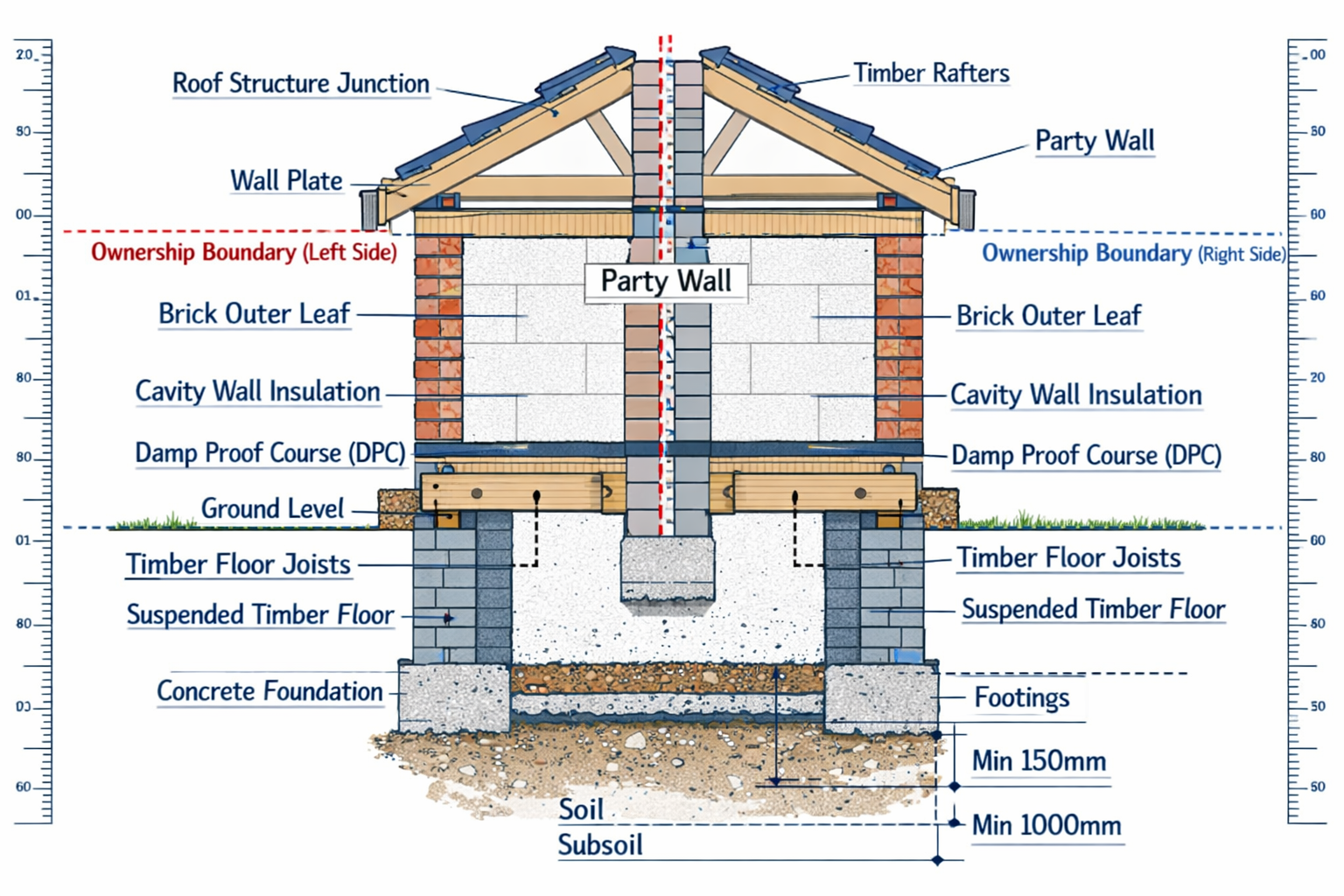
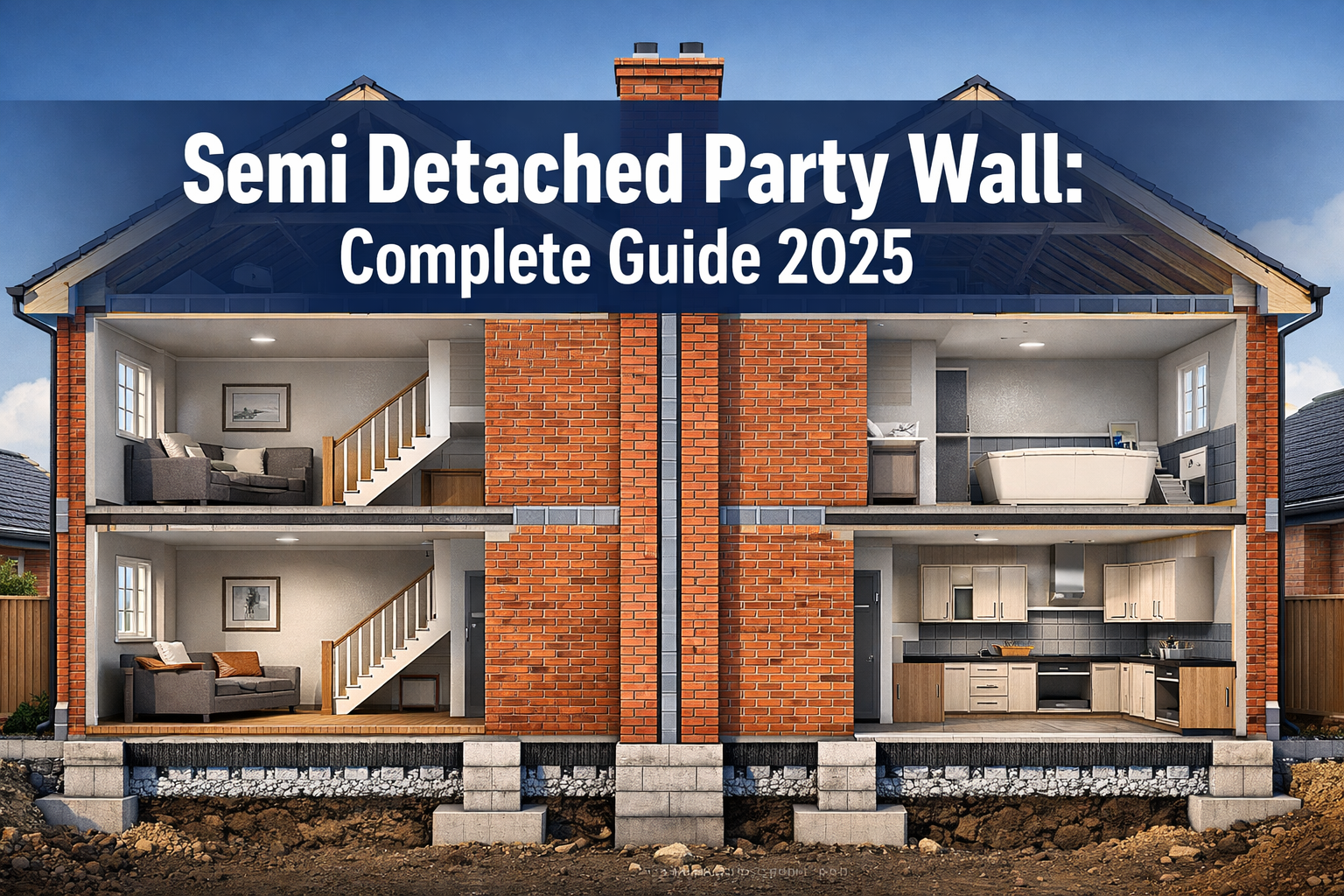
A semi detached party wall is the shared structural wall that separates two semi-detached houses. Unlike detached properties that stand alone or terraced houses that share walls on both sides, semi-detached homes share exactly one common wall with their immediate neighbour. This architectural feature creates a unique legal and practical situation that affects millions of UK homeowners.
Legal Definition and Classification
Under the Party Wall etc. Act 1996, a party wall in a semi-detached property is classified as a “party structure.” This means:
- The wall stands on land belonging to two (or more) different owners
- It forms part of a building and separates buildings belonging to different owners
- Both property owners have specific rights and obligations regarding the wall
The legislation applies throughout England and Wales, though Scotland and Northern Ireland have different legal frameworks. Professional surveyors can help determine whether your shared wall falls under party wall legislation.
Physical Characteristics
A typical semi detached party wall possesses several distinctive features:
Structural Elements:
- Usually constructed from brick or blockwork
- Typically 225mm (9 inches) thick or greater
- Extends from the foundations through to the roof structure
- May include cavity wall construction in newer properties
- Often contains fire-resistant materials to prevent fire spread
Ownership Boundaries:
- The wall is usually divided vertically down the centre
- Each owner technically owns half the wall’s thickness
- The boundary line runs through the middle of the structure
- Both parties share responsibility for the wall’s maintenance
Understanding the Party Wall etc. Act 1996 for Semi Detached Properties
The Party Wall etc. Act 1996 provides the legal framework governing work on shared walls between properties. For semi-detached homeowners, this legislation is particularly relevant as it directly impacts any building work affecting the shared wall.
When Does the Act Apply?
The Act requires property owners to follow specific procedures when planning certain types of work. For a semi detached party wall, the legislation applies to:
Notifiable Works
| Type of Work | Notice Period | Examples |
|---|---|---|
| Building on the boundary line | 1 month | New walls, garden walls |
| Work directly to the party wall | 2 months | Cutting into wall, inserting beams, raising height |
| Excavation within 3-6 metres | 1 month | Foundations, basements, extensions |
Common scenarios requiring notice:
- 🏗️ Installing steel beams or RSJs through the party wall
- 🔨 Removing chimney breasts on the party wall
- 📏 Underpinning foundations near the shared wall
- ⬆️ Raising the party wall height for loft conversions
- 🧱 Cutting into the wall to create new openings
- 🏠 Building extensions that connect to the party wall
Your Rights as a Semi Detached Property Owner
Whether you’re the building owner (planning work) or the adjoining owner (your neighbour is doing work), you have specific rights:
As the Building Owner:
- Right to carry out necessary works to your property
- Right to enter neighbouring property for inspection (with notice)
- Obligation to serve proper notice before starting work
- Responsibility to pay for party wall surveyor costs
As the Adjoining Owner:
- Right to consent or dissent to proposed works
- Right to appoint your own surveyor (at the building owner’s expense)
- Right to a schedule of condition before work begins
- Right to compensation for any damage caused
“Understanding party wall legislation isn’t about preventing your neighbour from improving their property—it’s about ensuring that improvements don’t compromise your property’s structural integrity or value.” — Chartered Building Surveyor
The Party Wall Notice Process for Semi Detached Homes
Serving a proper party wall notice is a legal requirement, not a courtesy. The process follows a specific timeline and format that must be adhered to for the work to proceed lawfully.
Step-by-Step Notice Procedure
Step 1: Determine Notice Requirements (3-6 months before work)
- Identify which type of notice is needed
- Assess the scope of proposed works
- Consider hiring a party wall surveyor early in the planning stage
Step 2: Prepare the Party Wall Notice (2-3 months before work)
- Complete the appropriate notice form
- Include detailed plans and specifications
- Specify the proposed start date
- Describe the nature and extent of works
Step 3: Serve the Notice (2 months before work for party wall works)
- Deliver notice in person, by post, or by hand
- Ensure proof of service is obtained
- Provide sufficient detail for the neighbour to understand the proposal
Step 4: Await Response (14 days)
Your neighbour has three options:
- ✅ Consent to the works (simplest outcome)
- ❌ Dissent or fail to respond (triggers dispute resolution)
- 📋 Request modifications to the proposed works
Step 5: Dispute Resolution (if consent not given)
- Each party appoints a party wall surveyor
- Surveyors prepare a Party Wall Award
- Award sets out conditions and safeguards
- Work can proceed once Award is in place
What Happens If You Don’t Serve Notice?
Failing to serve proper notice for work on a semi detached party wall can result in serious consequences:
- ⚖️ Legal action from your neighbour to stop the work
- 💰 Injunctions requiring you to cease construction immediately
- 🔧 Costly remediation to undo unauthorized work
- 📉 Difficulty selling your property due to non-compliance
- 💸 Increased costs from legal disputes and delays
Many homeowners discover these issues during property sales when solicitors identify unauthorized party wall works. Professional building surveys often uncover such problems during pre-purchase inspections.
Common Works Affecting Semi Detached Party Walls
Understanding which renovation projects require party wall procedures helps homeowners plan effectively and budget appropriately for both the construction work and the legal requirements.
Loft Conversions and Roof Extensions
Loft conversions are among the most popular home improvements for semi-detached properties, but they frequently involve the party wall:
Party Wall Implications:
- Raising the party wall to accommodate increased ceiling height
- Installing steel beams that rest on or penetrate the party wall
- Removing or altering chimney stacks on the party wall
- Creating new openings for staircases near the boundary
Best Practice:
- Engage a party wall surveyor before finalizing loft conversion plans
- Schedule notice periods into your project timeline
- Consider your neighbour’s concerns about noise and disruption
- Document the existing condition of both properties thoroughly
Basement Excavations and Extensions
Digging below ground level near a semi detached party wall triggers specific provisions of the Party Wall Act:
Critical Considerations:
- Excavation within 3 metres of the neighbour’s foundation requires notice if going deeper than their foundation
- Excavation within 6 metres requires notice if within a 45-degree angle from the bottom of their foundation
- Underpinning work always requires party wall procedures
- Temporary support may be needed for the party wall during excavation
Risk Factors:
- Subsidence affecting the neighbouring property
- Undermining existing foundations
- Water ingress or drainage issues
- Structural movement in the party wall
Kitchen and Bathroom Renovations
Even seemingly minor internal works can trigger party wall requirements:
Notifiable Scenarios:
- Installing new RSJs or steel beams through the party wall
- Removing chimney breasts that are part of the party structure
- Creating new doorways or openings in the party wall
- Chasing walls for plumbing or electrical work (if penetrating the full thickness)
Non-Notifiable Work:
- Plastering or decorating the party wall surface
- Installing kitchen units against the party wall
- Surface-mounted fixtures and fittings
- Minor electrical work that doesn’t penetrate the wall
External Alterations and Extensions
Single-storey and two-storey extensions commonly affect party walls in semi-detached properties:
Planning Considerations:
- Extensions built up to the boundary line
- Connecting new walls to the existing party wall
- Installing damp-proof courses that affect the party structure
- Flashing and weatherproofing where new roofs meet the party wall
When planning extensions, it’s advisable to consult with experienced surveyors who understand both planning regulations and party wall legislation.
Appointing a Party Wall Surveyor
The party wall surveyor plays a pivotal role in ensuring that work proceeds lawfully while protecting the interests of both property owners. Understanding their function helps homeowners make informed decisions.
The Surveyor’s Role and Responsibilities
A party wall surveyor acts impartially, even when appointed by one party. Their duties include:
Pre-Work Responsibilities:
- 📋 Reviewing party wall notices for completeness and accuracy
- 🏠 Preparing schedules of condition for both properties
- 📸 Photographically documenting existing conditions
- 📝 Drafting the Party Wall Award document
- ⚖️ Resolving disputes between neighbours
During Construction:
- 🔍 Monitoring compliance with the Party Wall Award
- 🛠️ Inspecting works at critical stages
- 📊 Addressing any issues that arise during construction
- 🤝 Mediating between parties if problems occur
Post-Work Responsibilities:
- 🔎 Final inspection to verify completion
- 💰 Assessing any damage and determining compensation
- 📄 Providing final reports to both parties
Agreed Surveyor vs. Two Surveyors
When a neighbour dissents or doesn’t respond to a party wall notice, surveyors must be appointed. There are two approaches:
Option 1: Agreed Surveyor
- Both parties agree to use the same surveyor
- More cost-effective (single fee)
- Faster process with fewer administrative steps
- Surveyor must remain impartial to both parties
- Suitable when relationship is amicable
Option 2: Two Surveyors (Plus Third Surveyor)
- Each party appoints their own surveyor
- The two surveyors may appoint a third surveyor
- More expensive but provides independent representation
- Better for complex disputes or strained relationships
- Each surveyor advocates for their appointing owner while remaining professional
Costs and Fee Structures
Understanding party wall surveyor costs helps homeowners budget appropriately:
Typical Fee Ranges (2025):
- Simple party wall awards: £700-£1,200 per surveyor
- Complex projects: £1,500-£3,000+ per surveyor
- Agreed surveyor (single appointment): £800-£1,500
- Third surveyor fees (if required): £500-£1,000
Who Pays?
- The building owner (person doing the work) pays all reasonable surveyor fees
- This includes their own surveyor’s fees
- The adjoining owner’s surveyor fees
- Any third surveyor fees
Cost-Saving Tips:
- 💡 Communicate early with neighbours to encourage consent
- 💡 Choose an agreed surveyor when possible
- 💡 Provide complete information upfront to avoid delays
- 💡 Schedule work efficiently to minimize inspection visits
For comprehensive guidance on surveyor costs and what to expect, visit our surveyor pricing guide.
Maintaining Good Neighbour Relations During Party Wall Works
While legal procedures protect your rights, maintaining positive relationships with neighbours makes the entire process smoother and less stressful for everyone involved.
Communication Best Practices
Before Serving Notice:
- 🗣️ Discuss your plans informally with your neighbour
- 📅 Explain the proposed timeline and scope of work
- 👂 Listen to their concerns and questions
- 📞 Provide your contact information and that of your builder
During the Notice Period:
- 📧 Keep communication channels open
- 📋 Provide additional information if requested
- 🤝 Be willing to make reasonable modifications
- ⏰ Be flexible with timing if possible
Throughout Construction:
- ⚠️ Give advance warning of noisy or disruptive work
- 🧹 Keep shared areas clean and safe
- 🚗 Manage parking and access considerately
- 🔧 Address complaints promptly and professionally
Managing Disputes and Disagreements
Even with the best intentions, disputes can arise. Here’s how to handle them:
Common Points of Contention:
- Noise and vibration during construction
- Dust and debris affecting the neighbouring property
- Working hours and frequency
- Access requirements for inspections
- Concerns about structural damage
Resolution Strategies:
- Direct Communication: Address issues immediately before they escalate
- Mediation: Use your party wall surveyor as a neutral mediator
- Documentation: Keep records of all communications and agreements
- Professional Advice: Consult with party wall specialists when needed
- Legal Recourse: As a last resort, formal dispute resolution through the surveyors
Protecting Your Neighbour’s Property
Taking proactive steps to prevent damage demonstrates good faith:
Protective Measures:
- 🛡️ Install protective coverings on shared surfaces
- 📏 Monitor for movement or cracking during excavation
- 💧 Ensure waterproofing doesn’t affect the neighbour’s property
- 🧱 Use appropriate construction techniques to minimize vibration
- 📸 Document conditions before, during, and after work
Insurance Considerations:
- Verify your builder has adequate public liability insurance
- Inform your home insurance provider about planned works
- Consider additional cover for party wall works
- Understand what your policy covers regarding neighbour damage
Party Wall Awards: What They Include and Why They Matter
The Party Wall Award is the formal document that sets out the conditions under which work on a semi detached party wall can proceed. Understanding its contents helps homeowners know what to expect.
Key Components of a Party Wall Award
A comprehensive Party Wall Award typically includes:
Section 1: Parties and Properties
- Names and addresses of building and adjoining owners
- Property descriptions and addresses
- Details of appointed surveyors
Section 2: Description of Works
- Detailed specification of proposed works
- Drawings and technical plans
- Methods of construction
- Timeline for completion
Section 3: Rights and Responsibilities
- Right of access for inspections
- Working hours and restrictions
- Security and safety requirements
- Notification procedures for changes
Section 4: Schedule of Condition
- Photographic evidence of existing conditions
- Description of current state of both properties
- Documentation of any existing defects
- Baseline for assessing future damage
Section 5: Dispute Resolution
- Procedures for addressing issues during work
- Surveyor inspection protocols
- Compensation mechanisms for damage
- Appeal processes
Enforceability and Legal Status
Party Wall Awards are legally binding documents:
- ⚖️ Enforceable in the County Court if breached
- 📜 Registered as a legal agreement between parties
- 🔒 Binding on future property owners
- 🏛️ Can be appealed within 14 days of service
Consequences of Non-Compliance:
- Injunctions to stop work immediately
- Damages awarded to the injured party
- Costs of rectification work
- Legal fees and surveyor costs
Modifying an Existing Award
Circumstances may change during construction, requiring amendments:
Reasons for Modification:
- Discovery of unexpected structural issues
- Changes to building plans or methods
- Additional works becoming necessary
- Timing or access adjustments
Amendment Process:
- Notify all parties and surveyors immediately
- Assess whether changes are material or minor
- Prepare supplementary award if needed
- Obtain agreement before proceeding with changes
Common Problems and How to Avoid Them
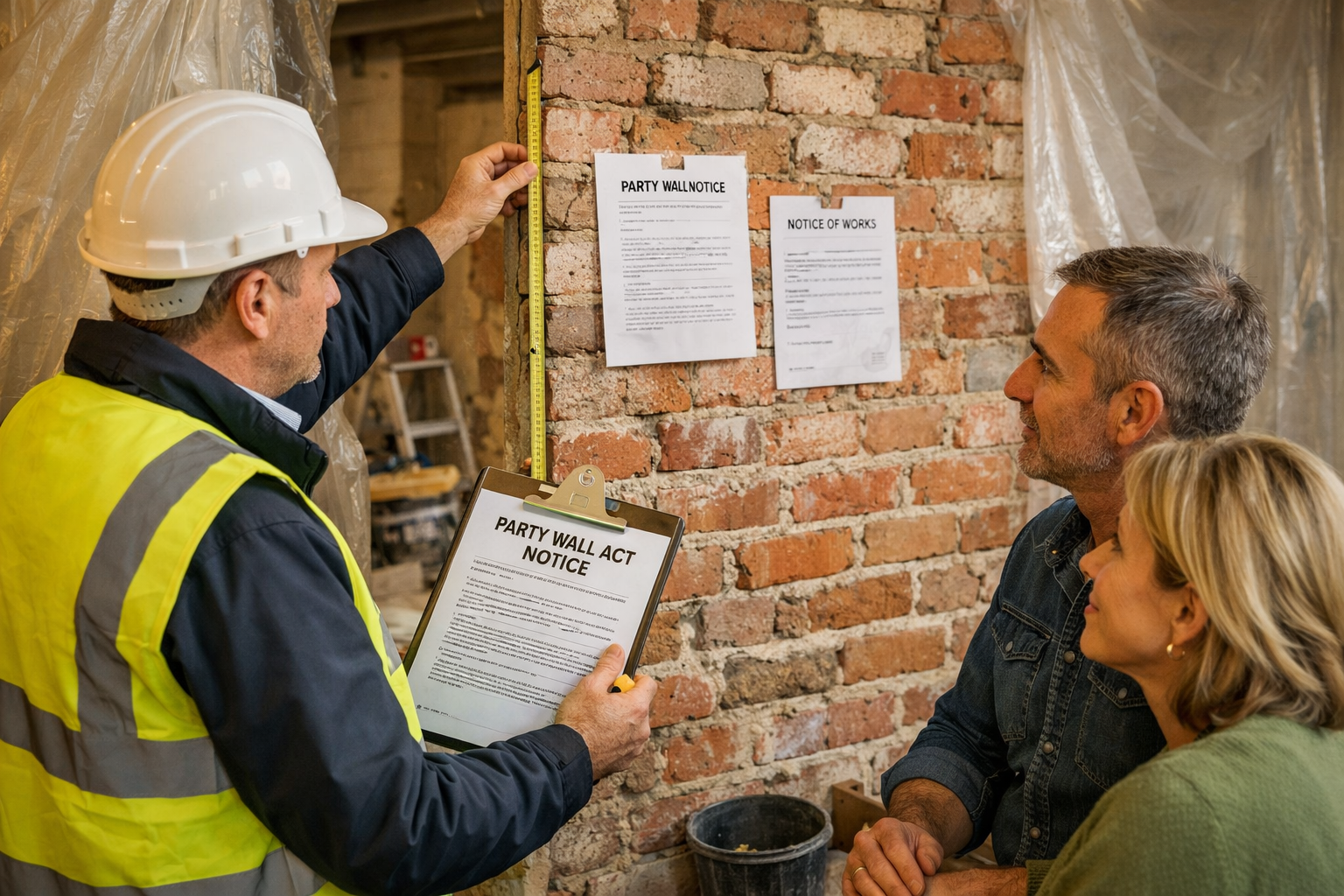
Learning from common mistakes helps homeowners navigate party wall procedures more successfully.
Inadequate Notice Periods
The Problem:
Homeowners often underestimate how long party wall procedures take, causing project delays.
The Solution:
- 📅 Start the party wall process at least 3-4 months before planned construction
- ⏰ Account for notice periods, surveyor appointments, and award preparation
- 🗓️ Build buffer time into your project schedule
- 📋 Engage surveyors during the planning stage, not just before construction
Incomplete or Inaccurate Notices
The Problem:
Poorly prepared notices can be rejected, requiring resubmission and further delays.
The Solution:
- ✍️ Use professional templates or engage a surveyor to prepare notices
- 📐 Include detailed plans and specifications
- 🔍 Double-check all property details and descriptions
- 📧 Obtain proof of service for all notices
Failure to Document Existing Conditions
The Problem:
Without proper documentation, it’s difficult to prove whether damage existed before work began.
The Solution:
- 📸 Commission a professional schedule of condition
- 🎥 Take comprehensive photographs and videos
- 📝 Note all existing cracks, defects, and issues
- 📅 Date-stamp all documentation
- 💾 Store records securely for future reference
For properties with existing issues, a damp survey or structural survey before party wall works can provide valuable baseline documentation.
Ignoring Minor Damage During Construction
The Problem:
Small cracks or issues that develop during work can worsen if not addressed promptly.
The Solution:
- 🔎 Conduct regular inspections during construction
- 📞 Report issues immediately to surveyors
- 🛠️ Address problems before they escalate
- 📋 Document all incidents and remedial actions
Poor Contractor Selection
The Problem:
Inexperienced builders may not understand party wall requirements or proper construction techniques.
The Solution:
- ✅ Hire contractors with party wall experience
- 📜 Verify insurance coverage and qualifications
- 🤝 Ensure they understand the Party Wall Award conditions
- 👷 Require them to work within specified hours and methods
Special Considerations for Semi Detached Properties
Semi-detached homes present unique challenges that differ from terraced or detached properties.
Asymmetrical Building Work
When one semi-detached property undergoes significant alterations while the other remains unchanged:
Potential Issues:
- Visual mismatch between the two properties
- Different roof heights or styles
- Varied external finishes and materials
- Unbalanced structural loading
Mitigation Strategies:
- Consider aesthetic impact on the pair of properties
- Ensure structural changes don’t adversely affect the neighbouring property
- Use sympathetic materials and design where possible
- Obtain necessary planning permissions alongside party wall procedures
Shared Services and Utilities
Semi-detached properties often share more than just walls:
Common Shared Elements:
- Drainage systems and sewers
- Gas and water supply pipes
- Electrical service entries
- Chimney stacks and flues
Important Considerations:
- 🔌 Identify all shared services before beginning work
- 💧 Ensure continued service to both properties during construction
- 🚰 Provide alternative arrangements if services must be interrupted
- 📋 Update service plans and documentation
Historical and Listed Buildings
Older semi-detached properties may have additional protections:
Additional Requirements:
- Listed building consent for certain alterations
- Conservation area restrictions
- Building control approval for structural changes
- Heritage organization consultations
Best Practice:
- Research the property’s listing status early
- Engage conservation specialists for listed buildings
- Allow extra time for heritage approvals
- Use appropriate traditional materials and methods
Future-Proofing Your Semi Detached Party Wall
Thinking ahead can prevent problems and add value to your property.
Maintenance and Regular Inspections
Proactive maintenance of the semi detached party wall benefits both properties:
Recommended Schedule:
- 🔍 Annual visual inspection for cracks or damage
- 💧 Check for damp or water penetration
- 🧱 Monitor pointing and external render condition
- 🏠 Inspect roof junctions and flashing
Early Warning Signs:
- Hairline cracks appearing or widening
- Damp patches or staining
- Loose or crumbling mortar
- Gaps between wall and ceiling/floor
Planning for Future Works
Even if you’re not planning work now, preparation helps:
Documentation to Maintain:
- 📄 Copies of all party wall notices and awards
- 📸 Regular photographic records
- 🏗️ Building plans and specifications
- 📋 Maintenance and repair history
Information for Future Owners:
- Create a property file with all party wall documentation
- Include contact details for previous surveyors
- Document any ongoing agreements with neighbours
- Note any restrictions or conditions from previous awards
Adding Value Through Compliance
Proper party wall compliance can enhance property value:
Benefits for Resale:
- ✅ Clean legal title without compliance issues
- 📈 Confidence for buyers and their solicitors
- 🏆 Demonstrates responsible ownership
- 💰 Avoids price reductions due to legal problems
When selling, ensure your solicitor has access to all party wall documentation. Buyers’ building surveys will often identify party wall works, and proper documentation prevents delays.
Understanding Your Legal Protections and Remedies
Knowing your legal position empowers you to protect your property and rights effectively.
When Your Neighbour Causes Damage
If work on the semi detached party wall damages your property:
Immediate Steps:
- 📸 Document the damage thoroughly with photographs
- 📧 Notify your neighbour and their surveyor in writing
- 🛑 Request work stops until damage is assessed
- 🔍 Arrange for your surveyor to inspect
Compensation and Repairs:
- The building owner is liable for damage caused by their works
- Compensation should return your property to its previous condition
- You’re entitled to reasonable costs for alternative accommodation if necessary
- Surveyors determine appropriate compensation amounts
Dealing with Non-Compliance
If your neighbour proceeds without proper notice:
Your Options:
- ⚠️ Serve a counter-notice requiring compliance
- 📞 Request an immediate surveyor appointment
- ⚖️ Seek an injunction to stop unauthorized work
- 💰 Claim damages for any harm caused
Legal Support:
- Consult a solicitor specializing in property law
- Consider whether mediation might resolve issues
- Understand costs and likely outcomes before proceeding
- Keep detailed records of all communications and incidents
Insurance Claims and Coverage
Understanding insurance in party wall situations:
Your Insurance:
- Home insurance may cover accidental damage from neighbour’s works
- Notify your insurer before work begins
- Understand policy exclusions and limitations
- Consider additional coverage for major projects
Builder’s Insurance:
- Verify the building owner’s contractor has public liability insurance
- Minimum £5-10 million coverage recommended
- Obtain proof of insurance before work starts
- Ensure policy is current throughout construction
The Role of Professional Surveyors in Party Wall Matters
Professional expertise makes navigating party wall procedures significantly easier and more effective.
Why Professional Advice Matters
Attempting to handle party wall matters without professional help often leads to:
- ❌ Invalid or incomplete notices
- ❌ Missed legal requirements
- ❌ Inadequate protection of your interests
- ❌ Costly disputes and delays
- ❌ Potential legal action
Benefits of Professional Surveyors:
- ✅ Ensure legal compliance from the start
- ✅ Prepare comprehensive documentation
- ✅ Provide impartial expert advice
- ✅ Prevent disputes through clear communication
- ✅ Protect both parties’ interests fairly
Choosing the Right Surveyor
Selecting an experienced party wall surveyor is crucial:
Essential Qualifications:
- Member of the Royal Institution of Chartered Surveyors (RICS)
- Specialist knowledge of the Party Wall etc. Act 1996
- Experience with semi-detached properties specifically
- Professional indemnity insurance
- Local knowledge of building practices
Questions to Ask:
- 📋 How many party wall awards have you prepared?
- 🏠 Do you have experience with similar properties?
- 💰 What are your fees and payment terms?
- ⏰ What is your typical timeline for the award process?
- 📞 How will you communicate with all parties?
Canterbury Surveyors offers experienced party wall surveying services with comprehensive knowledge of semi-detached property issues.
When to Engage a Surveyor
Timing is important for optimal outcomes:
Ideal Timeline:
- Planning Stage: Consult before finalizing building plans
- 3-4 Months Before Work: Engage formally to prepare notices
- Immediately Upon Receiving Notice: If you’re the adjoining owner
- At First Sign of Problems: Don’t wait for disputes to escalate
Early Engagement Benefits:
- Incorporate party wall requirements into project planning
- Avoid design changes after notices are served
- Build costs into your budget from the start
- Establish positive relationships with all parties
Conclusion: Navigating Semi Detached Party Wall Matters Successfully
Understanding your semi detached party wall rights and responsibilities is essential for any homeowner planning building work or responding to a neighbour’s construction project. The Party Wall etc. Act 1996 provides a clear framework that protects both parties while allowing necessary improvements to proceed.
Key Success Factors
For Building Owners:
- 📋 Start the party wall process early in your planning
- 🤝 Communicate openly with your neighbour from the outset
- 👷 Engage experienced professionals including surveyors and contractors
- 💰 Budget for party wall costs alongside construction expenses
- 📸 Document everything thoroughly before, during, and after work
For Adjoining Owners:
- 👀 Review notices carefully and seek professional advice
- ⚖️ Understand your rights to appoint a surveyor at the building owner’s expense
- 🔍 Insist on a comprehensive schedule of condition
- 📞 Maintain communication with all parties throughout the process
- 🛡️ Don’t hesitate to raise concerns about proposed works
Taking Action: Your Next Steps
Whether you’re planning work or responding to your neighbour’s plans, taking the right steps now will save time, money, and stress:
If You’re Planning Building Work:
- Review your plans with a party wall surveyor
- Identify all notifiable works affecting the party wall
- Prepare and serve proper notices with adequate lead time
- Appoint a qualified surveyor to prepare the Party Wall Award
- Ensure your contractor understands and complies with all conditions
If Your Neighbour Is Planning Work:
- Read the party wall notice carefully
- Seek professional advice before responding
- Appoint your own surveyor if you have concerns
- Request a thorough schedule of condition
- Maintain records of all communications and documentation
For All Homeowners:
- Keep comprehensive records of your party wall and its condition
- Maintain positive relationships with neighbours
- Address maintenance issues promptly
- Understand your legal rights and protections
- Consult professionals when in doubt
Professional Support Available
Navigating party wall matters doesn’t have to be overwhelming. Professional surveyors provide invaluable expertise, ensuring compliance while protecting your interests. Whether you need advice on party wall damage, guidance on serving notices, or representation during the award process, experienced professionals make the difference between a smooth process and a costly dispute.
The investment in professional party wall services is minimal compared to the potential costs of non-compliance, legal disputes, or property damage. By understanding your rights, following proper procedures, and engaging qualified surveyors, you can protect your property, maintain good neighbour relations, and ensure that building work proceeds legally and safely.
Your semi detached party wall is more than just a structural element—it’s a shared responsibility that requires knowledge, respect, and proper legal compliance. Armed with the information in this guide, you’re well-equipped to handle party wall matters confidently and successfully.